5 High-Impact Use Cases for Stories & Vertical Videos in Sports Apps and Websites
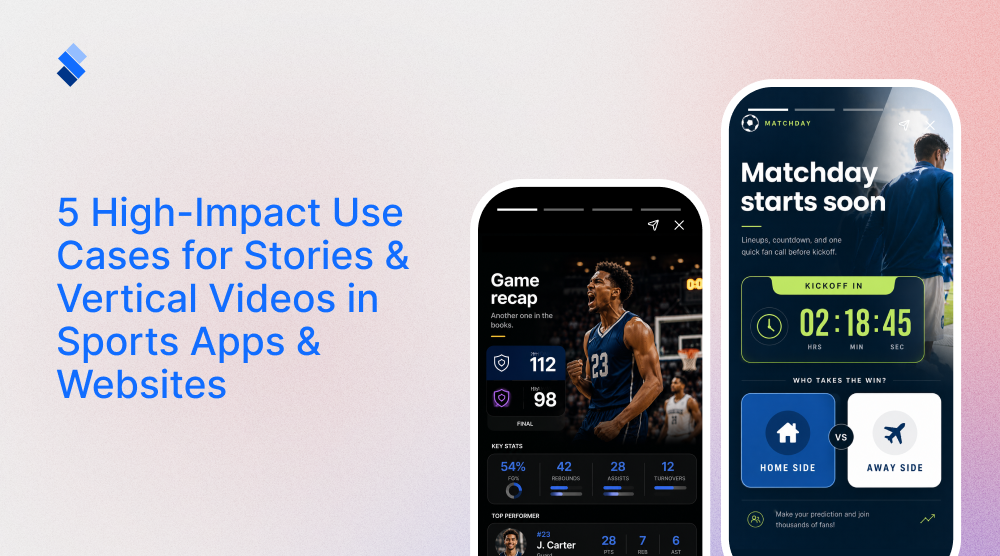
Over the years, marketing in sports has become all about meeting your fans where they are. This means that instead of simply posting on websites or running a post-game commentary, sports brands need to figure out the viewing habits of their fans and weave their content into them. The timing, the tone, and accessibility turned out to be as important as content quality. In this "capture the right moment" period of marketing, Stories and vertical videos have emerged as the secret weapon that sports brands utilize to great success. And to highlight this, we will cover 5 high-impact use cases and showcase why they are so sucessful.
A quick rundown of Stories
While most of our readers are familiar with what Web and In-app Stories are, there are those who are not so well-versed. So, to help them out, let's do a quick rundown. Originally popularized by Snapchat and later adopted by Instagram, Facebook, and virtually every major social platform, the Stories format has proven itself as a marketing hit. These are immersive, full-screen vertical video and image experiences designed specifically for mobile browsing within websites and native applications. Unlike social media Stories that live on platforms like Instagram or Snapchat, Stories are embedded directly into a brand's own digital properties.
On a surface level, they function similarly to Stories on social media. They allow users to go through sequential content, swipe up for more information, and interact with polls or other engagement features. The crucial difference is that the content, data, and user relationships remain entirely owned by the sports organization rather than a third-party platform. This gives sports brands complete control over the fan experience, which enables community-driven content, personalized marketing, and data-based business decisions. So, all in all, it is easy to see why Story content is so important for modern sport brands.
Now, let's check out some examples.
Showcasing the potential
The following are just some of the many examples of using Stories and videos to cover sports subjects. We hope that these will serve as more of an inspiration than a blueprint, as the creative potential of Story content and videos is truly staggering. So, without further ado, let's begin.
The NBA App sets the standard with Stories
Whether it was through customer analytics, in-depth research, or by simply copying from the competition, at a certain point, the NBA figured out that mobile apps represent the most intimate touchpoint between brands and users. After all, when it comes to online interactions, there is no other touchpoint where the fan is solely focused on your content, as there are no other tabs or profiles to contend with. Well, one of the ways in which sports brands guide this undivided attention within apps is with Stories. The NBA used its app to create hyper-personalized, real-time engagement that keeps fans connected throughout the entire match day experience.
Stories for sports
The NBA's official app has pioneered the use of in-app Stories to deliver personalized game day experiences. Their approach combines real-time scoring updates, key play highlights, and interactive elements all within a Stories interface that fans can consume in seconds during breaks in the action.
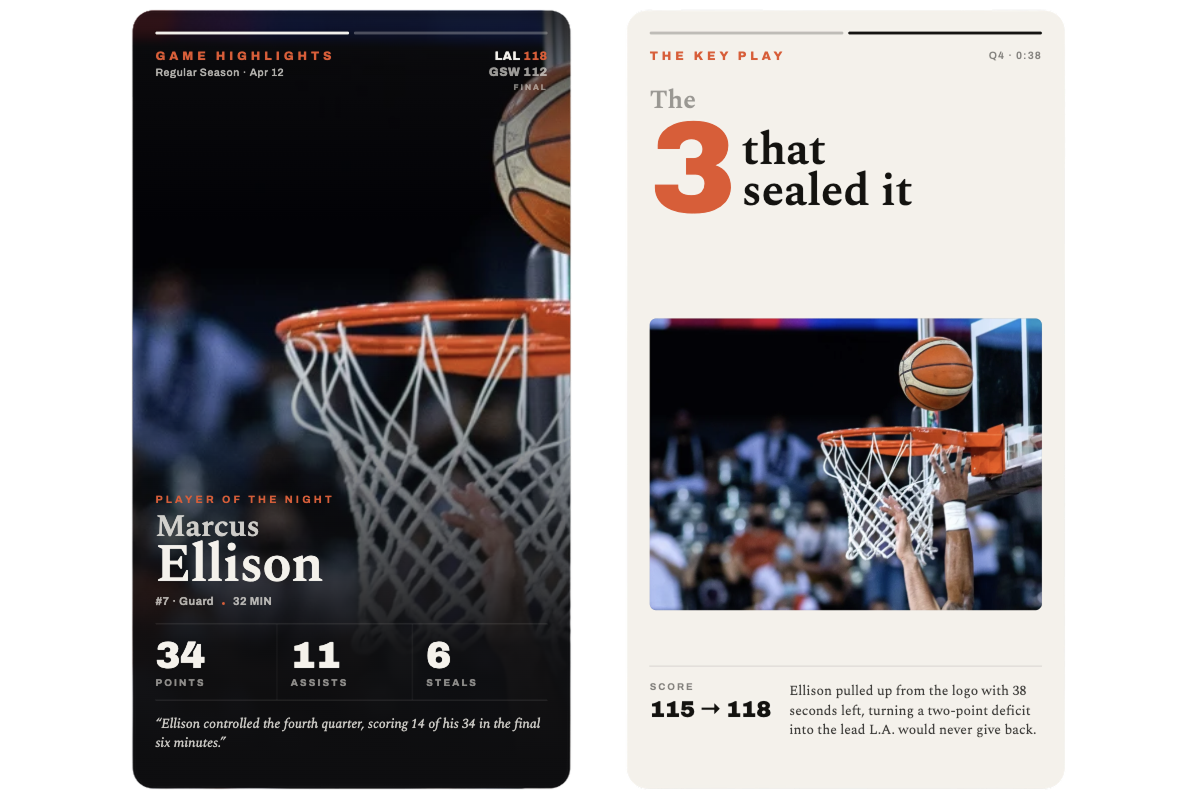
What makes the NBA app's implementation particularly effective is how it segments users. If you're a Lakers fan, your Story feed prioritizes Lakers content, but also surfaces relevant league-wide moments. During nationally televised games, the app pushes Stories featuring alternate camera angles, player reactions captured courtside, and instant replay breakdowns. Of course, these are all optimized for vertical viewing on mobile devices. The app also leverages Stories for pre-game hype, featuring starting lineups with player stats, injury reports, and even betting odds integrated seamlessly into the vertical format. Post-game, fans receive automatically generated Stories recapping key moments, final scores, and standout performances.
Making use of user data
In-app Stories provide sports organizations with complete control over the user experience and valuable first-party data. If the NBA were solely to rely on social media platforms their engagement metrics would be limited. But, because they use an app, they can track exactly how fans interact with each Story element. So, what NBA tracked was which plays users rewatch, which polls they respond to, when they swipe up for more information, and how long they engage with each piece of content.
This data enabled sophisticated personalization based on their NBA app profile. For instance, if a user's fan always watches defensive highlights, prefers Stories under 10 seconds, and engages most heavily with content about specific players, that is what he is going to get. Over time, the app curates a Story feed that feels custom-built for that individual, dramatically increasing engagement and time spent in-app.
PrepNetwork.com using Stories to build a helpful website
PrepNetwork.com is a recruiting platform focused on helping high school athletes gain exposure and connect with college coaches. Early on, they recognized that Story content is exactly what they need. The bite-sized, well-informed format makes it easy for ambitious student-athletes and their families to navigate the often overwhelming college recruiting process.
PrepNetwork uses Stories as a daily content touchpoint on their site, delivering bite-sized recruiting updates in a familiar, swipeable format. Rather than expecting young athletes to dig through lengthy articles, the platform surfaces the most time-sensitive information. This includes commitment announcements, recruiting class rankings, and transfer portal updates.
One of their most effective uses of Stories is around commitment news. When a high-profile recruit verbally commits to a program, PrepNetwork publishes a Story almost immediately. It features the athlete's photo, position, stats, and the committing school's logo. This creates a sense of real-time coverage that keeps athletes and families returning daily to check for updates.
Retaining users through meaningful connections
PrepNetwork also uses Stories to spotlight college coaches, dedicating short-form frames to a specific program's needs, roster gaps, and contact information. This is enormously valuable to their audience because it provides important recruiting information. A family can swipe through a three-frame Story on a particular Division I program and walk away knowing exactly what position the coaching staff is targeting and how to reach out.
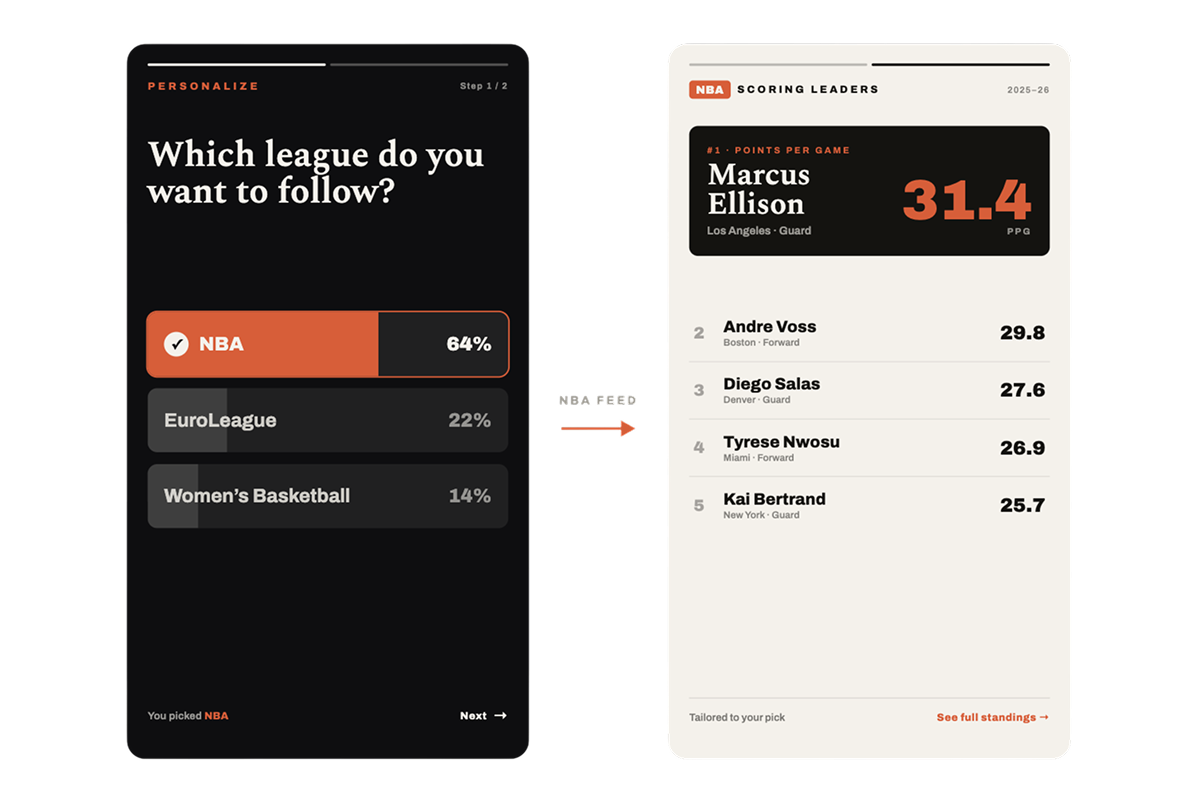
Beyond content, Stories serve a retention function. PrepNetwork encourages users to create free profiles on the platform, and Story content is partially gated, where full access requires registration. This converts casual visitors into registered members, allowing PrepNetwork to follow up with email newsletters and personalised recruiting content, building a long-term relationship rather than a one-time visit.
NASCAR using vertical videos for easy promotion
A few years back, NASCAR made a deliberate push to incorporate vertical video into its digital presence. They did this because they recognised that a significant portion of their audience now consumes content primarily on mobile devices. And rather than simply repurposing horizontal broadcast footage, NASCAR has developed vertical-first video content that feels purpose-built for the format.
NASCAR publishes short vertical highlight clips directly on its website, capturing key moments like dramatic crashes, photo finishes, and last-lap overtakes. These clips are cropped and reframed to keep the action central, ensuring that nothing critical is lost at the edges of the frame. Because they run between 30 and 90 seconds, they are designed to hook a user quickly and deliver a satisfying payoff before attention drifts.
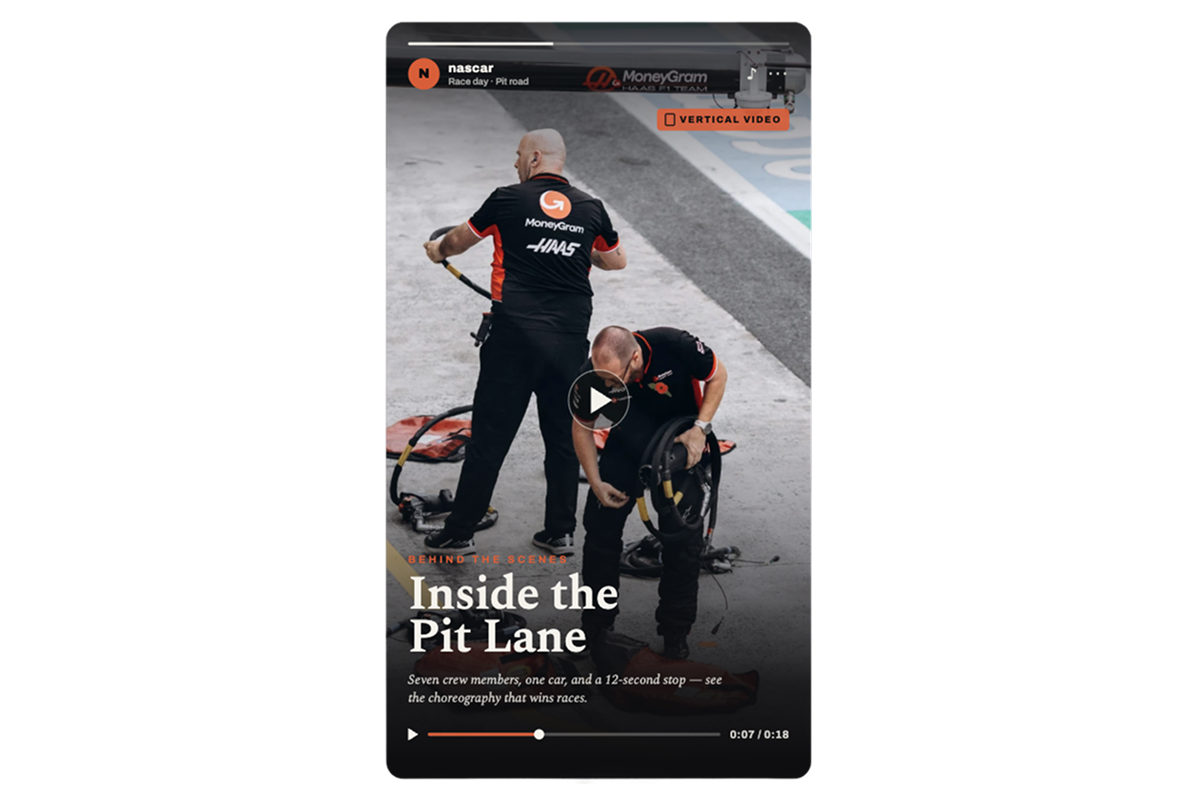
Another common use of vertical video on NASCAR.com is driver-focused content shot in pit lanes, garages, and locker rooms. These clips place the driver front and centre in the frame, creating an intimate, face-to-face feel. Mind you, this is something that you'd have a hard time replicating on a horizontal broadcast. Fans following a favourite driver get a sense of personal access that deepens loyalty and encourages repeat visits.
Integration with social media
NASCAR also uses vertical video as a bridge between its website and its social platforms. Content produced for NASCAR.com is simultaneously optimised for TikTok and Instagram Reels, meaning the production investment stretches further. Website visitors who discover a clip are often prompted to follow NASCAR's social channels. Meanwhile, social audiences are directed back to the site for full race coverage and ticketing. This cohesive vertical video strategy helps NASCAR connect with younger fans who may never watch a full race broadcast.
NIKE using vertical videos on its app
Upon a quick inspection, it is clear that Nike's app has evolved well beyond a simple shopping platform. On it, vertical video sits at the heart of how the brand delivers content, drives engagement, and connects product to culture. The format is woven throughout the app experience in several distinct ways.
When Nike drops a new sneaker or apparel collection, vertical video is the primary reveal format within the app. Rather than static product images, users are met with short atmospheric clips like a shoe rotating in dramatic lighting, or an athlete wearing the collection mid-movement. These videos are designed to create desire quickly, with the product available to purchase just a tap away beneath the video frame. The vertical orientation keeps the product large and immersive on screen without requiring the user to reorient their phone.
Personalised member content
For Nike Members, the app surfaces personalised vertical video recommendations based on sport preferences and browsing behaviour. A user who frequently shops for running gear might see vertical clips from elite runners, while a basketball fan receives court-based content. This personalisation makes the video feed feel curated rather than broadcast, increasing the likelihood that users will watch, engage, and ultimately shop. Together, these uses make vertical video central to how Nike turns its app into a destination rather than just a storefront.
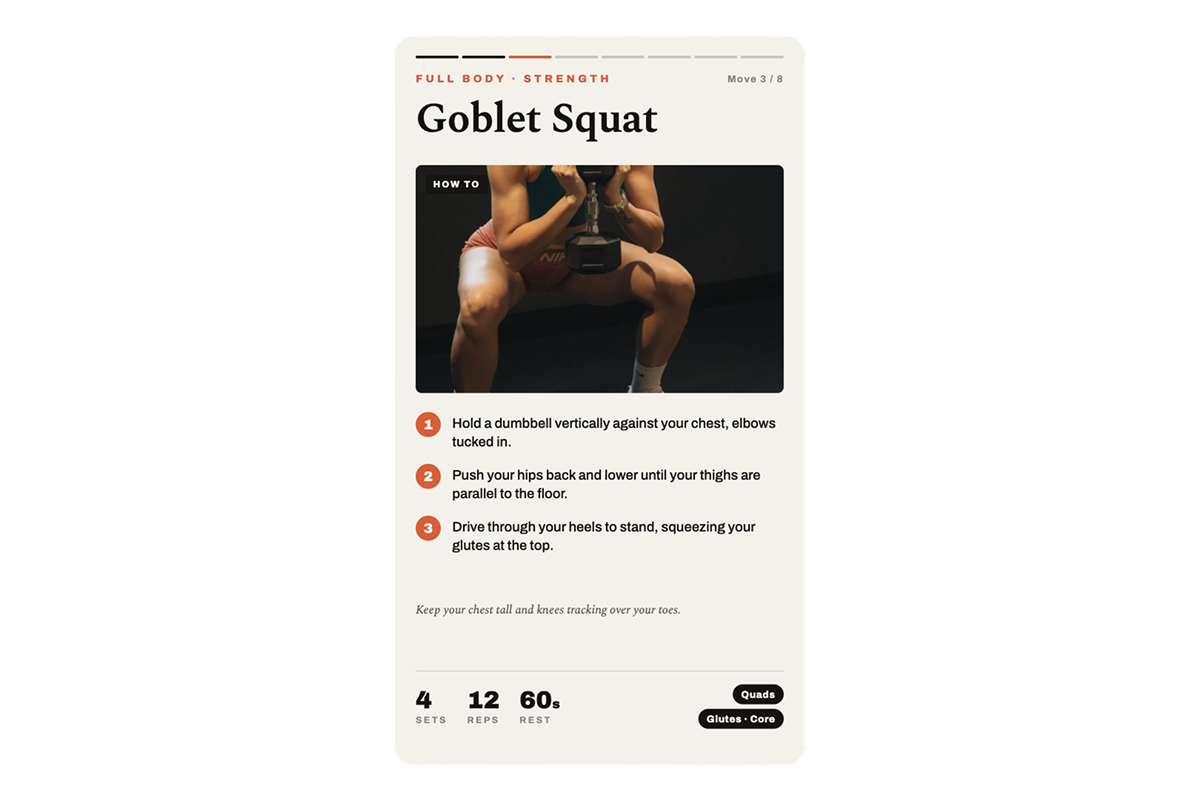
Within the Nike Training Club section of the app, vertical video is the backbone of every workout. Trainers appear full-screen, delivering instructions directly to the camera in a format that feels more engaging. Because users often hold their phone while exercising, the vertical format is a practical necessity as much as a stylistic choice.
FIBA - A creative combination of Stories and vertical videos
FIBA faces a difficult problem when it comes to marketing. It serves a uniquely global audience spanning dozens of national teams, multiple competitions, and fans across vastly different time zones and languages. While other brands struggled or had to scale down, FIBA chose to be creative. The diversity of their audience has motivated FIBA to develop a content strategy where Stories and vertical video work together as a cohesive system.
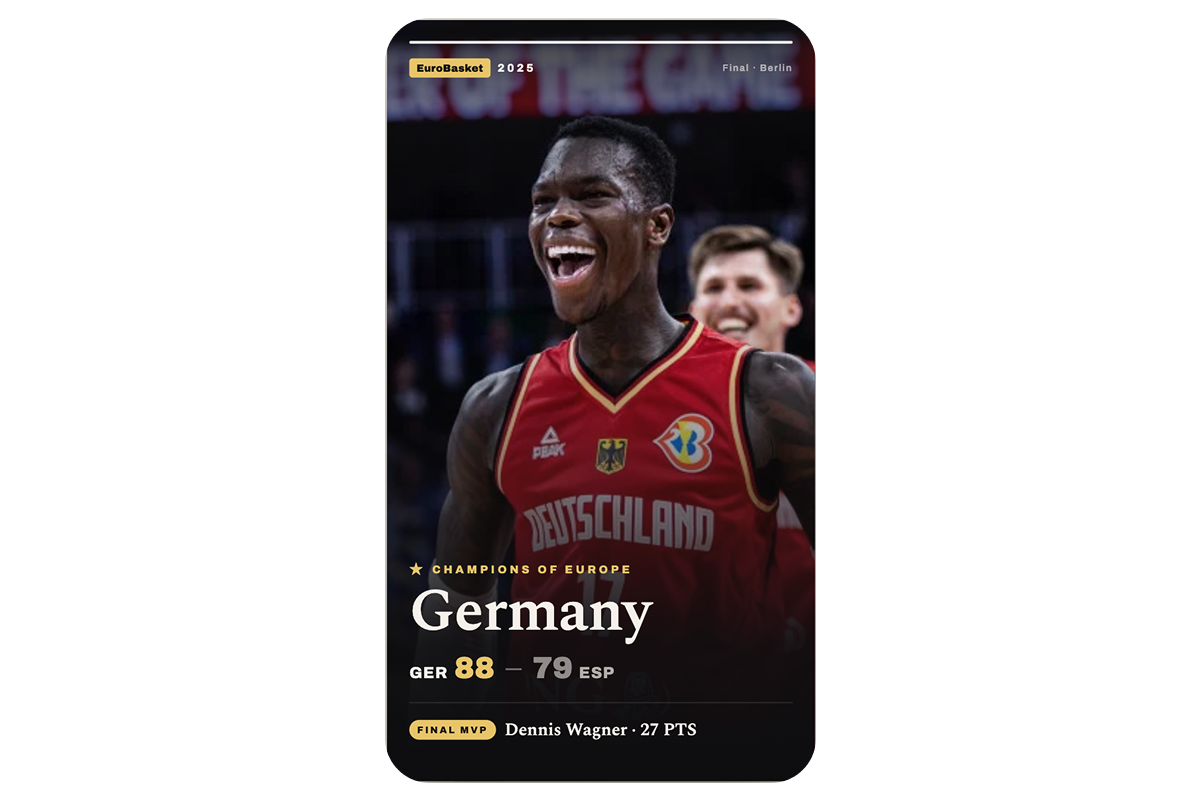
The clearest demonstration of FIBA's combined approach came during the 2023 FIBA Basketball World Cup held in the Philippines, Japan, and Indonesia. With games running across multiple venues and time zones simultaneously, FIBA used Stories on its website as a live content hub. They published swipeable frame-by-frame updates covering scores, standout performances, and bracket progressions in real time. Fans who couldn't watch live could simply open the FIBA website or app. There, they could swipe through a Story that condensed an entire game into six or seven compelling frames within minutes of the final buzzer.
Embedded within those Stories were relatively short vertical video clips. These clips were shot and edited vertically from the outset, not cropped from broadcast footage. This meant that the players filled the entire screen, and the energy of the moment translated powerfully to a mobile viewer. The Story format gave these clips context and sequence, while the vertical video gave them emotional impact.
Why the combination works so effectively
The pairing is effective for several reasons. Stories provide structure and narrative. They guide a fan through a game or tournament in digestible steps, respecting the fact that most users will not read a full match report. Vertical video provides the emotional punch that text and static images cannot. Together, they replicate something close to the experience of watching live, compressed into a two-minute mobile interaction.
For FIBA specifically, the format also solves a language problem. Vertical video is largely wordless, relying on action and atmosphere to communicate, which means a highlight clip resonates equally with a fan in Brazil, Serbia, or the Philippines without requiring translation. Stories can carry localised text overlays relatively cheaply, allowing FIBA to serve multiple language markets without producing entirely separate content streams.
Final thoughts
The examples we've covered made one thing perfectly clear. Stories and vertical video are no longer optional for sports brands. They are essential! In a mobile-first world, fans expect content that fits their habits: immediate, immersive, and personal. What unites the success of the NBA, PrepNetwork, NASCAR, Nike, and FIBA is a shared understanding of a core principle: control is king. This is why owning your online presence is crucial. By bringing Stories in-house, you own the data, control the narrative, and build direct relationships with fans. This enables a level of personalization and insight that social media alone cannot deliver.