How a Leading European Publisher Turned Mobile-Native Stories Into a Subscription Channel

Most publishers assume subscription growth comes from better content or stronger paywalls. But one leading European publisher showed that how content is presented can be just as important as what is published. By introducing mobile-native Stories across its digital experience, the publisher created a new way for readers to discover journalism, engage with premium content, and move toward subscription.
Nearly 2,900 subscriptions were recorded from users who had interacted with the Stories bar immediately before subscribing. For one of Europe’s most established publishing brands, Stories became more than an engagement format. They became a meaningful discovery and conversion channel. This case study breaks down what the European publisher did, why it worked, and what other publishers can learn from the approach.
The Challenge: Reaching Younger Audiences in a Mobile-First Format
The European publisher didn’t have a content problem. It already had a strong editorial brand, high-quality journalism, and an established subscriber base. The opportunity was to find a new way to present that journalism to younger, mobile-first audiences. The strategic question became:
What if premium journalism were delivered in a format younger audiences already understand and use every day?

The Solution: Premium Journalism, Reimagined for Vertical Consumption
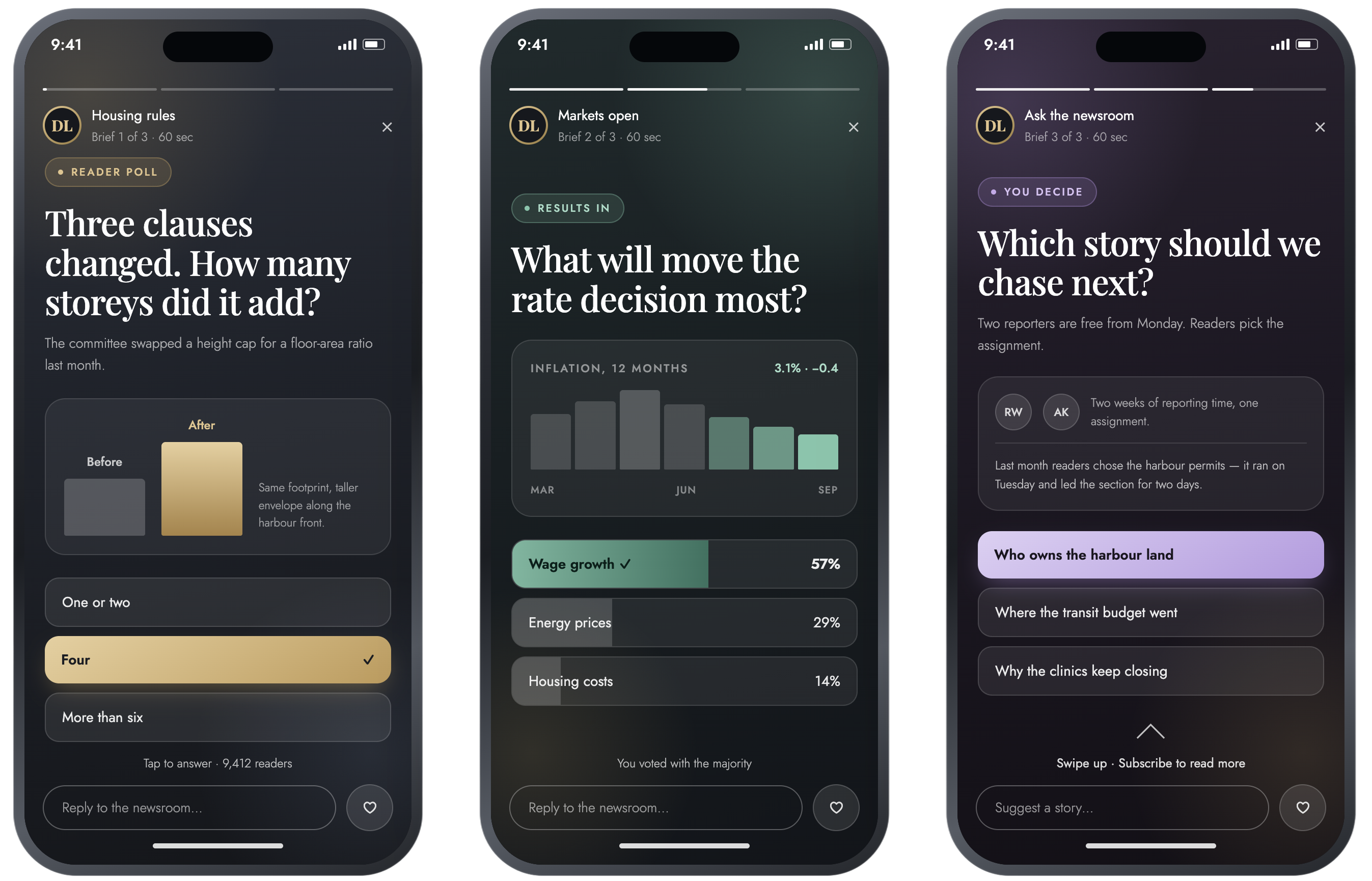
The European publisher integrated Stories directly into its digital experience as a new content layer. The goal wasn’t to replicate social media. It was to translate existing journalism into a format designed for mobile consumption.
Stories as a Front-Door Experience
Stories were placed prominently across the platform, giving readers an immediate entry point into content. Rather than requiring users to actively search for Stories, the format became part of the normal content discovery experience.
Editorial Content, Repackaged for Mobile
Instead of producing entirely new content, the publisher repurposed existing journalism into Story format:
- Key insights broken into short, sequential cards
- Visual storytelling layered on top of reporting
- Clear narrative flows designed for tap-based consumption
This allowed the team to adapt how journalism was delivered without changing the journalism itself.
A Focus on Younger, Mobile-First Audiences
The initiative was designed to help the publisher reach new and particularly younger audiences with a format optimized for smartphones. Stories created a bridge between high-quality journalism and familiar mobile-native consumption behavior.
The Results: A New Subscription and Discovery Channel
The impact was measurable. Nearly 2,900 subscriptions were recorded from users who had interacted with the Stories bar immediately before subscribing. The Stories bar also reached a peak of 169,000 page views in a single day. And during the measured period, around 21% of Story-bar users were subscribers, compared with approximately 7% of homepage users. The important takeaway goes beyond traffic. Stories became a format through which readers could discover premium journalism, understand its value, and continue toward subscription.
Why This Works
Familiar interaction reduces friction
Mobile users already understand Story-style navigation:
- Tap to advance
- Swipe to navigate
- Consume information in short sequences
This creates a familiar way to explore editorial content.
Stories showcase editorial value
Instead of asking readers to commit immediately to a long article, Stories can introduce the most compelling parts of a piece first. They can:
- Highlight key insights
- Build curiosity
- Lead readers toward full articles or subscription offers
This creates a more gradual path from discovery to conversion.
What Other Publishers Can Replicate
1. Use Stories as a distribution layer
You don’t necessarily need more content. You can create new experiences from journalism you already produce.
2. Put Stories where users already browse
Integrate Stories into existing website and app experiences rather than treating them as an isolated destination.
3. Prioritize high-value editorial content
Use Stories to surface content that demonstrates the value of your journalism, including:
- Investigations
- Premium analysis
- Exclusive reporting
- Major breaking stories
4. Design for mobile-first consumption
Think vertically, visually, and sequentially. Stories should feel natural on a smartphone while still reflecting the publisher’s editorial identity.
The Bigger Picture: Bringing Mobile-Native Consumption to Owned Platforms
Publishers often rely on social platforms to reach younger audiences. This European publisher took another approach. Instead of moving more journalism onto external platforms, it brought familiar mobile-native consumption patterns into its own digital experience. Stories didn’t replace journalism. They created another way for audiences to discover it, engage with it, and ultimately subscribe.
Key Takeaways
- Nearly 2,900 subscriptions were recorded from users who had interacted with the Stories bar immediately before subscribing
- The Stories bar reached a peak of 169,000 page views in a single day
- Around 21% of Story-bar users were subscribers, compared with approximately 7% of homepage users
- Mobile-native formats can help publishers reach younger audiences while keeping users within their owned platforms
- Stories can function as a discovery and conversion layer, not just an engagement format