How an Education Platform Used Stories to Create a More Engaging Student Experience
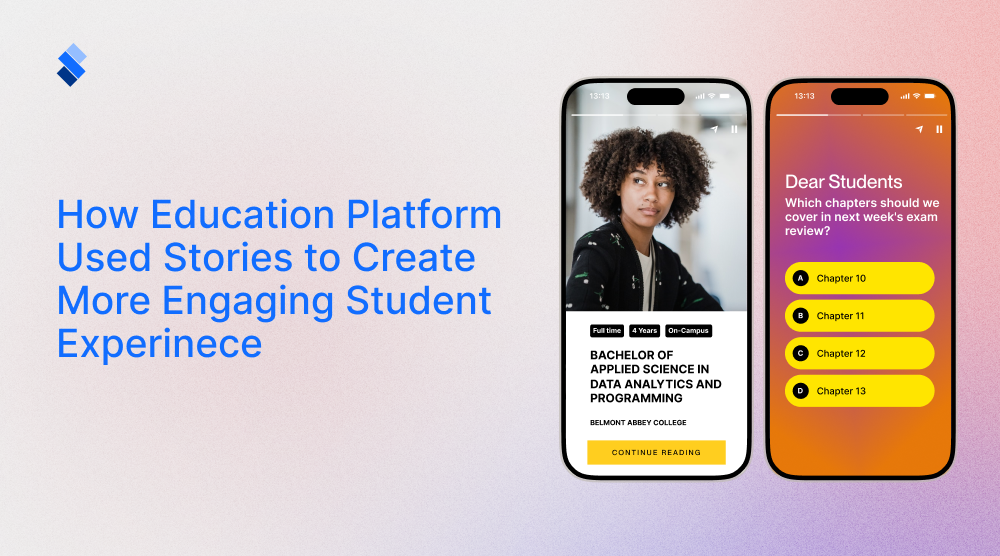
Students are used to discovering content through short, visual, and interactive formats. But many education platforms still rely heavily on long-form text, traditional content pages, and detailed information guides. For platforms helping young people explore universities and career opportunities, this creates an important question: how can valuable educational information be presented in a format students actually want to use?
One UK-based education and career exploration platform decided to find out. After researching its users' content preferences, the platform discovered that more than one-third preferred Instagram-like Stories for consuming information. That insight led the team to introduce StorifyMe Web Stories as an additional way for students to discover educational content and explore university options. The result was a more familiar, mobile-first experience that received positive feedback from users. Here's what the platform learned and what other education and edtech companies can take from its approach.
The Challenge: Making Educational Content More Engaging for Students
Education platforms provide information that can have a meaningful impact on students' futures. From choosing a university to exploring potential careers, students often need to navigate large amounts of information before making a decision. But providing valuable content doesn't automatically mean students will engage with it. Long articles, detailed guides, and traditional information pages are useful for research, yet they aren't always the easiest way to introduce a topic or encourage further exploration.
For this education platform, the challenge was to make its content more accessible and engaging for young people. The team also wanted to explore more relatable, user-generated content that would better reflect how students communicate and discover information online. Rather than assuming which formats would work best, the platform researched its audience. The findings revealed an opportunity.
More than one-third of users said they would prefer to consume content in an Instagram-like Story format.
This gave the team a clear direction: introduce a familiar content experience that would complement existing educational resources.
The Solution: Bringing Mobile-Native Stories to an Education Platform
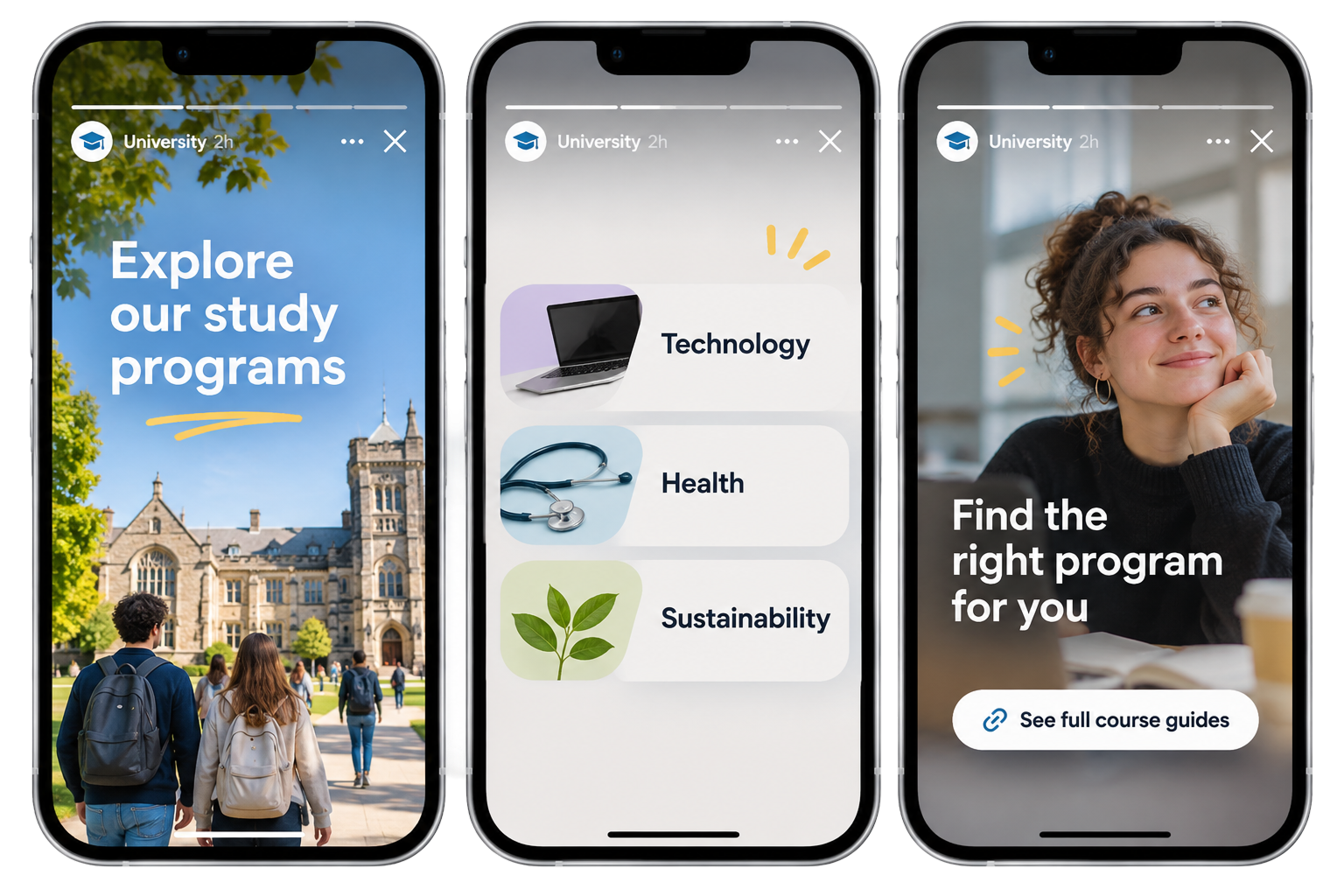
The platform introduced StorifyMe Web Stories to make educational content easier to explore through short, visual, and interactive experiences. Instead of replacing existing information, Stories provided another way for students to discover content and learn about their options.
Turning Long-Form Information Into Digestible Content
Exploring universities and career opportunities often involves reviewing detailed information. While that information remains important, presenting everything at once can make it difficult for students to know where to begin. Stories offer a way to break information into smaller, focused pieces. Instead of opening a long guide immediately, students can move through a sequence of visual cards introducing a topic and its most important details. For example, a Story about university life could introduce a course, highlight student experiences, and direct interested users toward more detailed information.
The value: Students get an accessible introduction to a topic, with the option to explore it further.
Creating a Familiar Mobile-First Experience
Stories use interaction patterns many students already recognize from social platforms. Users can tap to advance, swipe between content, and explore information at their own pace. By bringing this experience into an educational environment, the platform made content discovery feel more familiar. The goal wasn't to make education resemble social media in every respect. It was to use an established format to help students interact with educational content more naturally.
The value: A familiar interface that makes it easier for students to begin exploring information.
Making Content More Relatable
The education platform also wanted to introduce more student-focused and user-generated content. This was important because students aren't only looking for facts about universities or careers. They also want to understand what different opportunities might look like in practice. Stories offer a visual format for presenting perspectives, experiences, and educational information in a more conversational way. For education providers, this creates opportunities to combine practical guidance with relatable storytelling.
The value: Content that can connect educational information with students' interests and experiences.
Supporting Content Discovery
A student exploring university options may not know exactly what information to look for. Stories can introduce relevant topics and help users discover opportunities they might otherwise overlook. For example, an education platform could use Stories to highlight different courses, introduce career paths, or explain how to prepare for university. Each Story can serve as a starting point, directing students toward more detailed resources when they want to learn more.
The value: An additional content-discovery experience that supports exploration without replacing existing educational resources.
The Results: A Content Experience Built Around User Preferences
The most important outcome of this implementation was how closely the new format matched the audience's stated preferences.
Student content preferences: Over one-third preferred Instagram-like Stories
User feedback: Positive response to the Story experience
Content experience: Familiar, mobile-first format for exploring university options
More Than One-Third of Users Preferred Story-Based Content
The platform's audience research revealed that over one-third of users preferred consuming information through a format similar to Instagram Stories. This provided a concrete reason to introduce Web Stories. Rather than simply following a content trend, the team selected a format supported by its own audience research. For other education platforms, this highlights the value of understanding user preferences before introducing new content experiences.
Positive Feedback From Students
After introducing Stories, the platform reported positive user feedback. Students responded well to the familiar format as they explored university options. This was especially relevant because Stories were being used in an educational setting, rather than the social media environments where users typically encountered them. The feedback suggested that familiar content formats could also be valuable in helping students explore educational opportunities.
A More Accessible Way to Explore Educational Content
By adding Web Stories alongside existing formats, the platform created another way for students to interact with information. Short, visual content helped introduce topics without requiring students to begin with lengthy guides or detailed pages. The implementation demonstrated how education platforms can adapt content delivery to better align with audience preferences.
Why Mobile-Native Stories Make Sense for Education Platforms
The potential of Stories in education goes beyond their visual appearance. They offer a way to connect detailed educational information with the expectations of mobile-first audiences.
Making Complex Information Easier to Explore
Education often involves unfamiliar terminology, multiple options, and decisions that require careful consideration. Stories can introduce information in smaller steps, helping students build an understanding before moving into more detailed resources. For example, a university might use a short Story to introduce different study programs before linking to full course descriptions. This doesn't replace detailed information. It helps students find a starting point.
Encouraging Exploration Through Familiar Interactions
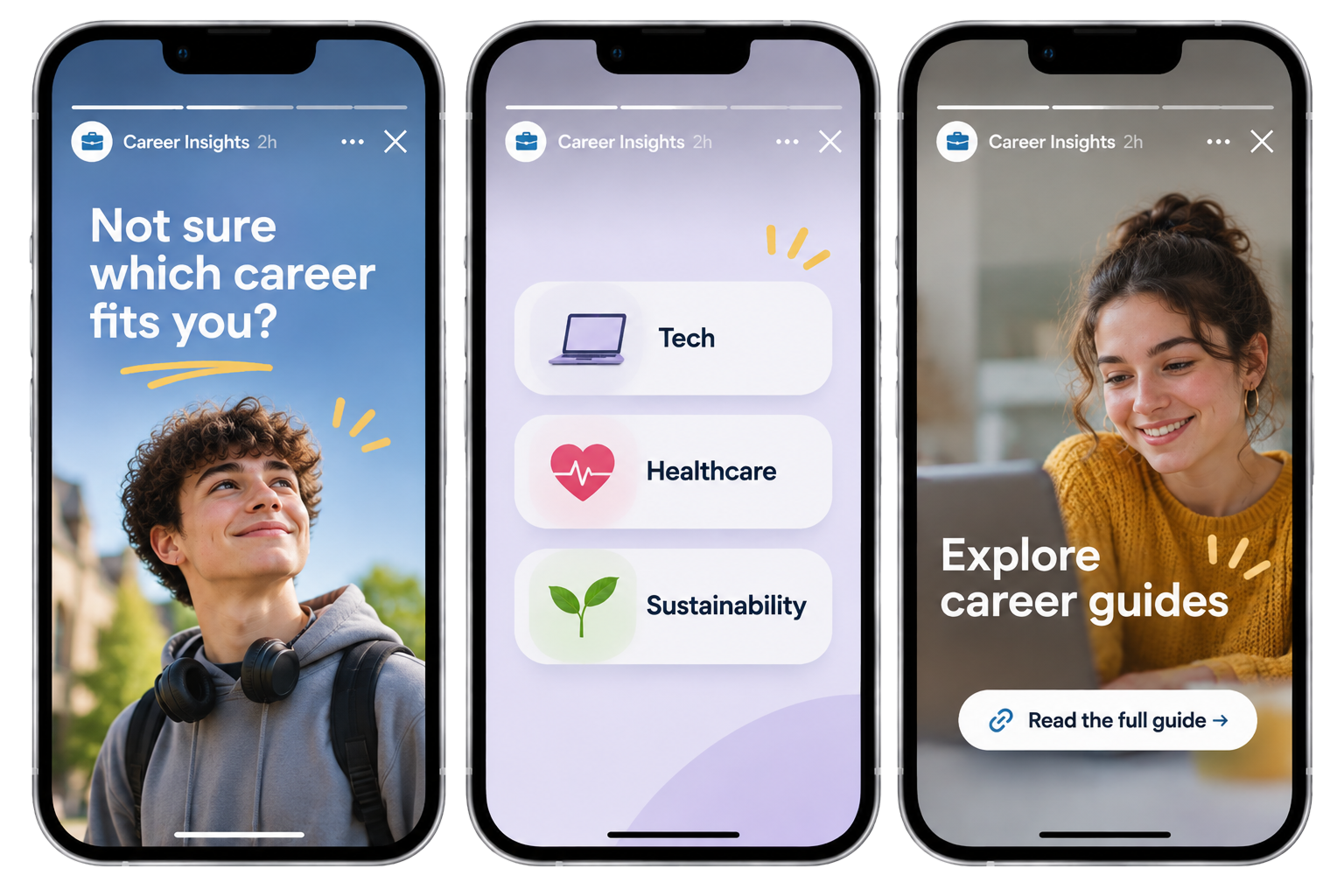
For students who already use Stories on social media, the format requires little introduction. Tap-based navigation and sequential content allow users to focus on the information rather than learning a new interface. This can be particularly useful for experiences built around discovery, such as exploring universities, career paths, or training opportunities.
Creating Opportunities for Interactive Learning
Beyond the implementation in this case study, education platforms can also use Stories to introduce polls, quizzes, and other interactive elements. For example, a career exploration platform might ask students about their interests and guide them toward relevant subjects or opportunities. A university could use a quiz to help prospective students understand different programs or introduce an interactive campus guide. These are additional ways education platforms can build on the Story format, rather than outcomes measured in this particular case.
What Other Education Platforms Can Learn From This Case Study
The experience offers practical lessons for education providers, universities, and edtech companies looking to improve how students discover and interact with content.
Understand How Your Audience Prefers to Learn and Explore
Before introducing a new content format, start with user research. Ask students how they prefer to discover information, which formats they find engaging, and what makes content easier to explore. The platform's finding that over one-third of users preferred Stories gave its team a clear reason to test the format.
Use Stories to Complement Existing Content
Detailed guides, articles, and educational resources remain important. Stories can help introduce those resources through short previews, key takeaways, and visual explanations. The goal should be to create additional entry points into existing content, not replace the information students need to make informed decisions.
Make Educational Content More Relatable
Students may respond to content that connects information with real experiences. Consider using Stories to highlight student perspectives, everyday university life, career journeys, and practical advice. This can help make unfamiliar opportunities easier to understand and explore.
Guide Students Toward the Next Step
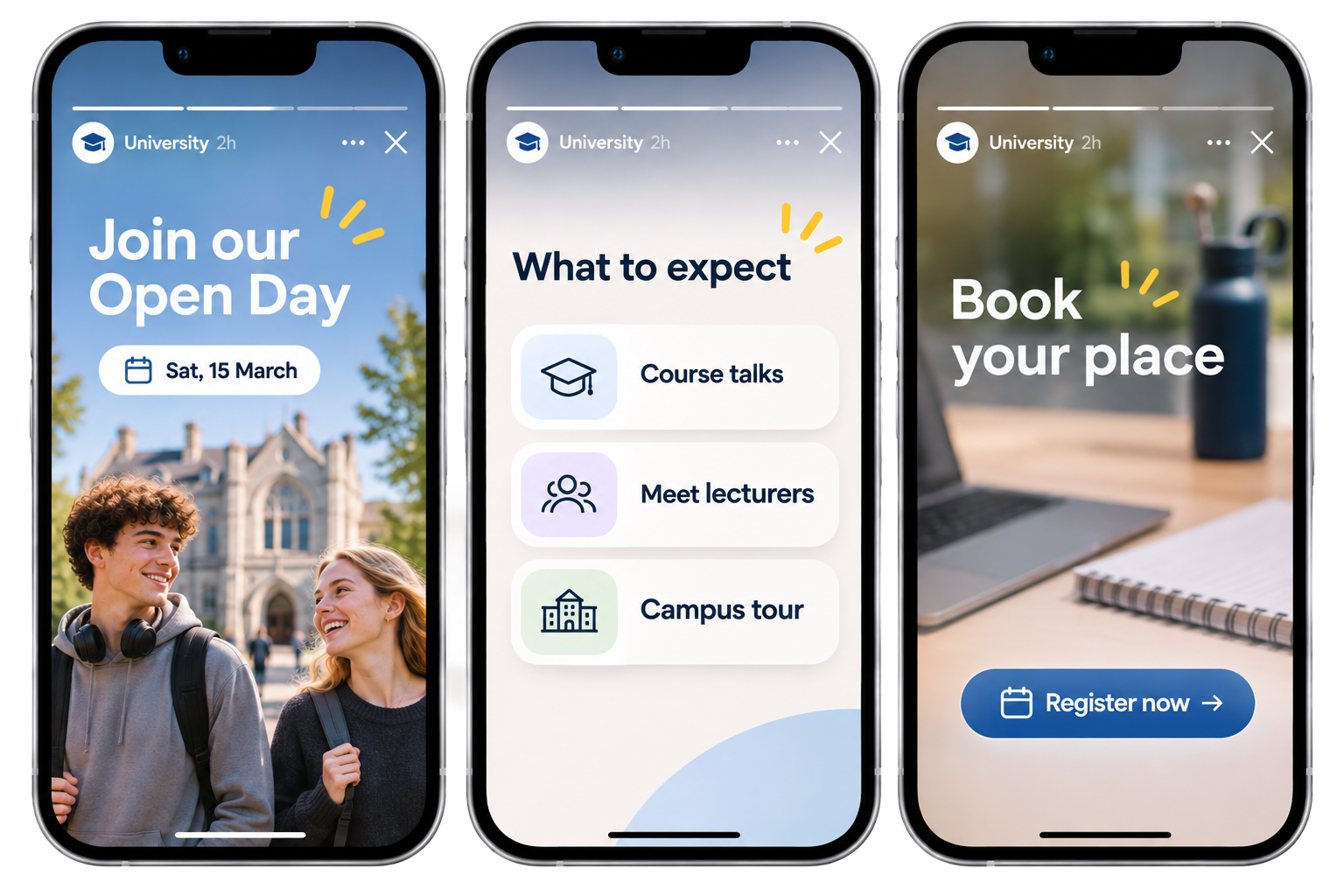
Stories work best when they support a clear user journey. After discovering a course, university, or career path, students should know where to go next. A Story might direct users to explore a program, compare options, register for an event, or learn more about an opportunity. The next step should be relevant to the information they've just viewed.
Measure Both Engagement and User Outcomes
Positive feedback is an encouraging starting point, but education platforms should also evaluate how Stories contribute to their wider goals. Useful metrics include:
- Story views and completion: Are students consuming the content?
- Click-through rate: Are they exploring additional educational resources?
- Content discovery: Are users finding relevant courses or opportunities?
- Registrations and applications: Do Story interactions contribute to important actions?
- User feedback: Do students find the format helpful and easy to use?
These metrics can help teams understand where Stories add value and how to improve the experience over time.
The Bigger Picture: Making Education More Accessible Through Better Content Experiences
Education platforms don't necessarily need to produce more content to create better experiences. They also need to consider how students discover and interact with the information already available. For this UK-based platform, audience research revealed a clear preference for familiar, mobile-native Stories. Introducing StorifyMe Web Stories helped the team respond to that preference and create an additional way for students to explore university options. The positive user feedback reinforced the value of adapting content delivery to audience expectations. The lesson for other education providers is straightforward: valuable educational content becomes easier to explore when it's presented in formats that match how students prefer to interact with information.
Key Takeaways
- Audience research should guide content decisions. More than one-third of the platform's users preferred Instagram-like Stories.
- Stories can complement long-form educational content. Short, visual introductions help students discover topics before exploring them in depth.
- Familiar formats can support content discovery. Tap-and-swipe navigation offers an intuitive way to explore educational information.
- Relatable storytelling matters. Student-focused content can make educational opportunities feel more accessible.
- Positive feedback supports further exploration. The platform received encouraging responses to Stories, although no quantitative engagement uplift was reported.
- Engagement should connect to meaningful outcomes. Education platforms can measure how Stories contribute to discovery, registrations, and other important user actions.
Bring Mobile-Native Stories to Your Education Platform
StorifyMe helps education and edtech platforms create interactive Stories for their websites and mobile apps. From student onboarding and course discovery to university information and interactive learning experiences, Stories offer a familiar way to guide users toward relevant content and actions.
Want to explore how Stories could work for your platform?
Discover StorifyMe Stories and see how mobile-native content can support more engaging digital experiences.