How Global Publishers Added 2 Minutes Per Visit and Grew Engagement with Mobile-Native Stories

Younger audiences haven't stopped consuming news. They've changed how they consume it.
For digital news publishers, this creates a challenge: how do you keep readers engaged when they're used to consuming content through Instagram Stories, TikTok, and YouTube Shorts? One digital news publisher took a different approach. Instead of relying only on traditional article formats, it introduced mobile-native Stories directly on its website, making news easier to discover, explore, and interact with.
Using StorifyMe, the publisher achieved two notable engagement results:
- 6–7% click-through rate on news Stories
- 2 additional minutes per session
These results show how introducing familiar, interactive content formats can help publishers keep readers engaged on their own platforms. Here's how the approach works and what other news and media companies can learn from it.
The Challenge: Engaging Readers Beyond Traditional News Formats
News publishers face increasing competition for audience attention. Readers can access breaking news, sports updates, entertainment, and trending topics without ever opening a news website. Social platforms deliver much of this content in short, visual formats that are easy to consume on mobile devices. For publishers, the challenge isn't simply producing more content. It's finding ways to make existing content more accessible and engaging, particularly for audiences accustomed to mobile-first experiences. Traditional news websites still rely heavily on article feeds, headlines, and text-based pages. While these formats remain essential for journalism, they don't always encourage readers to explore additional content.
A visitor might open an article, read it, and leave without discovering other relevant stories.
This creates several challenges for digital publishers:
- Encouraging readers to discover more content during a visit
- Increasing the time audiences spend on their websites
- Creating engaging experiences for mobile users
- Keeping audiences on owned platforms rather than relying entirely on social media distribution
The publisher saw an opportunity to address these challenges by introducing a content format readers already recognized.
The Solution: Bringing Mobile-Native Stories to a News Website
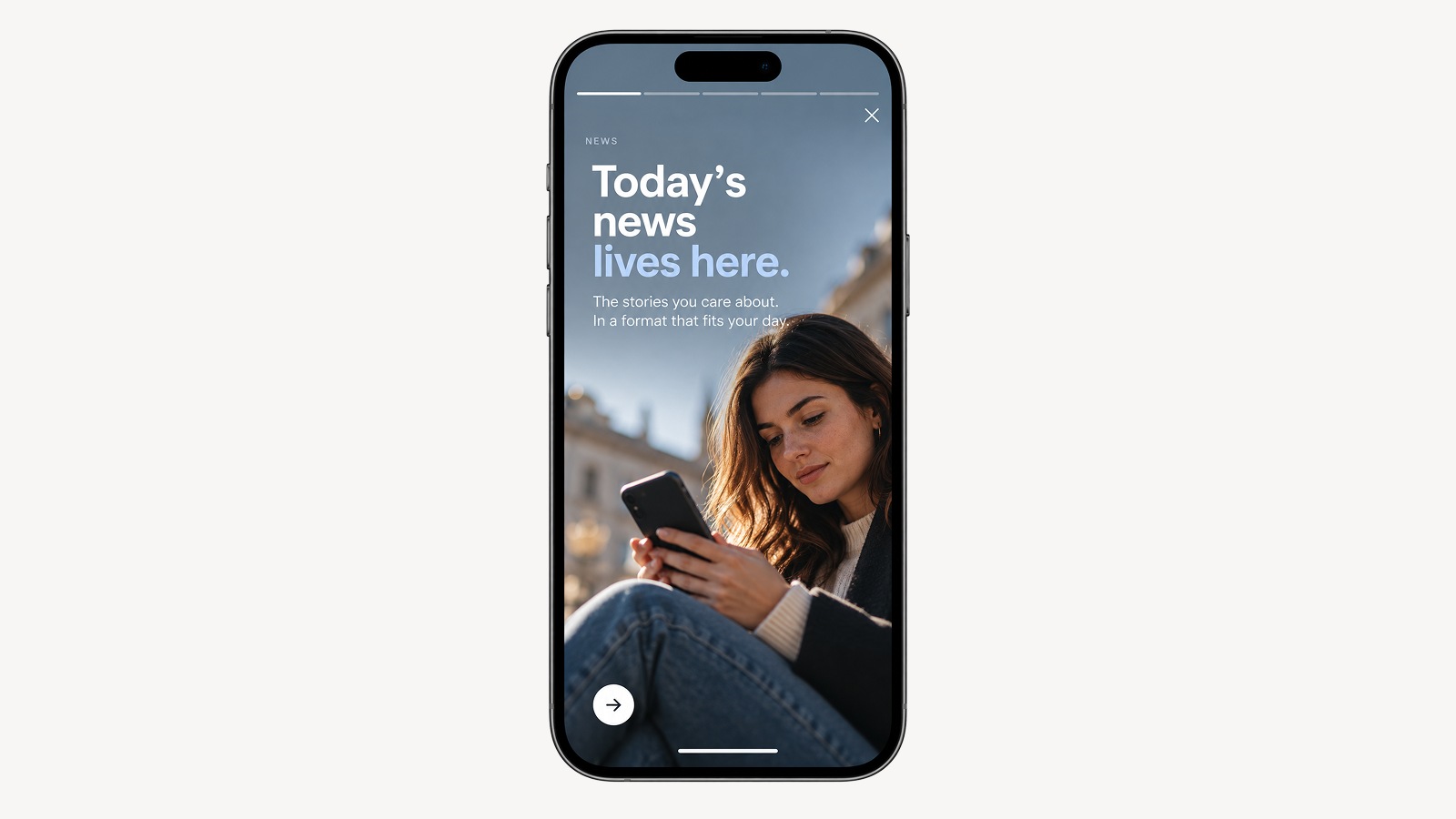
The publisher introduced StorifyMe Stories to make news content more visual, accessible, and interactive. Instead of requiring visitors to navigate exclusively through traditional article lists, Stories offered an additional way to discover and explore news. Readers could tap or swipe through short, vertical content and follow links to related articles when they wanted more information. The goal wasn't to replace traditional journalism. It was to create another entry point into the publisher's content.
Making News Easier to Discover
Stories provide a quick way to explore multiple news topics without opening each article individually. A reader can move through headlines, images, and short updates in a format that feels familiar from social media. For publishers, this creates additional opportunities to introduce audiences to relevant content. A visitor interested in one breaking news story might discover related coverage, another trending topic, or an article they otherwise wouldn't have opened.
The value: More opportunities for content discovery without requiring readers to change how they naturally interact with mobile content.
Creating a Familiar Mobile Experience
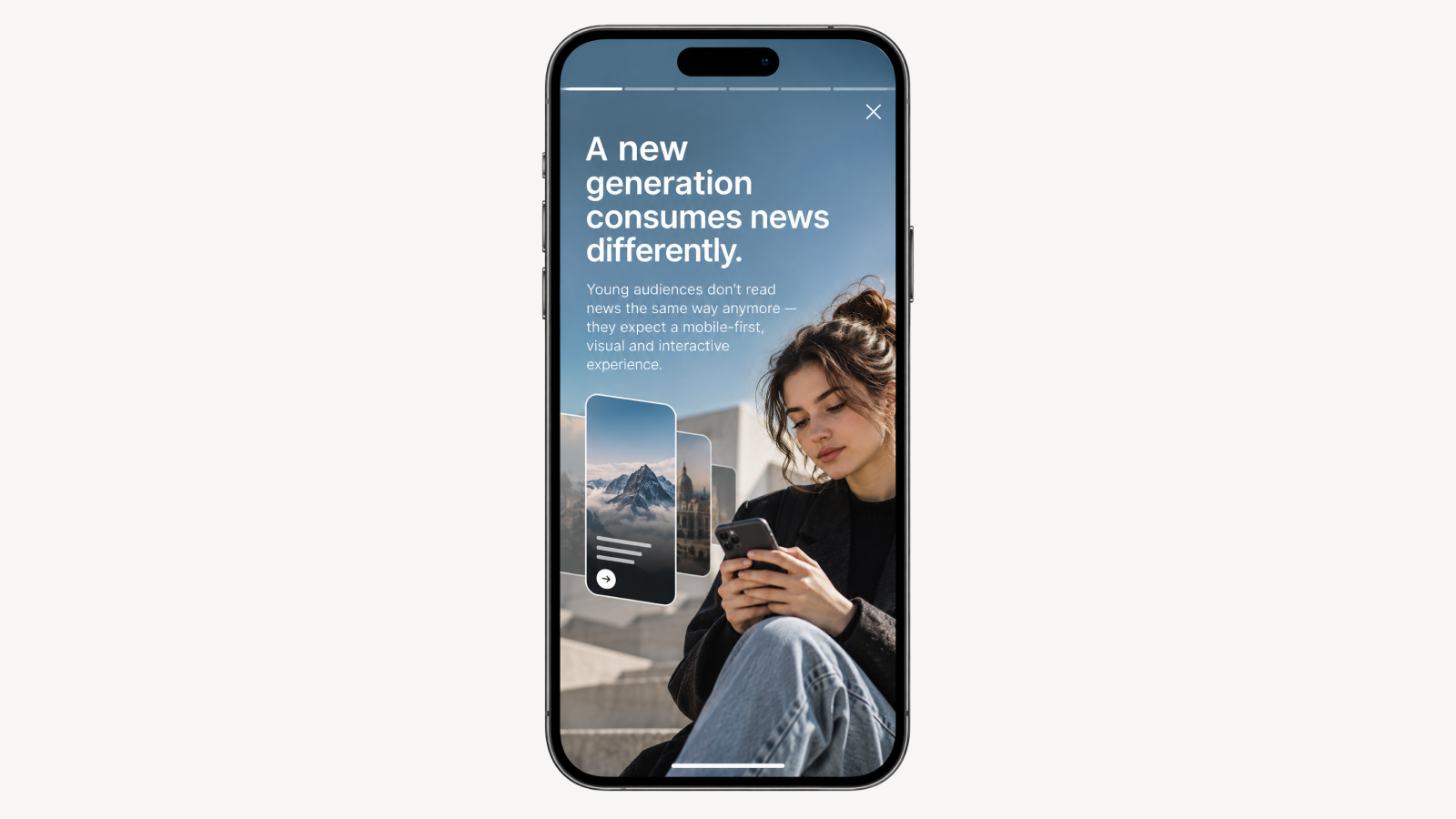
Vertical Stories use gestures audiences already know. Readers can tap to advance, swipe between content, and explore information at their own pace. This makes Stories particularly suitable for mobile news consumption, where users often want to understand what's happening before deciding whether to read an entire article. A short Story can introduce the key points of a news event, while a linked article provides the full coverage. The two formats work together rather than competing for attention.
The value: Readers get a quick, accessible introduction to news, while publishers retain opportunities to drive traffic to their editorial content.
Connecting Stories With Existing News Content
Stories are most useful when they help readers move naturally between content formats. For example, a publisher can use Stories to highlight:
- Breaking news and developing events
- Top stories of the day
- Sports results and match highlights
- Entertainment and lifestyle updates
- Related articles and in-depth coverage
Each Story can include a call to action that directs interested readers to the full article. This gives publishers another way to promote editorial content and guide audiences toward relevant information.
The value: Stories become an additional content-discovery channel within the publisher's website rather than an isolated experience.
Supporting Engagement Across Devices
News consumption doesn't happen exclusively on smartphones. Readers move between mobile browsers, desktop websites, and apps throughout the day. StorifyMe supports Stories across web and mobile environments, allowing publishers to bring familiar content experiences to different digital touchpoints. For editorial teams, this means Stories can form part of a broader content engagement strategy rather than being limited to a single channel.
The value: Publishers can offer consistent, mobile-native content experiences across their owned digital platforms.
The Results: Higher Click-Through Rates and Longer Sessions
The implementation demonstrated how mobile-native Stories can contribute to stronger reader engagement.
Key engagement results
- Click-through rate on news Stories 6–7%
- Additional time per session +2 minutes
6–7% Click-Through Rate on News Stories
The publisher achieved a 6–7% click-through rate on news content presented through Stories. This indicates that Stories weren't simply another format for displaying headlines. They encouraged readers to take the next step and explore related content. For digital publishers, this matters because content discovery plays an important role in audience engagement. When readers move from a short Story to a full article, publishers gain another opportunity to deepen the relationship with their audience. The result demonstrates the potential of Stories as a format for directing readers toward editorial content.
Two Additional Minutes per Session
The publisher also recorded an increase of two minutes in session duration. For a news website, additional engagement time creates more opportunities for visitors to explore content, discover related articles, and interact with the platform. Longer sessions can also support broader publishing objectives, including increasing exposure to advertising placements and introducing readers to subscription content. /These potential commercial benefits depend on how a publisher structures its website, content strategy, and monetization model. The important takeaway is that Stories helped create a more engaging browsing experience, giving readers reasons to spend more time with the publisher's content.
Why Mobile-Native Stories Work for News Publishers
The value of Stories goes beyond their visual format. They help publishers connect traditional editorial content with the way audiences increasingly consume information on digital platforms.
They Make Content Discovery More Natural
Readers don't always arrive on a news website knowing exactly what they want to read. Stories offer a way to browse topics, discover headlines, and move between content without repeatedly returning to a traditional article feed. This can make the experience more intuitive, particularly on mobile devices.
They Connect Short-Form Content With In-Depth Journalism
Short-form content and traditional journalism serve different purposes. A Story can introduce a topic, summarize an update, or highlight an important moment. An article can provide the full context, reporting, analysis, and detail. By connecting the two, publishers can serve different reading preferences without compromising the depth of their editorial content.
They Create More Opportunities for Reader Engagement
Stories can do more than present news. Publishers can introduce interactive elements such as polls, quizzes, reactions, and calls to action to encourage participation. For example, a sports publisher might invite readers to vote on a match outcome, while a general news website could use a quiz to help audiences explore a complex topic. These interactions create opportunities for audiences to participate rather than only consume information.
They Help Publishers Strengthen Their Owned Channels
Social media remains an important distribution channel for news organizations, but it doesn't give publishers full control over how audiences discover and engage with their content. Bringing familiar formats directly to a website or app helps publishers build engagement within their own digital environment. Readers can enjoy the convenience of Stories while staying connected to the publisher's content, subscriptions, and other services.
What Other News Publishers Can Learn From This Case Study
The results offer practical lessons for publishers looking to improve reader engagement without fundamentally changing their existing content strategy.
Start With Content That Readers Already Follow
Breaking news, trending topics, sports updates, and daily news summaries are natural starting points for Stories. These topics already attract audience interest and can be presented in short, easy-to-follow formats. A five-slide summary of a developing news event, for example, can introduce the key information and direct readers to the full article.
Use Stories to Support Article Discovery
Rather than treating Stories as a replacement for articles, use them to guide readers toward existing editorial content. A short preview, a compelling visual, and a clear call to action can encourage visitors to explore topics in greater depth. The goal is to make it easier for readers to find relevant information.
Place Stories Where Readers Already Spend Time
Consider introducing Stories on homepage feeds, category pages, or alongside relevant articles. The right placement depends on the publisher's audience behavior and website structure. Testing different placements can help identify where Stories contribute most effectively to content discovery and engagement.
Measure Meaningful Engagement Metrics
Story views are useful, but they don't tell the full story. Publishers should also evaluate how Stories influence the wider reading experience. Important metrics include:
- Story click-through rate: Are readers moving from Stories to related articles?
- Session duration: Are visitors spending more time on the website?
- Story completion rate: Are audiences viewing Stories through to the end?
- Content discovery: Are readers exploring additional articles?
- Conversions: Do Story interactions contribute to subscriptions, registrations, or other business goals?
Together, these metrics provide a more complete picture of how Stories contribute to audience engagement.
Build on Existing Editorial Workflows
Introducing a new content format shouldn't require publishers to rebuild their entire content production process. Stories can complement existing editorial workflows by repurposing headlines, images, videos, and article summaries into a format designed for mobile consumption. With reusable templates and consistent branding, editorial teams can create recognizable Story experiences while keeping content aligned with the publisher's identity.
Beyond Engagement: The Business Value of Stories
For news and media companies, increasing reader engagement is an important step toward broader business objectives. A more engaging content experience can create opportunities to improve several areas of digital publishing.
Content consumption: Stories help readers discover additional articles, topics, and updates.
Audience retention: Familiar, easy-to-use content formats can give visitors more reasons to interact with a publisher's website or app.
Subscriptions: Stories can introduce premium content, highlight subscription benefits, and guide interested readers toward registration or subscription pages.
Advertising and monetization: Publishers can explore sponsored Stories, branded content, and advertising placements within mobile-native experiences.
These opportunities extend the value of Stories beyond content presentation. While the results in this case study specifically demonstrate improvements in click-through rate and session duration, they also show why engagement-focused formats deserve a place in a publisher's broader digital strategy.
The Bigger Picture: Bringing Modern Content Experiences to Owned Platforms
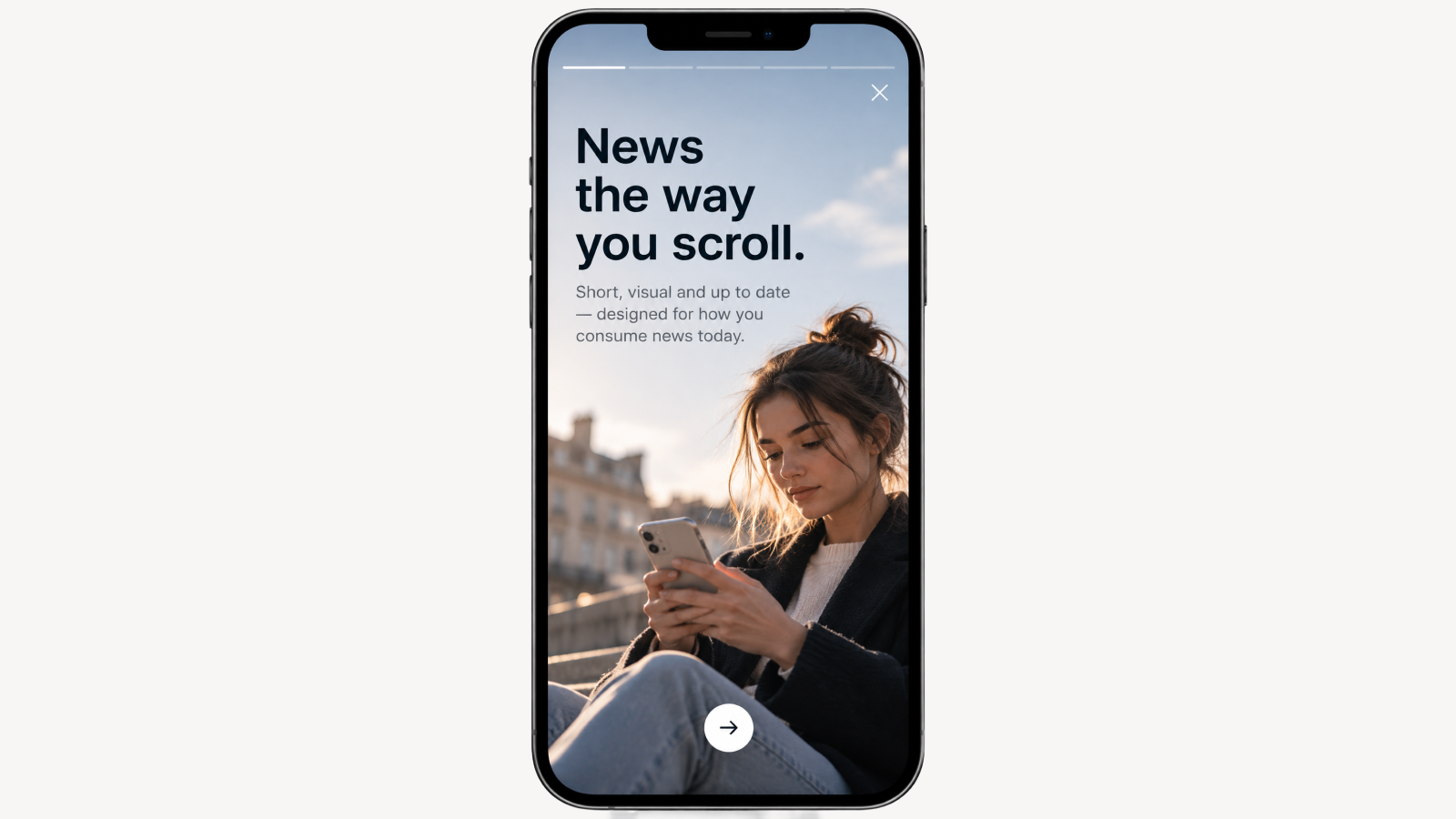
News publishers don't have to choose between traditional editorial content and the formats audiences enjoy on social media. Both can work together. Articles continue to provide the depth and credibility readers expect from professional journalism. Stories introduce an additional way to discover that content through short, visual, and familiar experiences. For the publisher in this case study, that approach delivered measurable results: a 6–7% click-through rate on news Stories and two additional minutes per session.
The lesson for other media companies is straightforward.
Improving reader engagement doesn't always require producing more content. Sometimes, making existing content easier to discover and explore can make a meaningful difference. By introducing mobile-native Stories on their own websites and apps, publishers can create more engaging experiences while maintaining control over their content and audience relationships.
Key Takeaways
- Mobile-native Stories can improve news discovery. Familiar vertical formats help readers explore content quickly and naturally.
- A 6–7% CTR demonstrates active engagement. The publisher's Stories encouraged readers to click through to related news content.
- Longer sessions create additional opportunities. Two more minutes per session give audiences more time to discover and interact with editorial content.
- Stories complement traditional journalism. Short-form previews can lead readers toward detailed reporting rather than replacing it.
- Owned-platform engagement matters. Bringing familiar formats to websites and apps helps publishers build direct relationships with their audiences.
Bring Mobile-Native Stories to Your News Website
StorifyMe helps news and media publishers turn existing content into interactive Stories and vertical video experiences for their websites and apps. From breaking news and daily briefings to interactive content and advertising opportunities, publishers can create new ways for audiences to discover, engage with, and explore their content.
Want to see how Stories could work for your news platform?
Book a demo and explore how StorifyMe can help you increase reader engagement and make more of your existing content.