How Sports Apps Use Stories to Drive Daily Habit Formation on Match Days

For a sports fan, match day is something special. From the moment they get up in the morning, they have a clear goal for the day, and everything else is secondary. The chores, the work, the obligations... All are simple distractions that you need to go through before you get to the important part. The game. Mind you, it is all the rituals, anticipation, and preparations that make this day what it is. The early alarm so that you don't miss a thing, the jersey getting pulled from the closet, and the group chat started pinging before breakfast. All this plays a role. Add to this a sense of community that sports fans share with their friends, and you get a pretty good notion of what makes match day special. Well, sports apps have learned how to make themselves a part of the match day, using stories as their primary tool. And they did this by understanding the sports fan psychology and by knowing how to leverage their habits.
What is habit formation in the context of sports apps?
Depending on the sport, match days usually happen multiple times per year. As such, it is quite customary for fans to develop certain habits that they might or might not be aware of. One thing is for certain: sports brands are aware of these habits. And those that leverage Story content have a deep understanding of what habits are and how they are formed.
In psychological terms, a habit is a behavior loop. It has three parts: a cue, a routine, and a reward. On match days, the cue already exists naturally. The game is happening. Fans are excited. The emotional stakes are high. Sports brands that understand this don't need to manufacture urgency. They simply need to insert themselves into an existing ritual at the right moment.
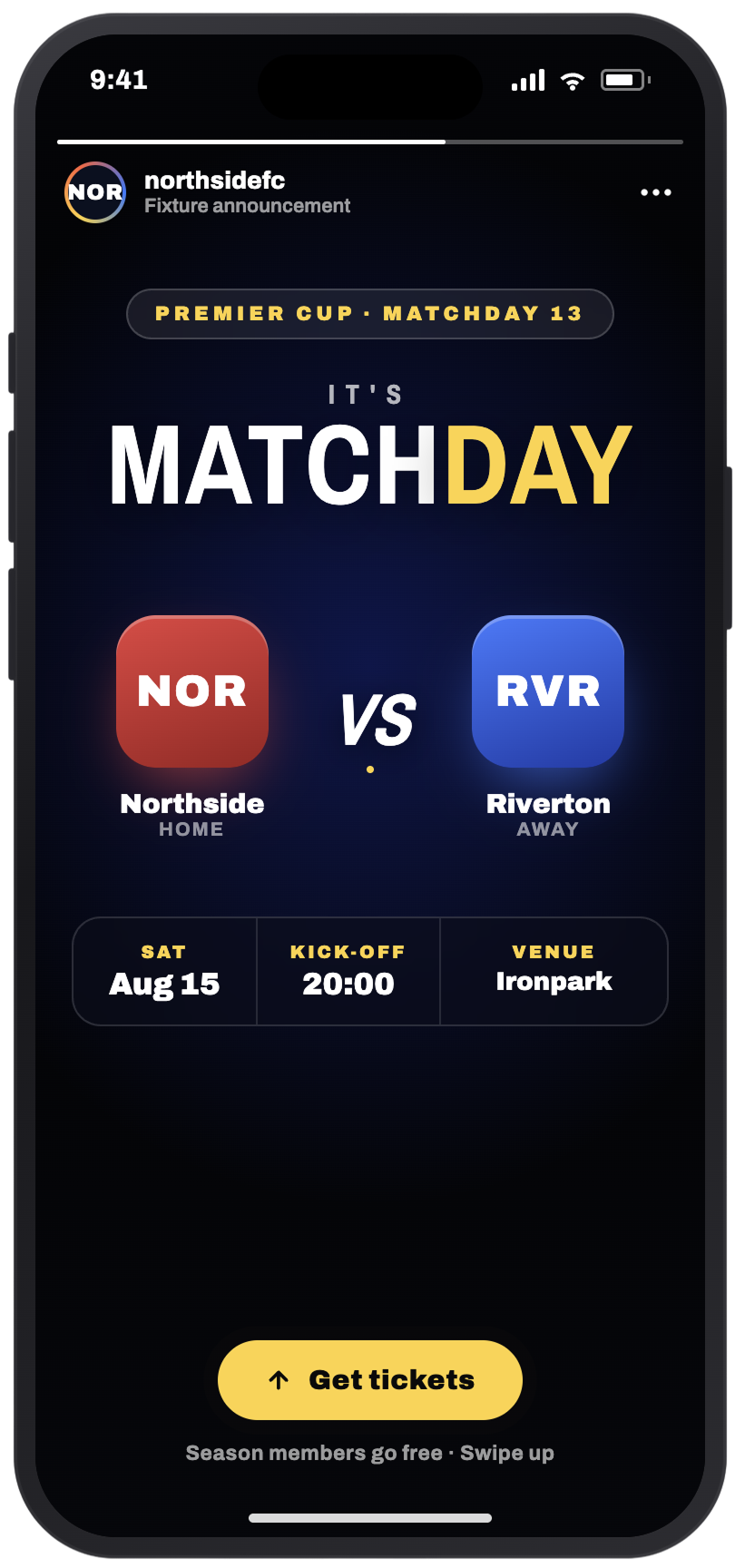
Stories (visual, swipeable, mobile-native content) are the perfect vehicle for that insertion. The question is no longer whether fans will check their phones on match day. That is a given. The question is whether your app is the one they open first.
The psychology behind match day behavior
A big part of sports fandom is social. Research in social identity theory shows that fans don't just support a team, but identify with it. A win is "we won." A loss is "we were robbed." This isn't casual language. It reflects genuine psychological identification.
On match days, this identity activation peaks. Cortisol and dopamine both spike. Fans become hyper-alert to any information about their team. They seek confirmation, analysis, drama, and community.
For a sports brand, this is a state of extreme content receptivity. And, luckily, it happens on a predictable schedule. Sports brands understand this and use Story content to great success. They publish content calibrated to the fan's emotional state at each phase of the match day: the buildup, the live event, and the aftermath. Each phase has a different psychological tone. Each requires a different type of story.
The inherent need to follow sports as a group
Humans are social animals. We have always gathered to watch competitions together, from ancient arenas to modern stadiums. We did this because the group experience amplifies individual emotion. Fear becomes shared tension. Joy becomes collective euphoria.
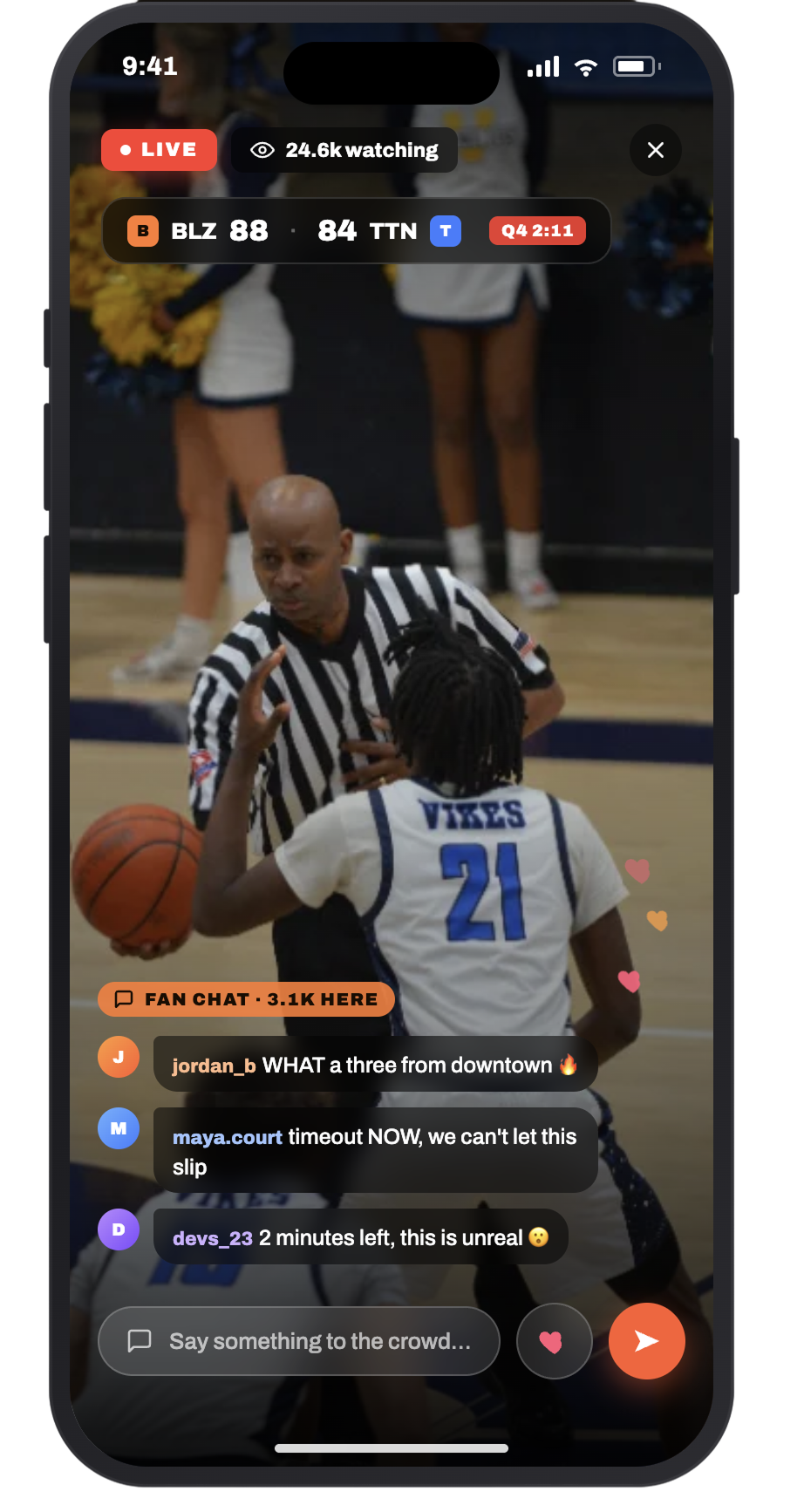
If utilized properly, Story content can digitally replicate this dynamic. A fan watching alone at home still wants to know that thousands of others are feeling the same thing. And what better way to do so than to check the Story feed in a sports app and discuss what is going on.
A well-designed match day Story doesn't just deliver information. It says: "Right now, this is what your tribe is talking about." That framing is psychologically powerful. It satisfies the need for collective experience even through a screen. This is why sports platforms that build community into their mobile content consistently outperform those that treat stories as simple broadcasting tools.
How Stories map to the match day
Stories aren't simply about discussing the match as it unfolds. Yes, people will enjoy elaborating on plays, discussing possible outcomes, and arguing about whether the judge was right. But, this can pretty much be done with live chat. The real crux of the Story content is in following the vibe of the match day and hyping people along.
The pre-match buildup
The hours before a match are emotionally charged. Fans are anxious, excited, and seeking tribal bonding. They want predictions, lineup news, and tactical analysis. Above all, they want to feel connected to other fans who share their investment. This is where pre-match story content earns its keep. A well-timed story series, including lineup reveals, last-minute injury updates, and head-to-head statistics, transforms passive fans into active participants. Add a poll ("Who scores first?") and passive consumption becomes shared prediction.
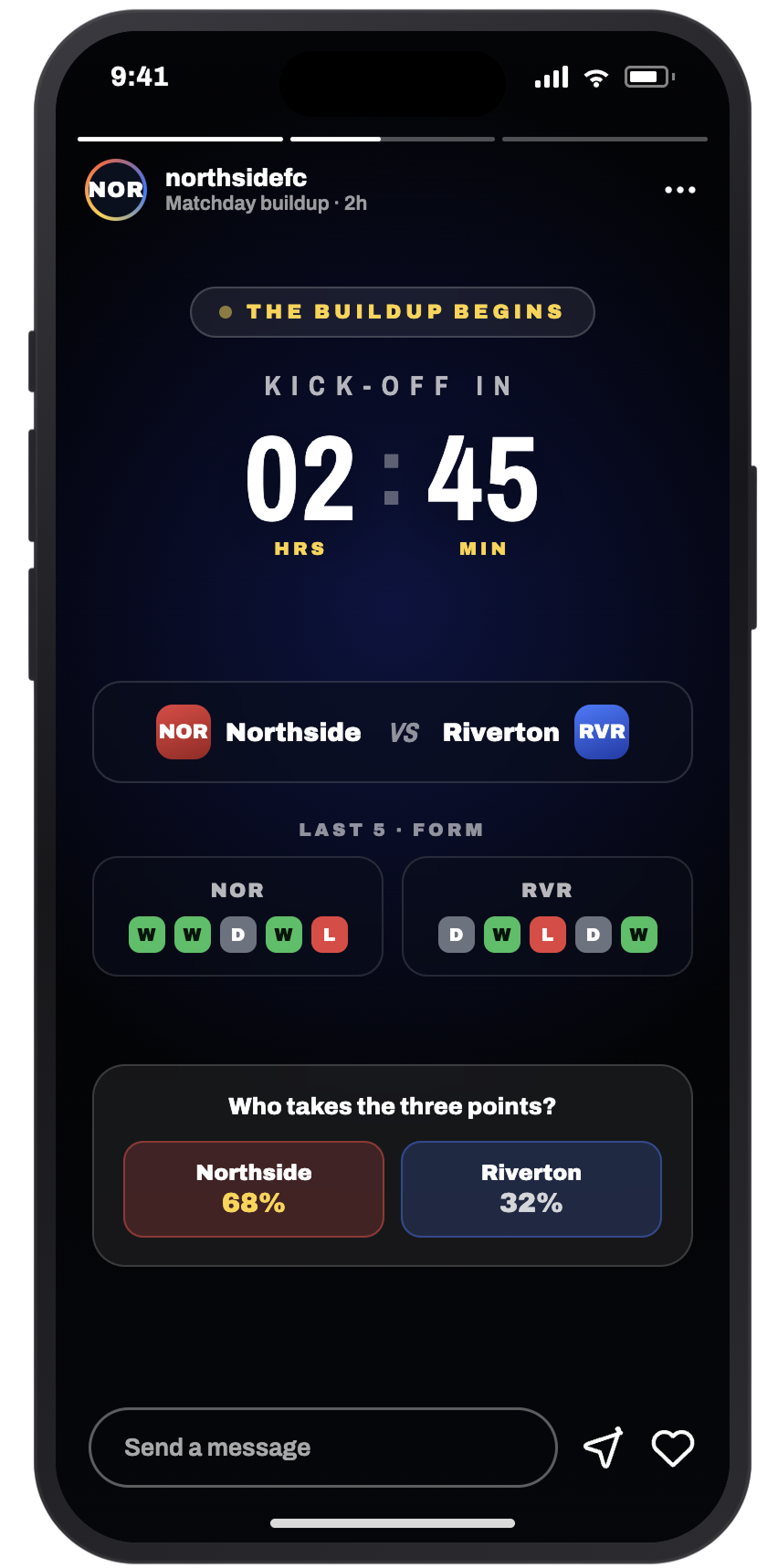
The goal is to stir discussions. Polls and quizzes embedded in pre-match stories do wonders here. They generate first-party data about audience preferences. But more critically, they generate community commitment. When a fan goes on record predicting a 2-1 win, they are now emotionally invested in that prediction. They will return to check back, which is exactly what you want. This is the habit loop beginning to form. The cue (match approaching) triggers the routine (open app, check story), which delivers the reward (information + community).
Live coverage
No content format handles live sports as naturally as stories do. Articles are static. Social media is noisy and fragmented. TV and live feeds require your full attention. Stories, by contrast, are noncommittal and easy to update. Everything that happens in a match can be elaborated on by Story content. They create a living, evolving narrative in real time, which doesn't force you to commit. It just sits there as a fellow companion that helps you enjoy the match that much more.
During a live match, sports apps can push new story cards continuously. A goal scored becomes a story card with the player's stats. A controversial refereeing decision becomes a poll: "Was that a foul?" A momentum shift is captured in a sharp visual with animated data overlay. In effect, each update extends the habit loop. The fan is pulled back, again and again, because each check delivers something new. The app becomes the second screen of choice. A companion rather than a competitor to the TV broadcast.
This real-time intimacy is what separates stories from traditional sports journalism. An article about a match written after the final whistle serves a different psychological need than a live story updated every few minutes. Both have value. But only the live story drives habit.
Post-match debrief
The final whistle doesn't end the fan's emotional engagement. It redirects it. Win or lose, fans enter the debrief phase. They want reaction, analysis, and, crucially, communal processing of what just happened. This makes the post-match period the peak moment for community content. A single Story asking "What was the turning point?" can generate thousands of responses. Locker room footage, manager quotes, and player ratings all serve the fan's need to dissect and relive the event.
Keep in mind that there is something more subtle happening here. Post-match story engagement is also habit reinforcement. Fans who engage deeply after a match are building a behavioral pattern. Next match day, the urge to repeat that experience will be stronger. Sports apps that excel at post-match stories are training their users, in the best possible sense, to return time and time again.
Why the Story format specifically drives habit
It is by no means an accident that Story content became the go-to option for sports brands. Their mobile-friendly design, serialized nature, and interactivity all played a role in driving the usefulness and popularity of story content to the top.
Joining the fans with a mobile-friendly design
Fans don't sit at desks to follow match days. They're on the couch, in the stadium, in the pub, on the commute home. Mobile is the default device. Stories are the default format for mobile content. Also, notice that the full-screen, swipeable interface of stories removes friction. There's nothing to navigate. No pop-ups. No cluttered sidebars. Just the content, immersive and immediate. This frictionless experience is critical for habit formation. Friction kills habits. Ease builds them.
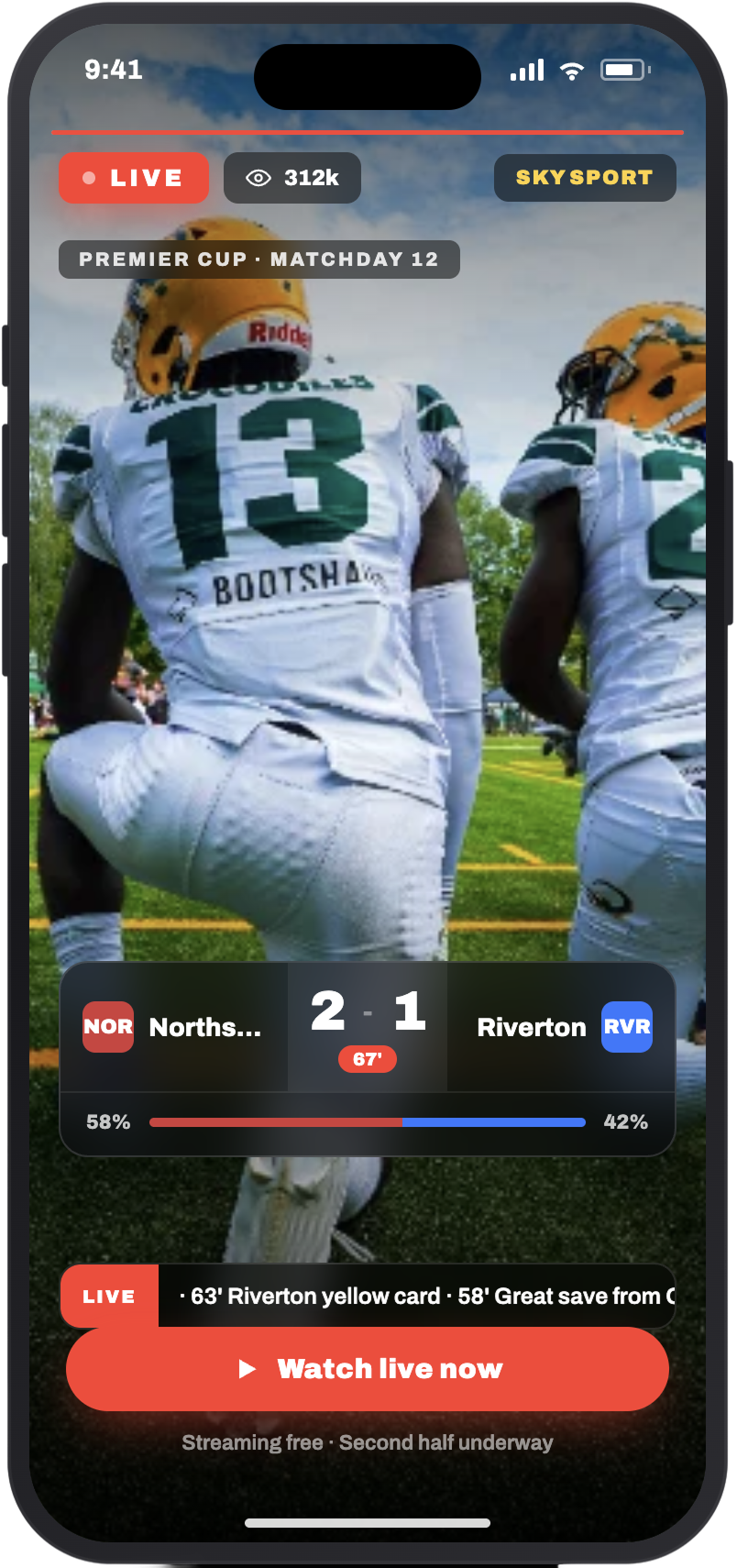
Stories are inherently episodic. They create anticipation through structure. If a fan engages with a pre-match story, they naturally want the half-time story. If they saw the half-time story, they come back for the full-time reaction. This serialization is not accidental. Sports platforms that think in story arcs (not mere individual posts) train users to follow narrative threads. And narrative threads create return visits. A user who returns three times on match day is building a habit. A user who does it across ten match days has formed one.
Interactive elements transform consumption into participation
By now, it has been established that passive consumption doesn't build habits. Participation does, and the distinction matters enormously. A fan who reads a match report stays passive. A fan who votes in a poll, submits a prediction, or reacts to a goal highlight has participated. They have contributed to a shared experience.
Stories excel at embedding participation directly into content. Polls, quizzes, emoji reactions, and even live chats can be integrated within the story frame itself. There is no detour to a separate community forum. The community interaction happens inside the content experience, in real time. As you can imagine, this is a significant design advantage. With other types of content, community features are often treated as add-ons. They are placed below the content, after the content, or in separate tabs. Stories eliminate that separation entirely. The community layer lives inside the story itself.
What sports apps get right and what they still miss
Using Story content within sports apps is by no means a new thing. For years, brands leveraged them to drive subscriptions, maintain retention, and offer content. Well, even though a lot of brands use Story content in their apps, not all are equally sucessful. Those who understood the unique advantages of Story content and how to leverage them when it comes to sports fans found great success. Others not so much.
The timing advantage
The best sports apps have learned to align story publishing with the natural rhythms of fan emotion. They don't push content on Tuesday about the upcoming Saturday fixture and then go quiet on match day itself. They understand the emotional arc and publish accordingly. This timing precision is where stories genuinely outperform traditional content formats. An article published on the evening of the match day lands differently than one published tomorrow morning. A story published at the exact moment a controversial decision is made captures the emotional peak of fan response. The apps that get this right are building the strongest habit loops. They are becoming indispensable parts of the match-day ritual.
Treating all Stories as repurposed articles
Don't get us wrong. Story content can be an awesome way to repurpose some of your articles. And articles still have a role to play in modern content marketing. But, seeing that a lot of brands have prior experience with articles, it is by no means a surprise that they take a similar mindset when creating Stories. This is a mistake. Stories are not condensed articles. A story that simply replicates the structure of a written match report misses everything that makes the format powerful. The visual hierarchy, the swipeable progression, the interactive elements, the real-time update capability... None of these is being used.
Effective match day Story content is mobile-friendly. It uses bold visuals to convey emotion before a word is read. It deploys short, punchy text overlays that land before the next swipe. It embeds participation at the moment of maximum engagement.
The gap between app presence and Story strategy
Many sports apps have built excellent apps. The design is top-notch, the technology is solid, and the interface is user-friendly. Unfortunately, none of this guarantees that their in-app Stories will perform well. What makes this possible is a good story strategy, which is precisely what most brands lack.
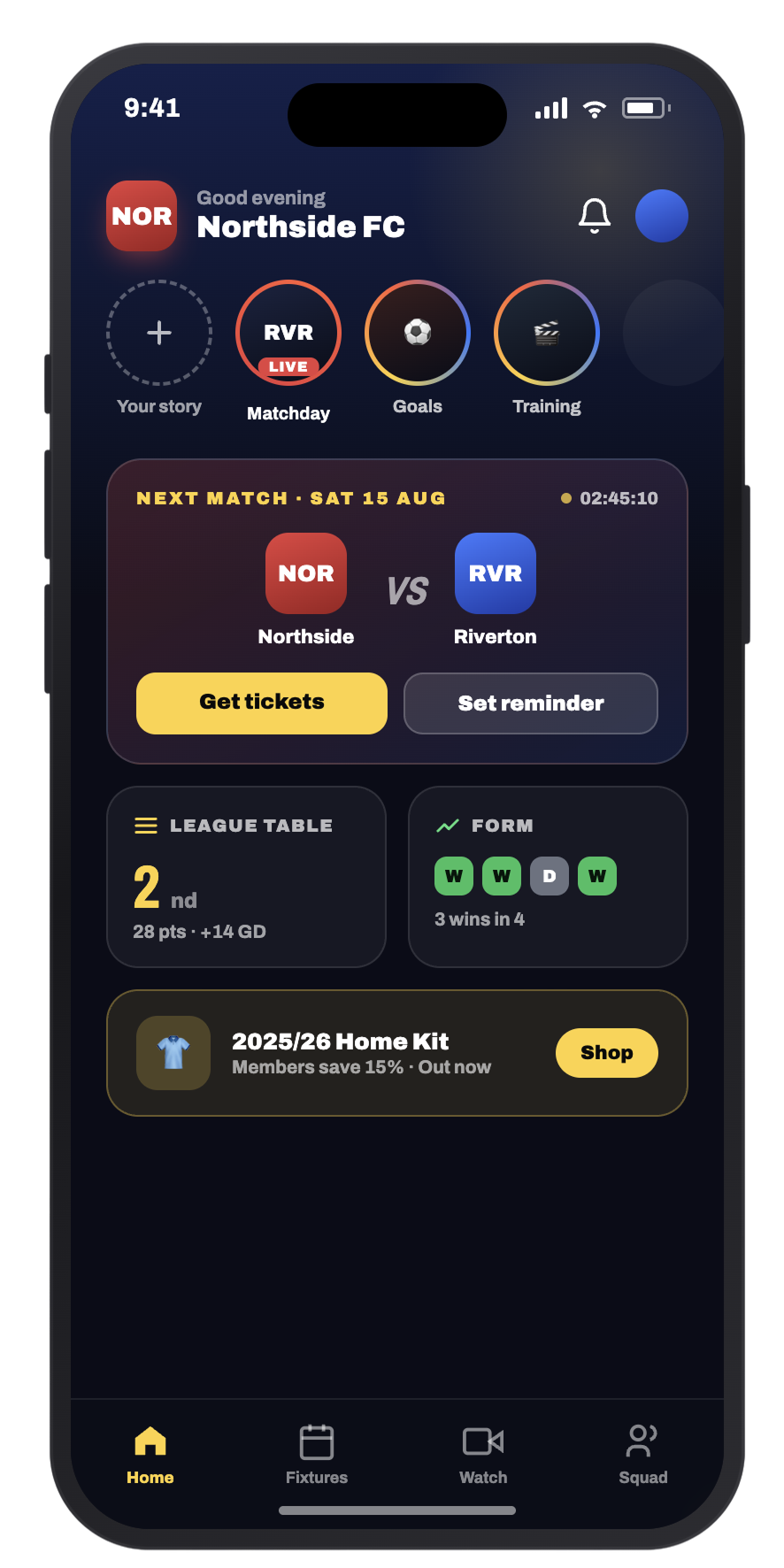
In most cases, story strategy remains reactive rather than designed. Stories are published because something happened, not because of a deliberate editorial arc tied to fan habit formation. This can only yield mediocre results, as Stories need to be instigators of further conversations, not just reactions to what is going on. The platforms that will win the next phase of sports media are those that think about stories the way serialized television thinks about episodes. Each story is part of a larger narrative. The narrative creates anticipation. Anticipation creates habit. Habit creates loyalty.
Final thoughts
Match day is one of the most psychologically primed moments in sports fans' behavior. They are emotionally activated, socially oriented, and intensely receptive. They are seeking information, community, and shared experience simultaneously. As such, a sports brand would be a fool not to make the most out of it.
Sports apps that use stories effectively are meeting all three needs at once. They are placing themselves inside the fan's match day ritual at every emotional peak. And they manage to do so because they are interactive, social, and up to date. The key thing is that brands that rely on Stories are building habits. The story format aligns almost perfectly with the psychology of sports fandom. It is visual, immediate, serial, and social. It creates participation rather than consumption. And delivers community within content rather than alongside it. The apps that understand this aren't just publishing match day content. They are shaping match day behavior. And that is where real audience loyalty is built.