How Story Ads Improve Viewability & Attention
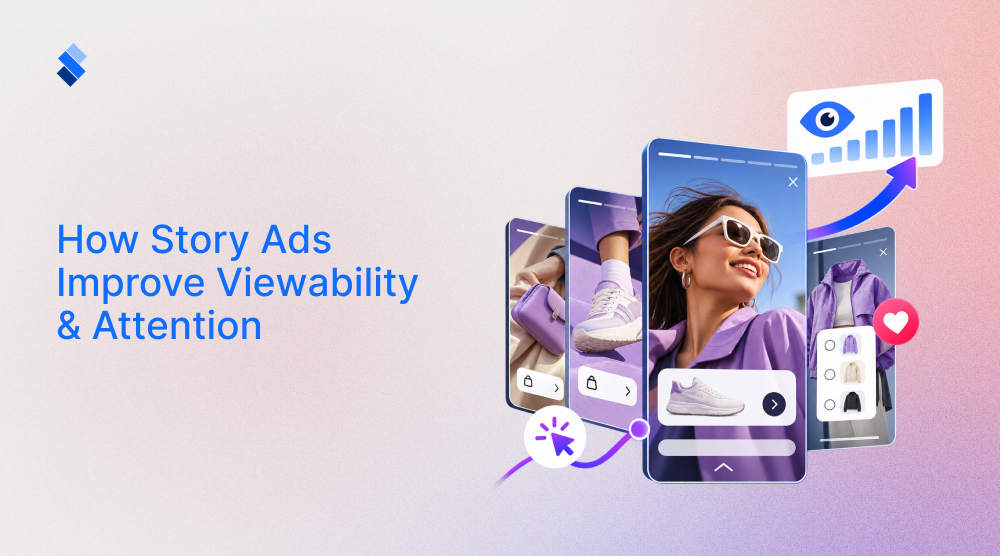
It has been well established that Story content outperforms standard content, at least when it comes to first impressions. Due to its design, it manages to leverage certain visual and UX principles that make it shine. But while this is well understood in theory, it is not uncommon for brands to underperform in practise. More than a few brands have dealt with Story ads specifically, and while they've seen some success, it didn't really translate into revenue. Why does this happen? If you really want to understand Story ads, you need to delve deeper. Firstly, you need to understand that viewability & attention aren't the same thing, and that tackling them requires a deeper understanding of both digital design and basic marketing psychology.
The overlooked difference between attention and viewability
A common mistake is to use these two terms interchangeably, since they encompass different things. Viewability is a measurement standard. It tells you whether an ad met a technical threshold for visibility. Attention is a behavioral and cognitive outcome. It tells you whether a person actually processed what they saw.

An ad can be 100% viewable and still receive close to zero attention. Think of a banner that loads fully into view while a user is reading the paragraph next to it. Fully visible, fully ignored. This is precisely why the advertising industry has started paying attention to both viewability and attention. What they've found is that Story ads outperform banners on both fronts, especially when they are well-made.
Eye-tracking research backs the format up
Not so long ago, it was essentially impossible to properly track attention. This is why beginners thought that attention and viewership are the same thing. And more experienced content managers measured conversion rates or dwell time as more reliable metrics. Luckily, we no longer have to make such inaccurate guesses about attention.
Nowadays, we have attention measurement companies that run eye-tracking studies across ad formats. What's important for us is that they have consistently found that full-screen, vertical formats capture longer and more concentrated gaze time than embedded units surrounded by competing content. The reasoning is based on basic visual psychology. When there's only one thing on screen, there's only one thing to look at. Split-attention environments, by contrast, force the eye to constantly go from one thing to another and prioritize what is worth focusing on. In that process, ads almost always lose.
This doesn't mean every Story ad automatically earns deep engagement. A poorly designed Story with a wall of text and no visual hierarchy will still lose attention. But the potential for grabbing and maintaining attention is higher in Story ads than any other type of commercial content.
What viewability actually measures (and why most formats fail it)
On its surface, it seems like a simple concept. The IAB's (Interactive Advertising Bureau) baseline standard requires that at least 50% of an ad's pixels be in view for a minimum of one second for display, or two seconds for video. Sounds reasonable enough. But, in practise, a huge share of digital ads don't meet that standard.
An ad that you shove into viewers' faces will not only be ignored, but will likely annoy the viewer into leaving the page. If you stack ads at the bottom of a long-scrolling page, you can pretty much assume that they'll go unseen. Sidebar units kind of make sense, since they sit in the middle. But users have trained themselves to ignore them, along with other ads. A phenomenon researchers call banner blindness. Even mid-roll video ads, which technically play in full, often run while a user has looked away or muted the sound entirely. So, what can you do?
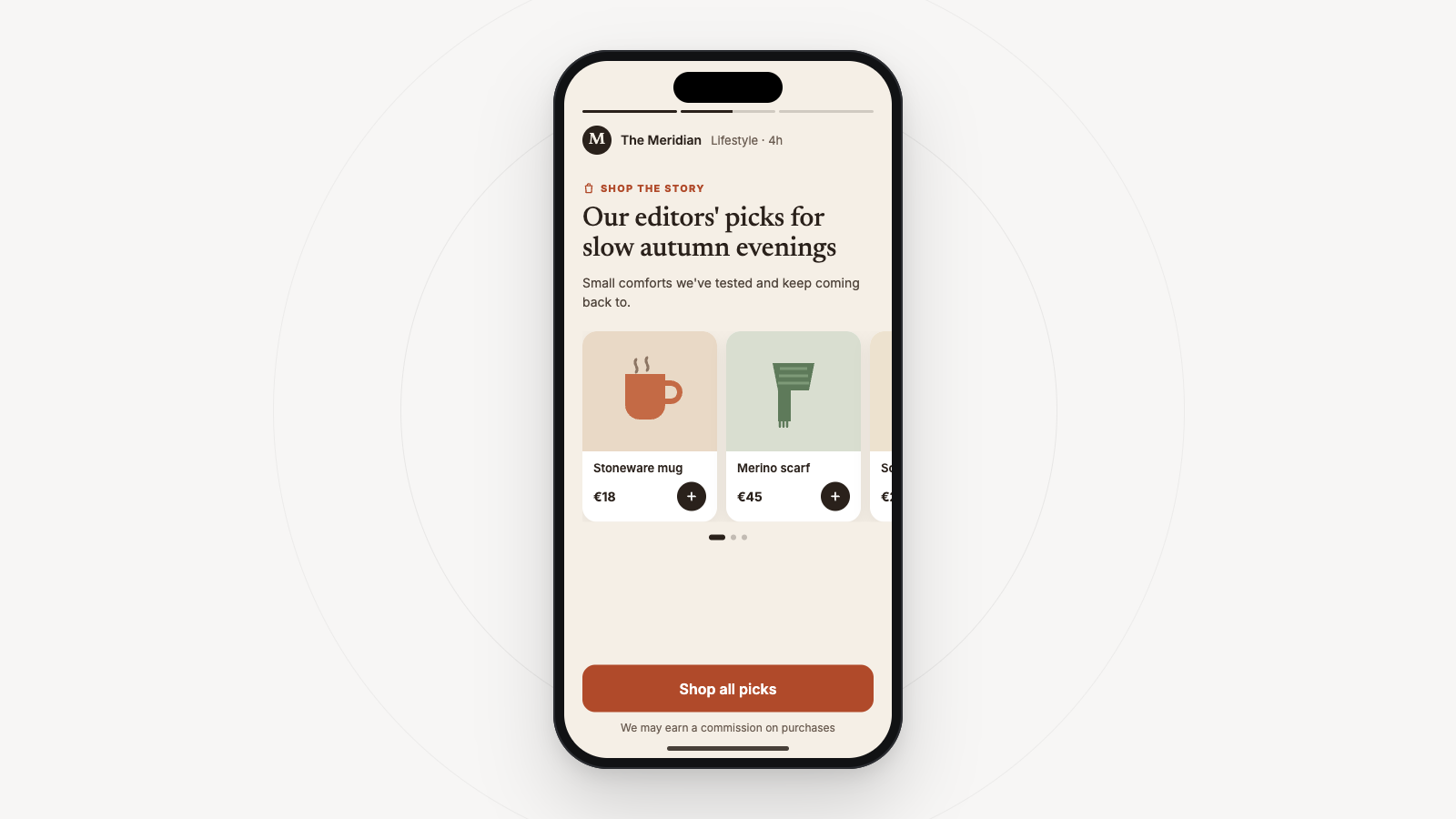
The difference between "served" and "seen"
This is worth sitting with for a moment, because it's the crux of the whole viewability problem. An ad being served and an ad being seen are two completely different events. And it is in this difference where enormous advertising budgets can go to waste.
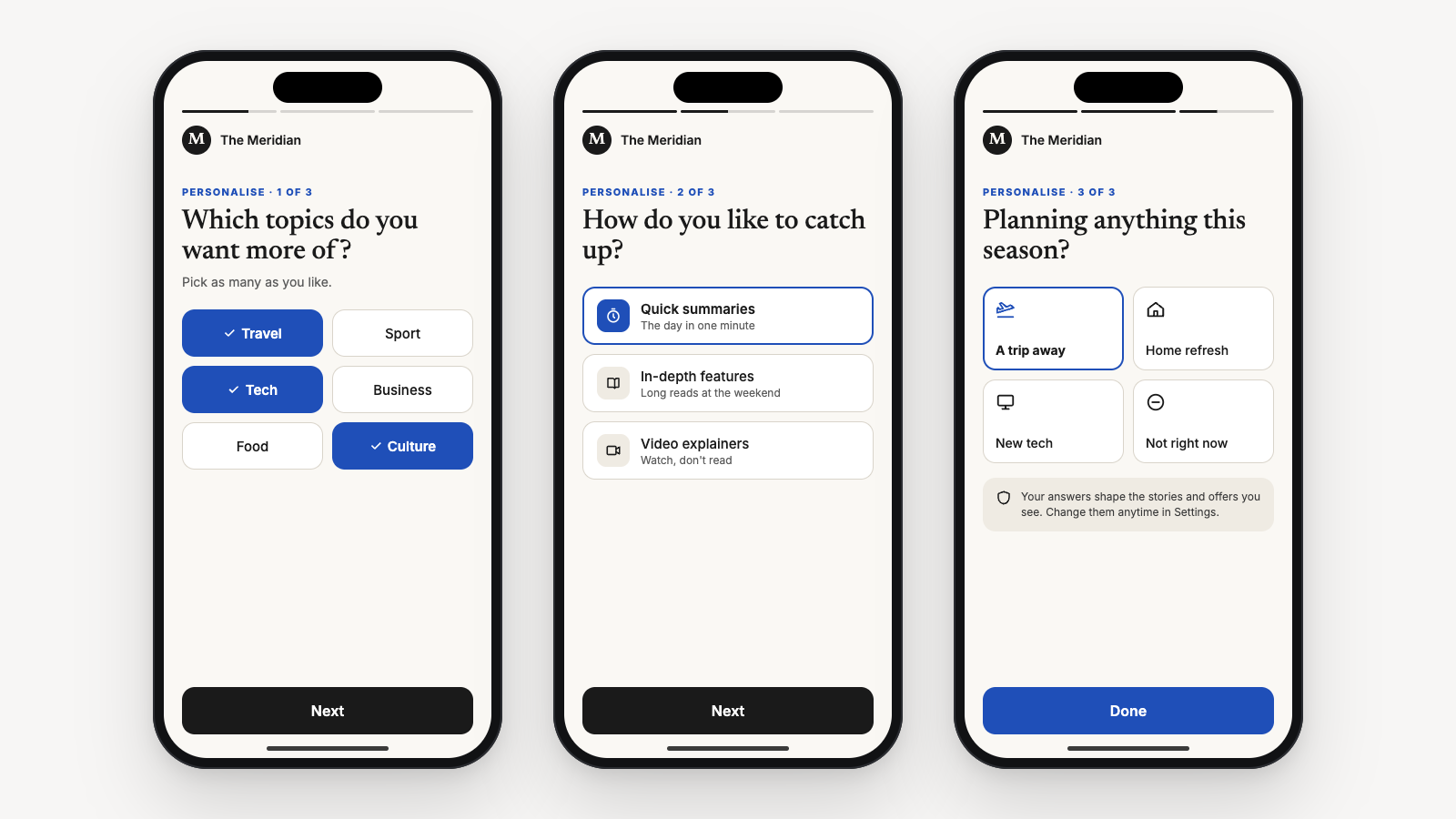
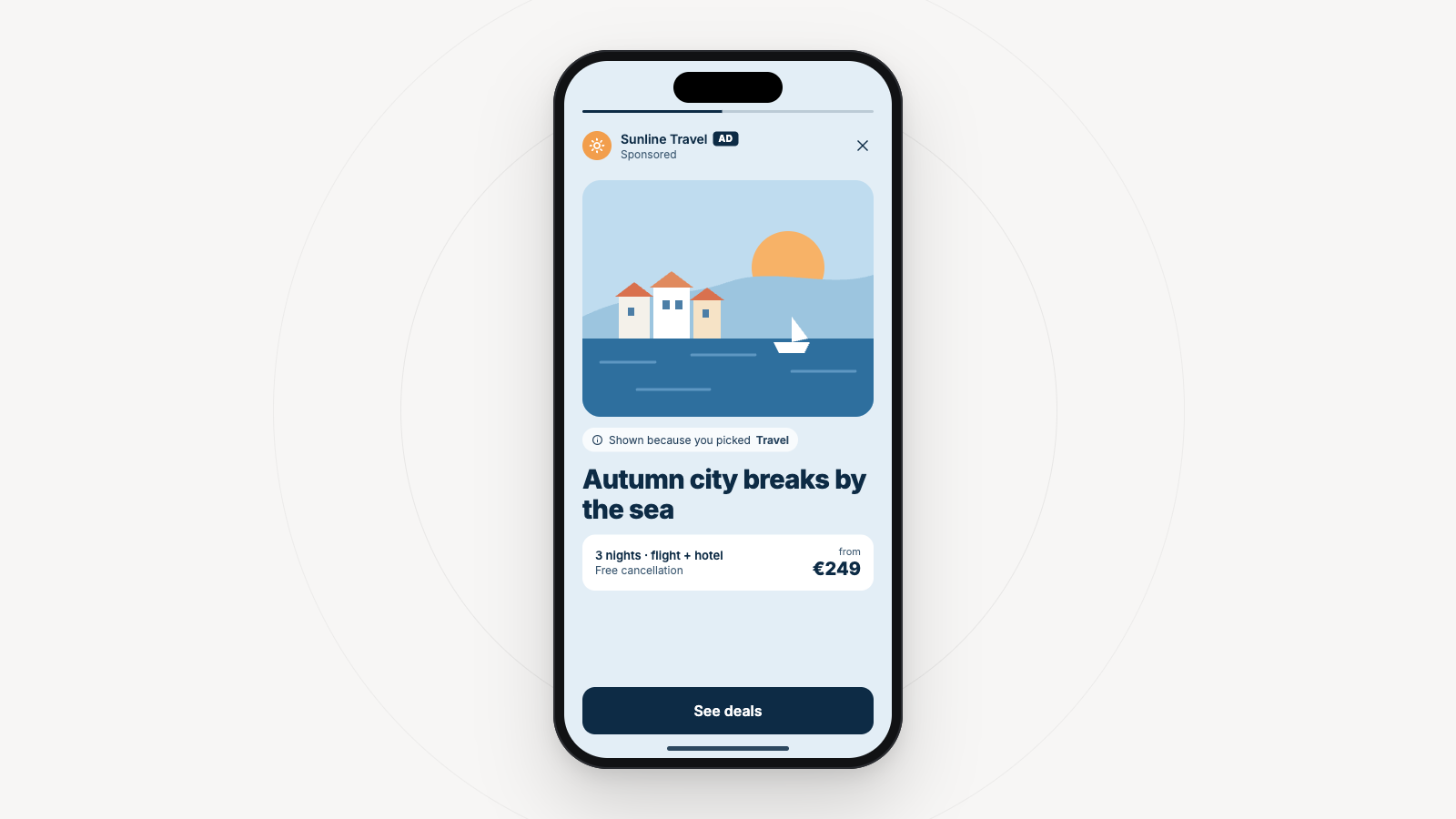
The core problem is that the audience is essentially done with old-school ads. Shoehorned marketing content without any context of relevance to the viewer has no chance of being seen. As such, modern ads need to be context of what the viewer is currently seeing. Or, they need to be personalized enough to be relevant to the viewer, even though they will jank them out of their prior experience. In both cases, Story ads present themselves as af effective solution.
Why full-screen, sequential formats change the attention equation
There's a reason Stories caught on with users before they caught on with advertisers. The first is that platforms that popularized Story content (like TikTok) managed ads quite well. Personalized, rare, and far between. Younger generations grew quite familiar with TikTok, and before long, worldwide audiences grew accustomed to the Story format. This was a big difference from platforms like YouTube or Instagram, where ads were abundant and annoying. As a result, we grew to disassociate Story content from old-school ads. And when we did run into a Story ad, we weren't as defensive about it. There was no banner blindness to have us ignore them, or prior frustration to find them annoying.
Secondly, the Story format strips away everything competing for eyeballs. No sidebar. No comment thread pulling focus. No autoplay video three inches away fighting for the same glance. Just one piece of content, filling the whole screen, until the viewer decides to move forward. This is true for both ad content and standard content.
The psychology of scrolling
Another thing to mention is the psychological dimension. Stories aren't usually seen as single pieces of content. When we opt to check TikTok, we tend to scroll through a few videos that are automatically primed for us. This is called sequential viewing, and it's one of the key psychological reasons tow why Stories (and by extension Story ads) are sucessful.

Users have already opted into sequential viewing when they enter a Story flow. They're comfortable moving through Story frames one at a time, absorbing each before advancing. An ad inserted into that flow benefits from behavior the user was already engaged in. Rather than trying to interrupt scrolling through an article, an ad is just another frame to view and absorb. No pressure, but also no resistance.
Native placement inside a trusted content flow
Here we address the importance of context for ads. Namely, if you properly place a Story ad within a blog post or a video, it won't read as an intrusion. They should sit inside the same visual rhythm as the surrounding content. If they do, the viewer's guard won't activate the way it might with a pop-up or an aggressive ad. This matters more than it might seem at first glance. Attention isn't just about whether eyes are pointed at a screen. It's about whether the viewer is in a receptive state or a defensive one. A jarring, out-of-place ad triggers the latter. A well-sequenced Story ad triggers the former.
What advertisers still get wrong
Story ads aren't a guaranteed win just because the format has structural advantages. A surprising number of brands still treat them as an afterthought, and the results show it.
Treating Story ads like shrunken banners
The most common mistake is repurposing a static banner creative into a vertical frame and calling it a Story ad. This is the worst way to go from banner-first to story-first marketing. It is cheap, unimaginative, and plain old boring. It throws away nearly everything that makes the format effective. Full-screen space doesn't just mean more room. It's a different visual approach entirely. Content that was built for a 300x250 box rarely translates well.
Ignoring the first two seconds
Because Story ads are sequential and skippable, the opening moment of a frame carries the most weight. This means that the first impression is everything. Brands that bury their message on the second or third beat of a frame lose viewers who've already tapped forward. The strongest Story ad creative front-loads its point, or at least gives a convincing enough reason why a person should wait for the second Story beat.
Skipping interactivity entirely
A static Story ad still benefits from the viewability advantages of the format, but it leaves the high-attention advantage on the table. Brands that never test polls, quizzes, or swipe-ups are essentially running a better-viewed banner ad, not a genuinely different format.
Quick answers: Story ads, viewability, and attention
Let's go through the most important points of what we've covered.
What's the actual difference between viewability and attention?
Viewability confirms an ad was technically visible. Simply checking whether enough pixels stay on screen long enough. It says nothing about whether the viewer processed it. Meanwhile, attention is a behavioral measurement that checks whether a human actually registered the message.
How do brands measure attention, not just viewability?
Common methods include eye-tracking studies, gaze duration, dwell time, scroll-past rate, and interaction rate (taps, swipes, poll responses). Unlike viewability, which is a binary pass/fail, attention metrics are graded. A spectrum from glanced-at to fully processed.
Do Story ads have higher viewability than banner ads?
Yes, because Story ads occupy the full screen for a fixed duration, they clear standard viewability thresholds (50% of pixels in view for 1-2 seconds) far more consistently than banner or sidebar units. These are frequently scrolled past or loaded outside the visible viewport.
What makes Story ads better for attention specifically?
Three things working together: full-screen exposure that removes visual competition, lack of banner blindness present in standard ad content, and proper context awareness or personalization that went into Story design.
Are interactive elements necessary for a Story ad to perform well?
Not strictly; a well-designed static frame still benefits from the format's viewability advantages. But interactivity is what separates a merely well-seen ad from one with proof that it was understood and acted on.
Does banner blindness affect Story ads the same way it affects display ads?
Far less. Banner blindness develops because users learn to mentally filter out ad-shaped content in predictable locations, like sidebars or above-the-fold banners. Story ads don't sit in a "known ad slot" the same way, and because they occupy the full screen inside a format the user already opted into, they don't trigger the same automatic filtering.
Are Story ads more expensive than banner or display ads?
Not inherently. Pricing depends on the platform and targeting, not the format itself. Where Story ads often earn a better return isn't a lower cost per impression. It's a higher chance that the impression actually converts into attention, which improves overall efficiency per dollar spent.
What's the biggest mistake brands make with Story ad creative?
Repurposing a banner ad into a vertical frame without rethinking the design. This throws away the format's core advantages: full-screen focus, sequential pacing, and native visual rhythm. It also frequently ignores that the first two seconds carry the most weight, since viewers can skip forward at will.
Final thoughts
If we follow modern marketing trends, it is by no means a stretch to say that Story ads are the future of ad content. Until banner blindness stops being a default reaction and we are willing to give our attention to any bit of content that flies our way, ads will be seen as intrusive. As content that nobody asked for and that simply has to exist so that content creators and advertisers make some money. Therefore, while they may gain viewability, they won't get much attention.
That being said, it is important that you properly leverage the advantages of Story content to make truly effective Story ads. Personalization, context, interactivity: these are what will determine whether your ad was served or seen. Without them, your Story ad will be much closer to a regular ad than to a Story.