What Are Shoppable Stories? Examples from Retail & Ecommerce
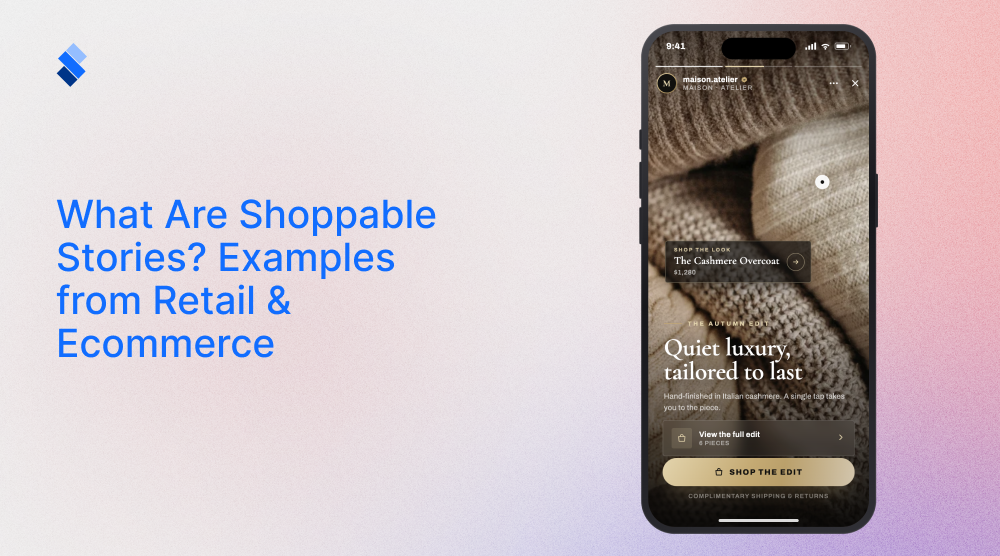
Handling a sales funnel is never easy. You first need to grab the viewer's attention. Then convince them that your product is not only worth the cost, but also better than your competition. And lastly, you need to finalize the sale. More often than not, something goes wrong in this process, and an interested customer abruptly leaves. To solve this, brands have thought long and hard about changing the sales funnel altogether. Some have tried to streamline the process, while the more creative ones have wondered whether we can minimize the funnel to a single screen. This is where shoppable Stories came out as one of the more compelling solutions. While the concept isn't brand new at this point, there are certain innovations that are quite notable. So let's get into what shoppable Stories are, why they work, and what good execution looks like in practice.
What are shoppable Stories?
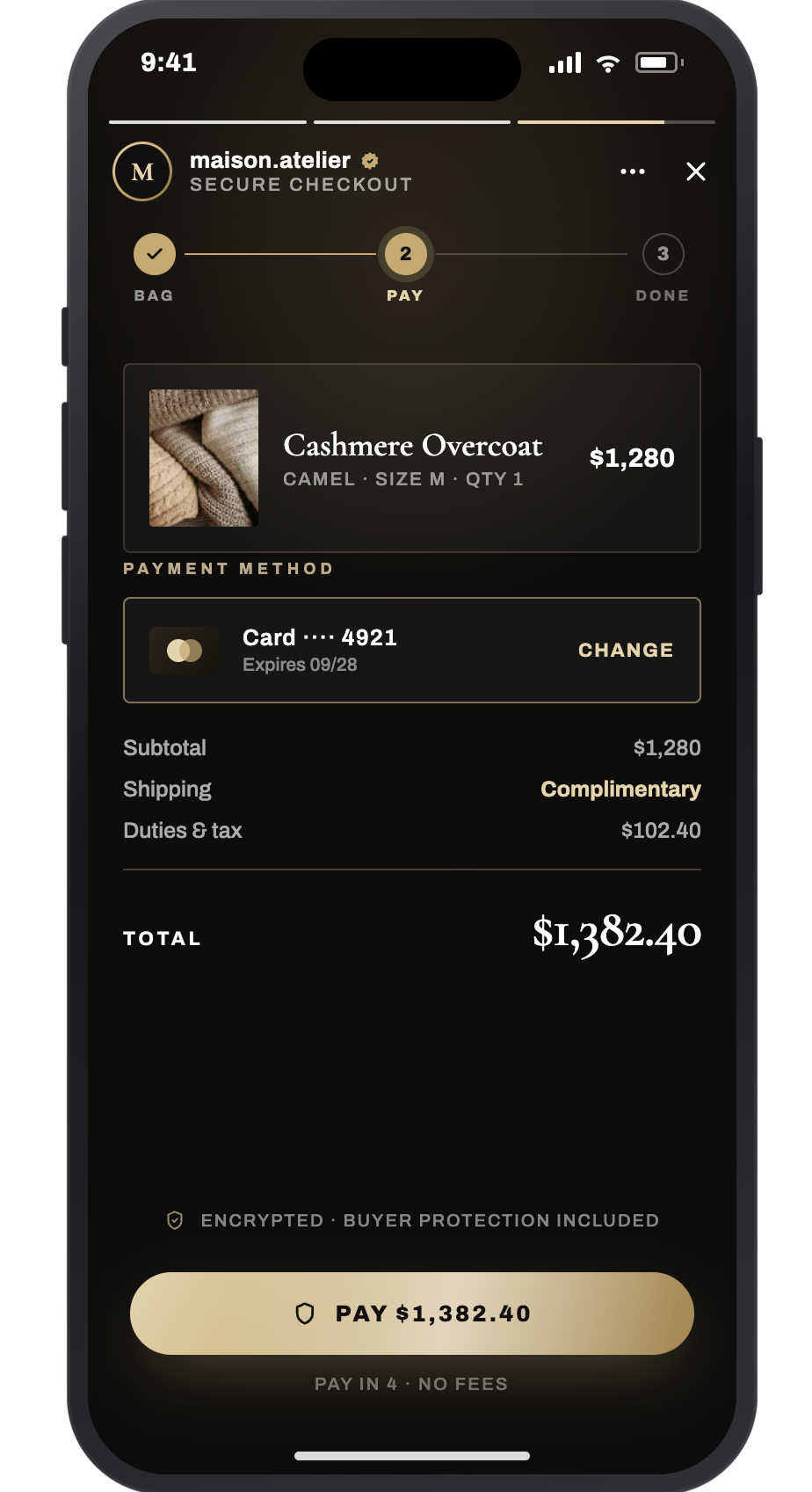
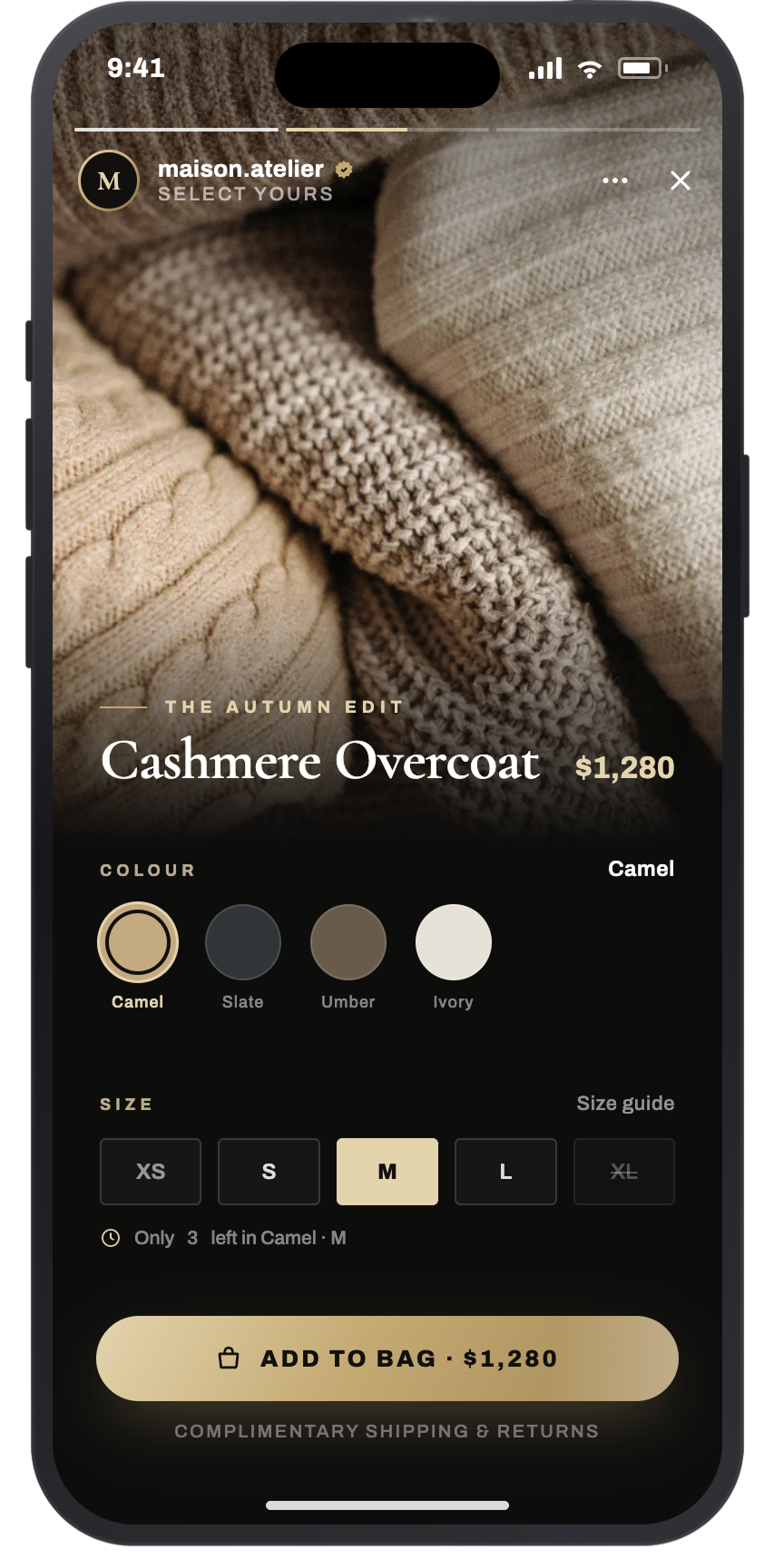
At the most basic level, a shoppable Story is a full-screen, vertical, swipeable content experience (the kind of format you already know from Instagram or Snapchat) with commerce embedded directly into it. Think product tags you can tap, CTAs that take you straight to a product page, or even full checkout flows that live inside the Story itself.
The keyword there is embedded. This isn't a banner ad sitting next to content, and it isn't a link in a bio. The shopping itself is woven into the narrative. You're watching a "morning routine" Story, you see the moisturizer being used, you tap the product tag, and you're looking at pricing and variants, all without leaving the experience.
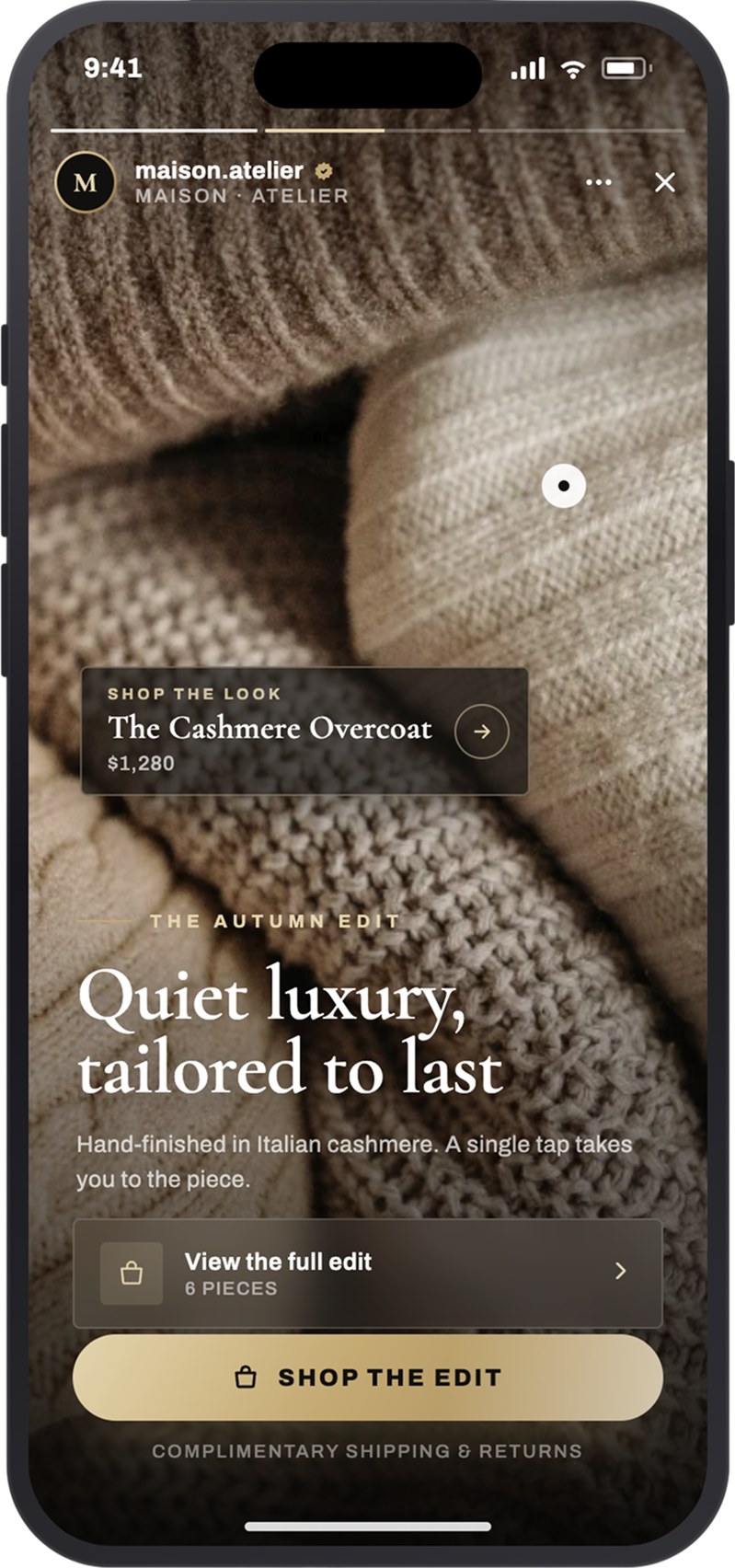
That last part matters more than it might seem. Every time you force a user to navigate away, you introduce friction. And friction is where conversions go to die. Shoppable Stories eliminate this. While they mostly lived on social platforms, brands are increasingly embedding them directly into their own websites and apps using tools like StorifyMe. While embedding eCommerce can sometimes hurt a new publisher, the results are more often quite beneficial. And the advantage of owning that experience (rather than renting it on Instagram) is significant, and we'll come back to that.
Why the shoppable Stories work
The key reason is that shoppable Stories work because they collapse the distance between inspiration and purchase. Traditional eCommerce content tends to operate in two separate lanes: there's the content (blogs, lookbooks, social posts) that builds desire, and then there's the product page where you actually buy. Shoppable Stories merge those lanes, which is why they serve a specific purpose in marketing campaigns.
But this is not the only reason. Stories as a format are inherently immersive. Full-screen, no competing UI elements, auto-advancing, familiar to people who spend time on social media... All these factors go in favour of shoppable Stories. When designed well, they create a kind of tunnel vision that regular webpage layouts simply don't. When a user is in a Story, they're present in a way they just aren't when they're scrolling a product grid. Add commerce functionality to that state of attention, and you've got something interesting. Not because you're tricking anyone, but because you're meeting them where the interest actually peaks.
There's also the mobile angle. An enormous percentage of eCommerce traffic is now mobile, and the Story format was built for mobile from the ground up. Vertical, tap-driven, fast. It fits how people actually use their phones in a way that desktop-era product pages retrofitted for mobile simply don't.
Solving a retail problem
For retail specifically, this matters because product discovery is still one of the industry's biggest unsolved problems. Getting someone to buy something they already know they want is relatively easy. Getting them to discover something new, develop desire for it, and convert is genuinely hard. Especially if you want to do it all in one session. Shoppable Stories are unusually good at compressing the sales funnel.
Retail examples of shoppable Stories
To make things clearer, let's look at specific examples. By doing so, we'll know how shoppable Stories function and why they are so effective.
Fashion industry
Fashion is probably the place where shoppable Stories feel most natural, and where some of the most creative applications have emerged. Consider how a clothing brand might approach a seasonal campaign. Instead of a static lookbook, they publish a Story series where each slide features a full look, and every item in that look is tagged with price and available sizes. The user swipes through what is essentially a curated editorial shoot, tapping items as they go.
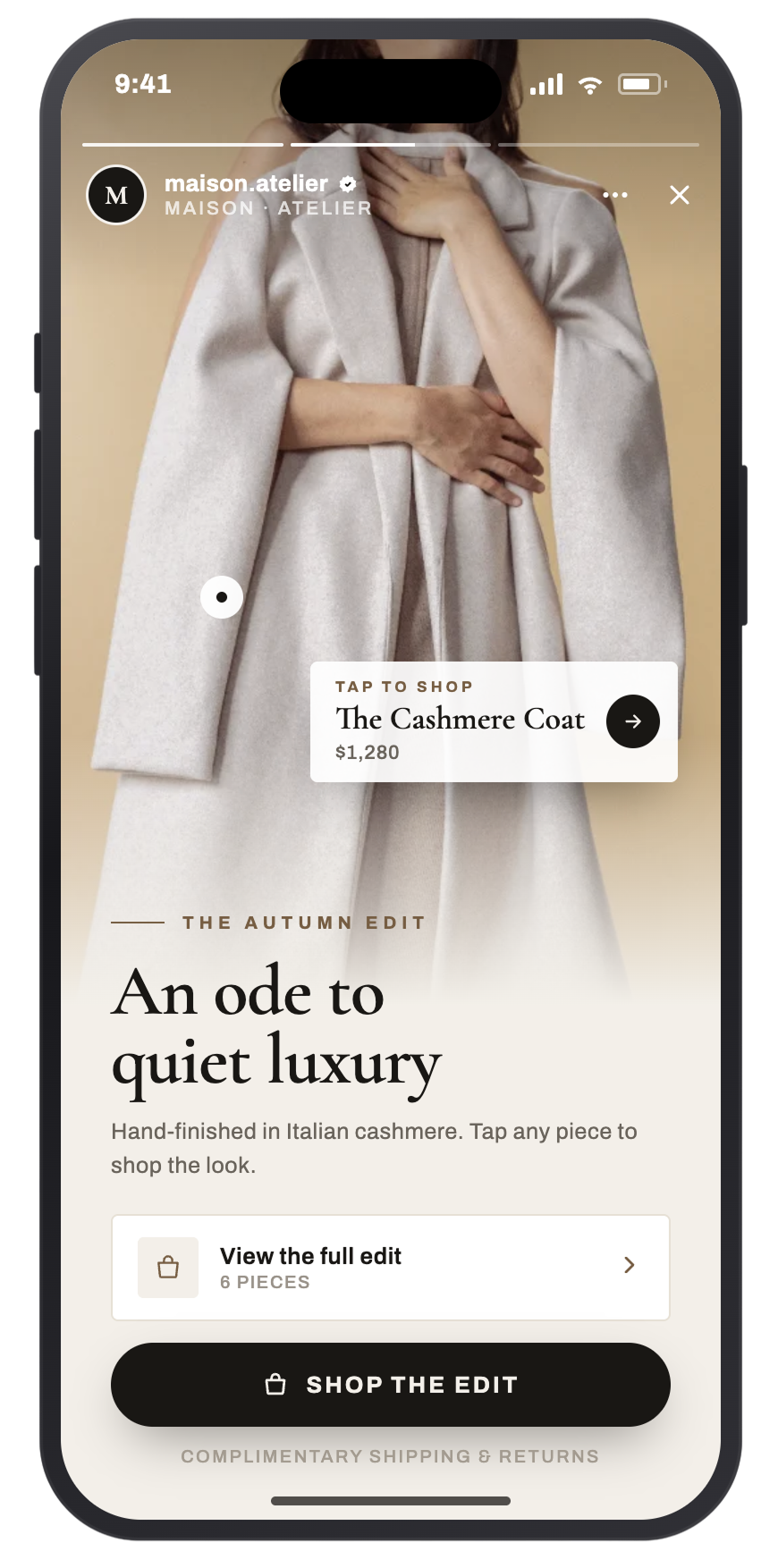
What makes this effective isn't just the tags. It's that the Story has a point of view. There's styling context. The items aren't floating in a white-background void. They're being worn by someone, in a setting, in combination with other pieces. That context does real conversion work.
Sports goods
Marketing sports goods is fairly similar to fashion. You take a product, manufacture a desire for it, and then enable an easy purchase. A standard sales funnel would go on and on about the quality of material, the great price, and the ease of washing. But this is often seen as boring. A shoppable Story, on the other hand, would put the item in action. A person running in brand new sneakers, or doing a workout with brand new weights... All this makes people feel "I should really start working out.", and motivates them to purchase the gear that will help them along.
While not done that often, sports brands often benefit from challenges. If you can motivate your audience to join in on a challenge like "My preparation for a marathon!" or "Getting ready for the summer!" it can create a lot of UGC. And all that participation and UGC leave plenty of room for shoppable Stories. Even a cup can become viral if users are happy to promote it. The trick is knowing how to engage your audience.
Beauty products and cosmetics
Beauty was among the first categories to really crack social commerce, and the shoppable Story format slots into established behavior patterns very naturally. After all, most cosmetics are purchased on a whim with extra little research. A person looks at a tutorial or a product review and decides then and there that they want the product in question. The shoppable version just removes the "now go find this product" step that always existed at the end.
The most obvious example is a cosmetics review delivered as a Story, with each product tagged at the moment it's used. Simple, straightforward, effective. The user knows what they want when they see it applied and talked about. An interactable element gives them the option to shop.
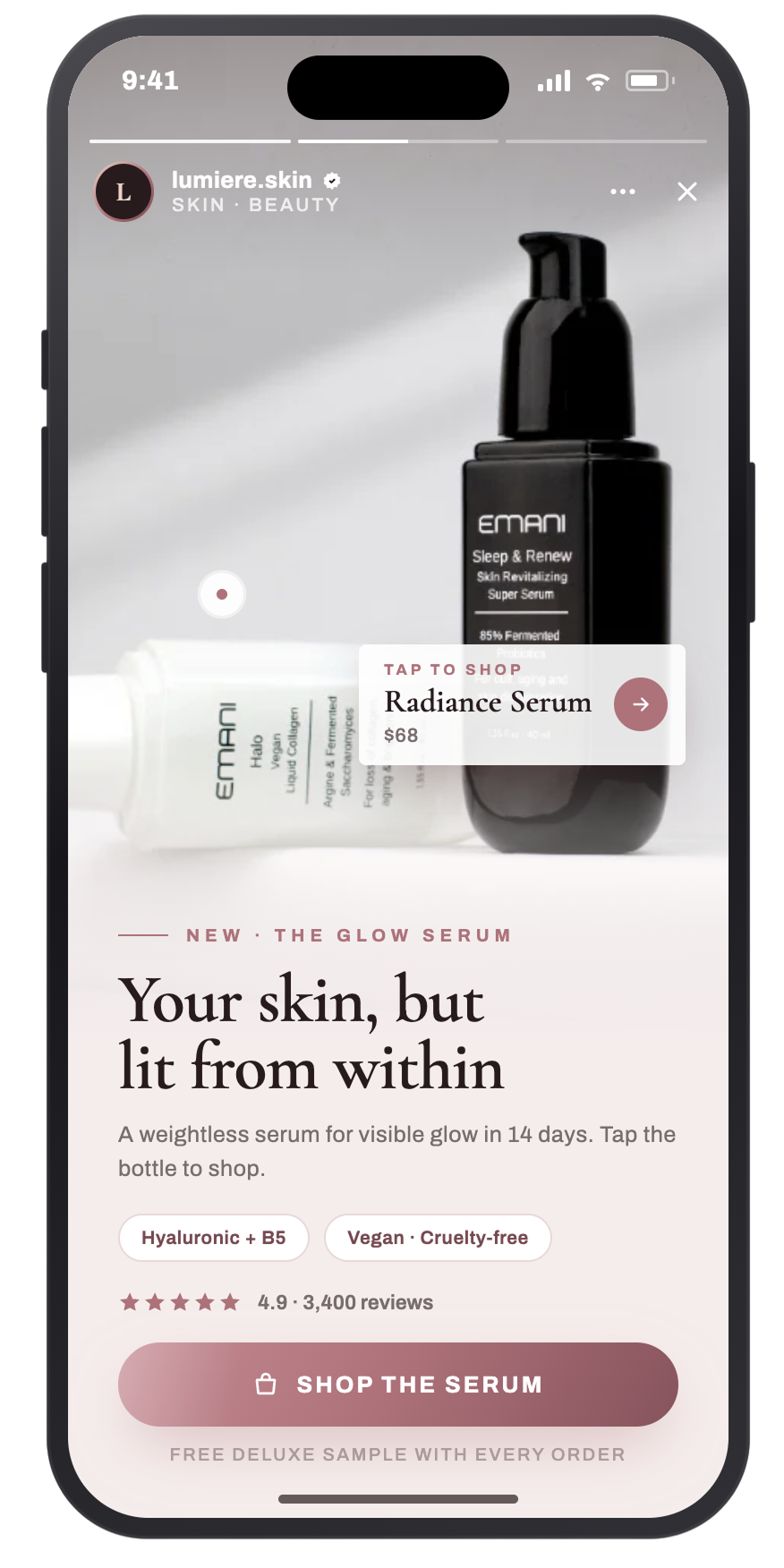
Where this gets genuinely interesting is personalization. Some beauty brands have used quiz-based shoppable Stories like "What's your skin type?" followed by "What's your main concern?" That guides users toward specific Story content that is more likely to resonate with them. Before you know it, the content itself becomes a consultative experience, and the "Add to cart" at the end feels like a recommendation rather than a sales pitch. That's a subtle but meaningful difference in how users experience it.
Food preparation
Food might seem like an odd category for Stories, but some grocery and meal kit brands have found compelling use cases. Recipe Stories, where you follow the preparation of a dish, step by step, and can tap to add ingredients to your cart as you go, solve a real problem. People see recipes online all the time and have to manually track down the ingredients. Embedding the cart functionality into the recipe itself is a straightforward quality-of-life improvement that also drives purchases. Truth be told, it's less flashy than fashion or beauty applications. But it's a good example of the format serving genuine utility rather than just aesthetics.
Shoppable Stories on your own platform vs. social media
More and more platforms are adding shopping options for you to add on your Story content. This is worth dwelling on for a moment, because there's a meaningful strategic difference between running shoppable Stories on Instagram and embedding them in your own website or app.
Building and maintaining your own platform can be difficult. But keep in mind that on social platforms, you reach a built-in audience, but you don't own the relationship. You don't control the algorithm, and you don't get clean access to behavioral data. Not to mention that you're also competing for attention with everything else in the feed.
When you embed shoppable Stories on your own platform, the dynamics shift. The user is already there, as they came to your site with some level of intent. The Stories sit on the homepage, a product category page, or a dedicated campaign page, and they convert that ambient interest into active engagement. You control the design and own the data. And you're not fighting for attention with memes and your competitor's ads. And if you are worried about design difficulties, don't be. Platforms like StorifyMe make this straightforward to implement. You get the Story format and commerce functionality without being dependent on a social platform's API, algorithm, or policy changes. For brands serious about their owned channels, this matters a lot.
Common mistakes to avoid
There are a few consistent mistakes worth mentioning, because they're common enough to be patterns at this point.
Purchase friction
There are several types of purchase friction that your customers can run into. While you ought to minimize all of them, there are some that you simply need to solve. If tapping a product tag takes the user to a page that loads slowly, doesn't retain their scroll position when they go back, or forces them to re-navigate to the Story, you're in trouble.... What has happened is that you've broken the experience at the exact moment that mattered most. The checkout path from a shoppable Story needs to be as clean as the Story itself.
Shoppable Stories ≠ product catalog
Another one is treating the Story like a product catalog. A shoppable Story that's just eight product photos in sequence with price tags isn't really a Story. It's a slideshow. And while a slideshow is better than nothing, you aren't really making the most of the format. The main reason why it works is that it has narrative momentum. So, make sure to curate the experience. Give it a point of view. Let it breathe. Let the viewer feel something before you suggest a purchase.
Mobile optimization
While there is tons of data to find online, most tell the same story. A majority of your customers will use mobile devices. As such, ignoring mobile optimization is not only lazy but detrimental to your brand as a whole. Bafflingly, this is still a problem for some brands. Just know that if your product pages or checkout flows aren't genuinely mobile-optimized, embedding them into a Story format won't fix a thing. It actually makes it worse, because the contrast between the slick Story and the clunky landing page becomes very obvious.
Ignoring first-party data
Finally, and this one is subtler, don't ignore what the data is telling you. Shoppable Stories generate rich engagement signals:
- Which slides people skip
- Where they tap
- Which products get added to cart
- Which products get tapped but don't convert (which might indicate a pricing or sizing issue).
Treating Stories as a one-and-done creative output rather than an ongoing optimization loop leaves a lot of value on the table.
Avoiding the AI trap
While there is nothing inherently wrong with using AI in marketing, we would suggest that you be careful with it. Using it to better understand your data or optimize your platform to better run on mobile devices is fine. But using it to create Story content from scratch is frowned upon, to say the least. Relying on AI slop is one of the easiest ways to lose the trust of your shoppers and viewers. And once that trust is gone, you aren't going to get it back. So, invest in proper visual design and ensure that your Story content is as good as possible.
Final thoughts
Shoppable Stories have moved well past the novelty stage. More and more brands are getting quite comfortable in using them, and those that aren't are falling behind. So, the question is not whether you should use Shoppable Stories, but how to best integrate them. Keep in mind that they shouldn't be the end-all of your eCommerce, but simply a part of it. While your customer might enjoy the streamlined experience, others will look for more in-depth research into their purchase. What you need to do is accommodate them and ensure that all your content (including Shoppable Stories) works in tandem.