What Is Vertical Video Marketing? Definition & Examples

Vertical videos have become an integral part of modern marketing. Whether you are a smaller brand looking to find its place or an established brand trying to reaffirm it, vertical videos are needed. But, while most brands use vertical videos, few actually understand how versatile and adaptable they are. So, let's take a moment to perform a more in-depth analysis of vertical videos and outline a couple of examples of how to use them.
Definition: What Is Vertical Video Marketing?
Vertical video marketing is the practice of creating and distributing video content in a portrait orientation (typically a 9:16 aspect ratio). While you can view it on PC, vertical content was designed specifically for mobile screens. The idea was for the video to fill the full screen of a smartphone, thus immersing the viewer in the content. The vertical format also ensures that the viewer doesn't have to rotate their device, which enables them to frictionlessly go from one platform to the next. It is the native format of TikTok, Instagram Reels, YouTube Shorts, and Snapchat, and has become one of the most dominant content formats in digital marketing today.
The reason why vertical videos are so engaging is that they meet audiences where they already are. On their phones, scrolling through feeds, consuming content in short, immersive bursts. Brands, creators, and marketers try to leverage vertical video to drive awareness, engagement, conversions, and build a community. The ones that succeed do so because they adapted their video storytelling to fit the way modern audiences engage with mobile content.

Why vertical video marketing matters
If this were all that vertical videos have to offer to modern marketing, we would consider them a passing trend. A powerful one, that lasted its fair share, but a passing one. But, due to the following reasons, we feel that vertical videos are not only here now, but are here to stay. Even further, while horizontal videos will still have a role to play in modern marketing, it is safe to assume that vertical videos will only become more popular as time goes on. Here is why.
The Mobile-first world
Like it or not, we live in a mobile-first world. As things stand, smartphone users now account for over 60% of all global web traffic. And in many markets that figure climbs even higher. People pick up their phones dozens of times per day, and the overwhelming majority of that screen time is spent in portrait mode. Holding a phone horizontally to watch a video is an active, conscious choice. Holding it vertically is simply how people function.
This tendency of mobile users has enormous implications for marketers. If you don't want your users to flip their phone, a horizontal video either appears letterboxed with black bars above and below, or it will be cropped awkwardly to fit. In both cases, the viewer's experience is degraded. Vertical video eliminates that friction entirely. It fills the screen, commands full attention, and signals that the content was made for this moment, on this device.
The numbers back this up. Studies have consistently shown that vertical videos achieve significantly higher completion rates on mobile than horizontal equivalents. Viewers are more likely to watch to the end, more likely to engage, and less likely to skip. All this, simply because the format matches the way they are already holding their device.
Platform algorithms favor vertical
Beyond viewer behavior, the major platform algorithms have continuously rewarded vertical video content. TikTok was built entirely around it. Instagram has progressively deprioritized square and horizontal posts in favor of Reels. YouTube Shorts, launched to compete directly in the short-form vertical space, now generates tens of billions of views per day. Snapchat pioneered the format years before most brands paid attention.

When a format is algorithmically favored, creators and marketers can leverage it to gain reach that others simply do not. This makes vertical video not just a style preference but a necessary promotional format that directly affects organic distribution.
The community layer
A big reason why vertical videos are a necessary part of modern marketing is their capacity to build and sustain community. This is what is often called the "community layer". The network of interactions, responses, collaborations, and shared identity that grows around content over time.
Horizontal broadcast video, by its nature, is one-directional. A brand publishes, and an audience watches. Vertical video platforms were engineered differently. TikTok's duet and stitch features allow viewers to respond directly to a video with their own video, easily made with a mobile phone. Instagram Reels' remix function enables collaborative content creation. Comments on vertical video posts tend to be longer, more conversational, and more community-oriented than on other formats. Viewers tag friends. They recreate content. They argue, praise, and discuss, thus generating a secondary layer of engagement that multiplies the reach and relevance of the original post.
For brands, this community layer is not merely a bonus. It is the leverage by which vertical video marketing increases in reach over time. A single product video might generate a wave of customer response videos, each of which introduces the brand to a new audience. Or a tutorial that sparks a challenge that thousands of users participate in. Perhaps a founder's honest talking-head clip that generates comment threads that double as authentic social proof. All these are natural ways to boost your online presence, all leveraged by vertical video.
The AI revolution
A big reason why vertical videos are here to stay is Artificial Intelligence. If every single vertical video had to be made, altered, and optimized by a trained individual, they wouldn't be so widespread. But, as we can see, this is no longer the case. Ever since it came out, AI has been reshaping online media as a whole. As a result, content marketing is different at every stage of the production and distribution pipeline, and the impact of AI will only accelerate.
AI-Powered Content Creation
Generative AI tools drastically lower the barrier to vertical video production. And while we still need to determine what the responsible use of AI is, the AI-generated videos are going strong. Text-to-video platforms can now produce passable short-form vertical clips from a written prompt alone. You can even use tools like StoryMe to turn full-fledged articles into vertical videos. AI voice generators can narrate content without a human on camera. And with automated caption tools you can reduce production time significantly and improve accessibility.
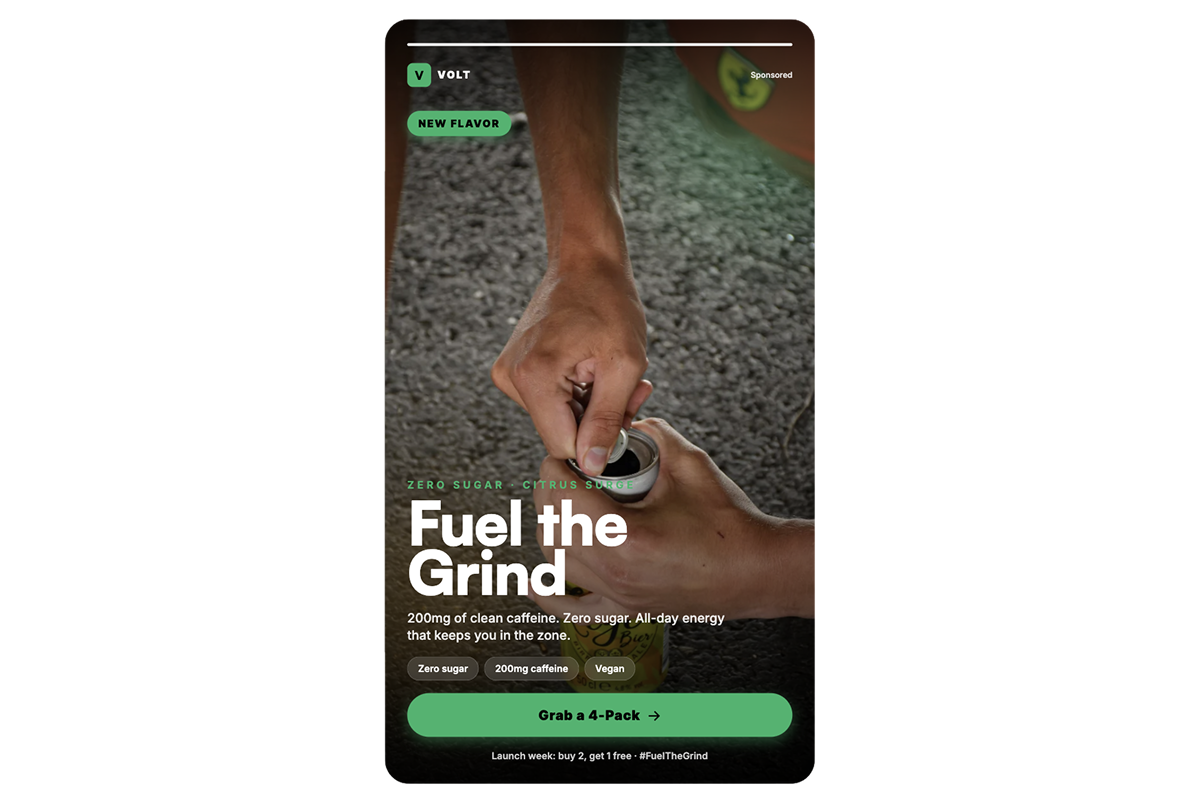
For marketers without large production budgets, these tools are a lifesaver. A small brand can now produce daily vertical video content at a quality and volume that would previously have required a dedicated team.
How does AI help with intelligent repurposing and resizing?
One of the most practical AI applications in vertical video marketing is automated reformatting. AI-powered tools can analyze a long horizontal video like a webinar, a podcast recording, or an interview. Then, they can automatically extract the most engaging segments, reframe them vertically, add captions, and output them as short-form clips. This transforms a single piece of content into a multi-platform vertical video library in minutes rather than hours.
Personalization at scale
While personalization is no longer a key trend in marketing, it has by no means fallen off. In fact, a big reason why AI is so important is that it enables dynamic vertical video personalization. This means that with AI, you can serve different versions of the same video to different audience segments based on behavioral data. An e-commerce brand, for example, might serve a vertical video ad featuring running shoes to users who have browsed athletic content. Or, they can serve the same video reformatted around casual wear to lifestyle audiences. At scale, this level of personalization was previously achievable only by the largest advertisers. Now AI is making it accessible to everyone.
Vertical video marketing in practice
To make the case for vertical videos, let's outline a few examples of brands using them to strengthen their presence effectively.
Can sports community go beyond the living room?
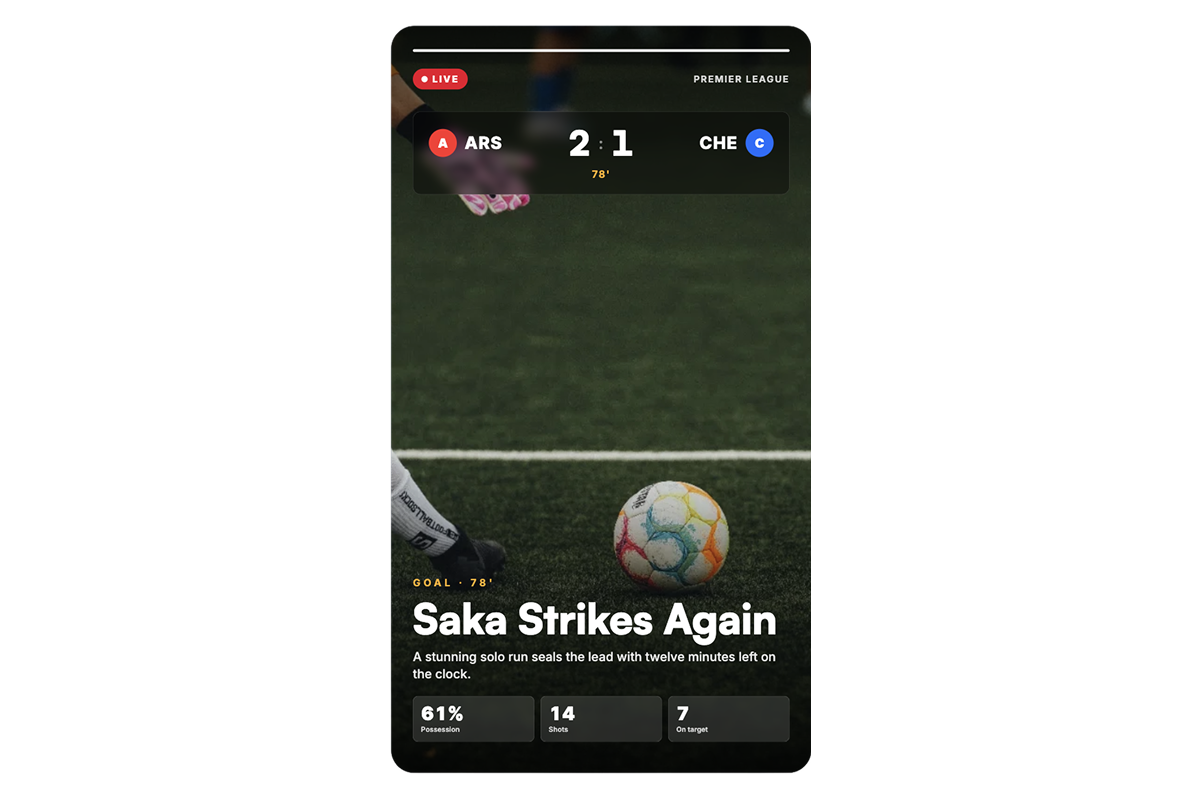
Instead of simply providing score updates, a sports brand can establish itself as a platform where fans track live stats and comment on games in real time. And they can do so by using vertical video to introduce a community layer. The idea is to build it around the moment something happens on the pitch, and you immediately invite the audience to join in. Each clip shows a single game-changing moment: the stat spike, the notification, and a comment feed erupting in real time. No brand voice. Just the crowd reacting together. The beauty of the vertical frame is that it will effectively turn the comment section into a standing ovation. If run properly, sports fans will spend as much time watching their phones as they are watching the game.
How can a budget airline show that they understand their travelers?
A low-cost tourist organization can can levarage a vertical video series focused entirely on the in-between moments of travel. The departure gate nap, the window seat cloud-watching, the first meal in a new city eaten standing up. Nothing is glamourised. The videos are shot scrappily and vertically, as if by a fellow passenger. The message is subtle: travel doesn't have to be perfect or expensive to be meaningful. Each clip ends with a destination name and a price, but the emotional sell has already landed long before the call to action appears.
Do cosmetics brands benefit from personalisation?
As we said before, personalisation is still big in marketing. With that in mind, a beauty brand can develop a personalized vertical video system where a single master clip is remixed into dozens of variations, each speaking to a specific skin concern. Redness, uneven texture, dark circles, dry patches... Viewers are served whichever version matches their profile. The person holding the phone could turn on their camera and see the transformation unfold before their eyes. And the personalisation makes each viewer feel individually addressed rather than part of a mass audience. These two combined create the underlying message that the brand starts with your skin, not a one-size-fits-all solution.
Is it necessary for a gym to focus on transformation journey?
No. Another way to go is for a gym brand to run a vertical video campaign that deliberately avoids transformation stories. Here, every clip captures the unglamorous struggle of a fitness journey. The dip in motivation. The poor sleep. The diet struggle. All these are struggles that people in fitness will resonate with. Especially if the videos addressing these struggles are shot vertically in actual gym environments. By taking this approach, the brand positions itself not as a place where transformations happen, but as a place that shows up for you even when you're not at your best. The struggle is real, but the brand is here to help you overcome it.

Final thoughts
When it was first introduced, vertical video marketing was seen as a subset of video marketing. Slowly, it has turned into the primary form of it. The mobile-first behavior, platform algorithm incentives, AI-powered production tools, and community-driven engagement mechanics... All these have made vertical video the most important format in the modern marketer's toolkit. The brands that master vertical video marketing now are not just adapting to current behavior. They are building the audience relationships and platform equity that will define competitive advantage for the next decade.