Common Myths About Web Stories

Sometimes it can be difficult to fully explain the scope of Web Stories. On the one hand, we are dealing with a content type that is highly popular on various platforms. And every year, we are seeing new innovations and trends that push the boundaries of what Web Stories can do. With this, we see people who believe that their whole marketing should be Web Stories. That investing in them, and solely in them, is the only solution that has a decent ROI. On the other hand, we have people who think that Web Stories are a passing fad and that they add little "real value" to one's online presence. Well, to better understand Web Stories as a marketing phenomenon, we will take the role of Mythbusters and see whether the most popular myths about them are true or false.
What are Web Stories?
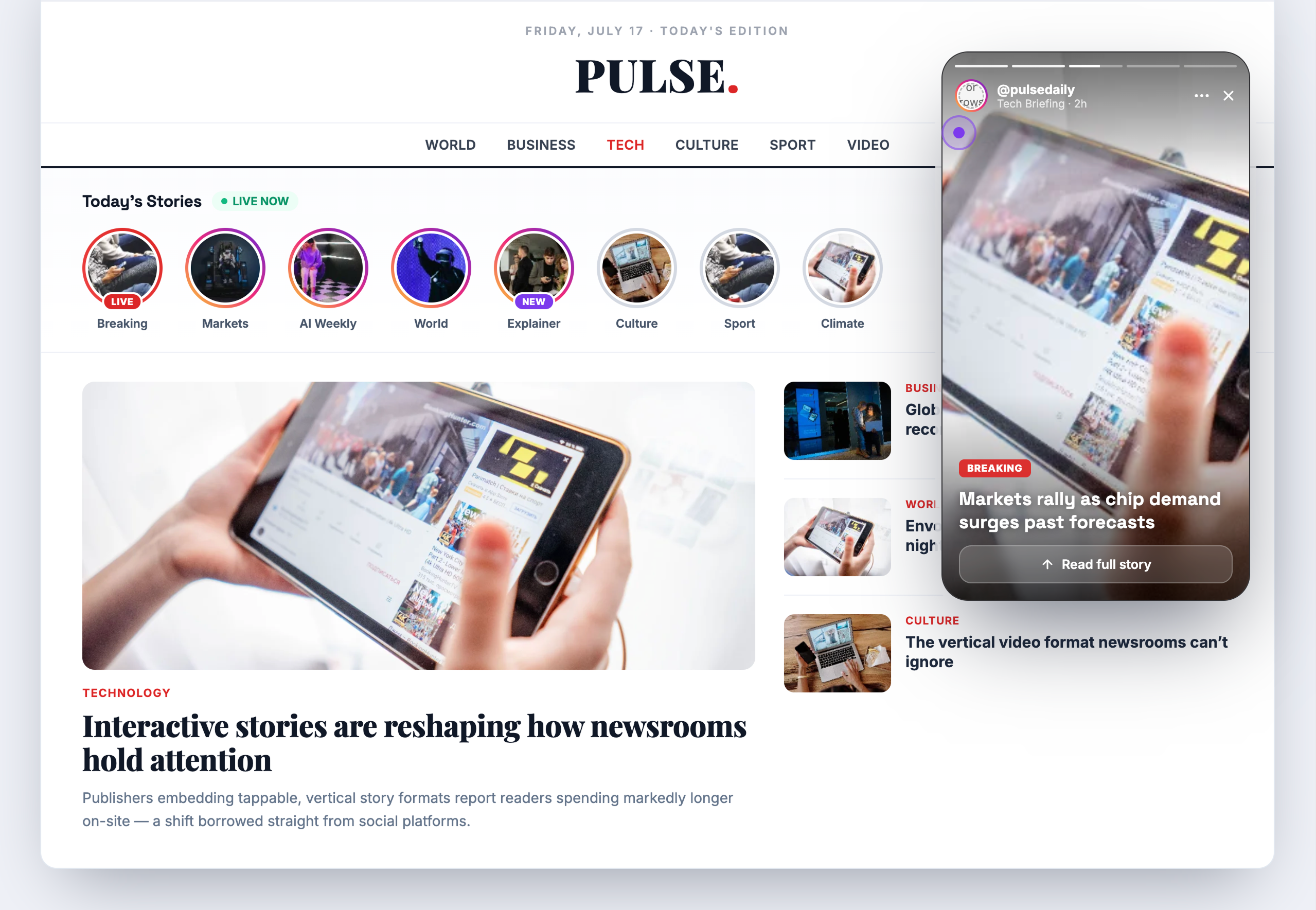
Let's start by giving a brief explanation of what Web Stories are. In a nutshell, Web Stories are a visually rich, mobile-first content format built for the open web. This format is what you see when you open Instagram (Instagram Stories), Facebook (Facebook Stories), YouTube (YouTube Shorts), or TikTok. While social stories garner a lot of attention, they usually disappear after 24 hours and always live inside a closed platform. Meanwhile, Web Stories are permanent pages hosted on your own domain. They show up in Google Search results, Google Discover, and Google Images. This brings real, lasting organic traffic to your site long after you've published them.

Each Web Story is made up of a series of full-screen pages that users tap or swipe through. These pages can combine text, images, short video clips, animations, and audio to create an immersive, distraction-free experience. You can also add calls-to-action, outbound links, and even product tags. This makes them quite useful for everything from tutorials and listicles to product showcases and news summaries.
What can Web Stories be used for?
Social media stories usually serve to grab attention and, ideally, lead you to other content. Web Stories are a far more versatile content tool. We have in-app stories, which are Web Stories embedded directly within a brand's own mobile app. With these, brands deliver announcements, onboarding flows, product highlights, or seasonal campaigns in a format users already intuitively understand. Retailers and e-commerce brands have taken this further with shoppable stories. Here, individual pages feature products, pricing, and direct purchase links, turning a visually engaging story into a frictionless buying journey. Keep in mind that community and UGC (user-generated content) can also be woven into the format, allowing brands to leverage customer reviews, social posts, or fan submissions. This does wonders for building social proof and fostering a sense of belonging.
QR codes add another powerful dimension. When printed on packaging, in-store displays, or physical marketing materials, they can drop a customer directly into a Web Story, seamlessly bridging the gap between the physical and digital worlds. Now, with AI and various available tools, we can only imagine how people will choose to use Web Stories. And when they do, there are bound to be new myths that pop up.
Busting myths about Web Stories
Like most myths, the following are somewhat based on reality. People who rely on Web Stories tend to get certain notions and ideas simply through practise. While these can be true, to a degree, they are often an exaggeration of an oversimplification. So, without further ado, let's dig into some myths.
Myth #1: Web Stories are just for mobile
Are Web Stories mobile-friendly? Yes! Are they the go-to vertical content when it comes to marketing? Yes! Does this mean they are only for mobile? No!

Web Stories are usually in the vertical format. But, this isn't set in stone. You have all the freedom in the world to create horizontal content and use it on your website. Even when it comes to vertical, there is still ample reason for making it suitable for viewing on computers. While you can gain a decent amount of traffic from mobile alone, the best results come from weaving the two experiences together. And considering how easy web design is due to AI, there is little reason not to.
Myth #2: Web Stories are only for news publishers
Seeing how often we've written about the various benefits publishers have when using Web Stories, we can't help but feel a bit responsible for this one. Namely, while publishers do stand to get a lot from Web Stories, their effect is by no means limited to them. Even now, Web Stories are used effectively by brands from various industries. Blogger use them to get attention for their articles. E-commerce brands use Shoppable stories to weave shopping and content into a single experience. Sports platforms use them to push real-time notifications and build a community around shared interests. And travel sites use them to promote destinations and convince people to share their experiences via UGC. Web Stories are everywhere, and you'll have a hard time finding a brand that won't make some use of them.
Myth #3: Web Stories don't help SEO
When people mention SEO, they usually think of articles. If not that, then the overall written content that you have on your online presence. In this line of thinking, Web Stories tend to be seen as useful as stories on social media. Aka, not useful at all. Well, this is not true.
Web Stories offer a genuine SEO advantage that most visual formats cannot match. Because they are hosted on your own domain, every story contributes to your site's authority and indexability. Google actively indexes Web Stories and surfaces them in dedicated carousels across Search, Discover, and Google Images. This gives a single piece of content multiple entry points into search results simultaneously. Stories optimised around specific keywords or trending queries can also capture traffic that traditional articles miss, particularly in visual-heavy niches. Simply put, Web Stories let you compete in search in a format built for how modern audiences consume content. Not how they ought to consume it, according to content managers.
Myth #4: You need to be a developer to create them
We've all seen Web Stories that run smoothly, have stunning visuals, play a soundtrack that enhances them but doesn't take attention away from them, and host interactive elements that flow right into the experience. Upon experiencing these Stories, one might think that a full-fledged team is needed to create them. Or at least a committed developer with years of experience. Well, no.
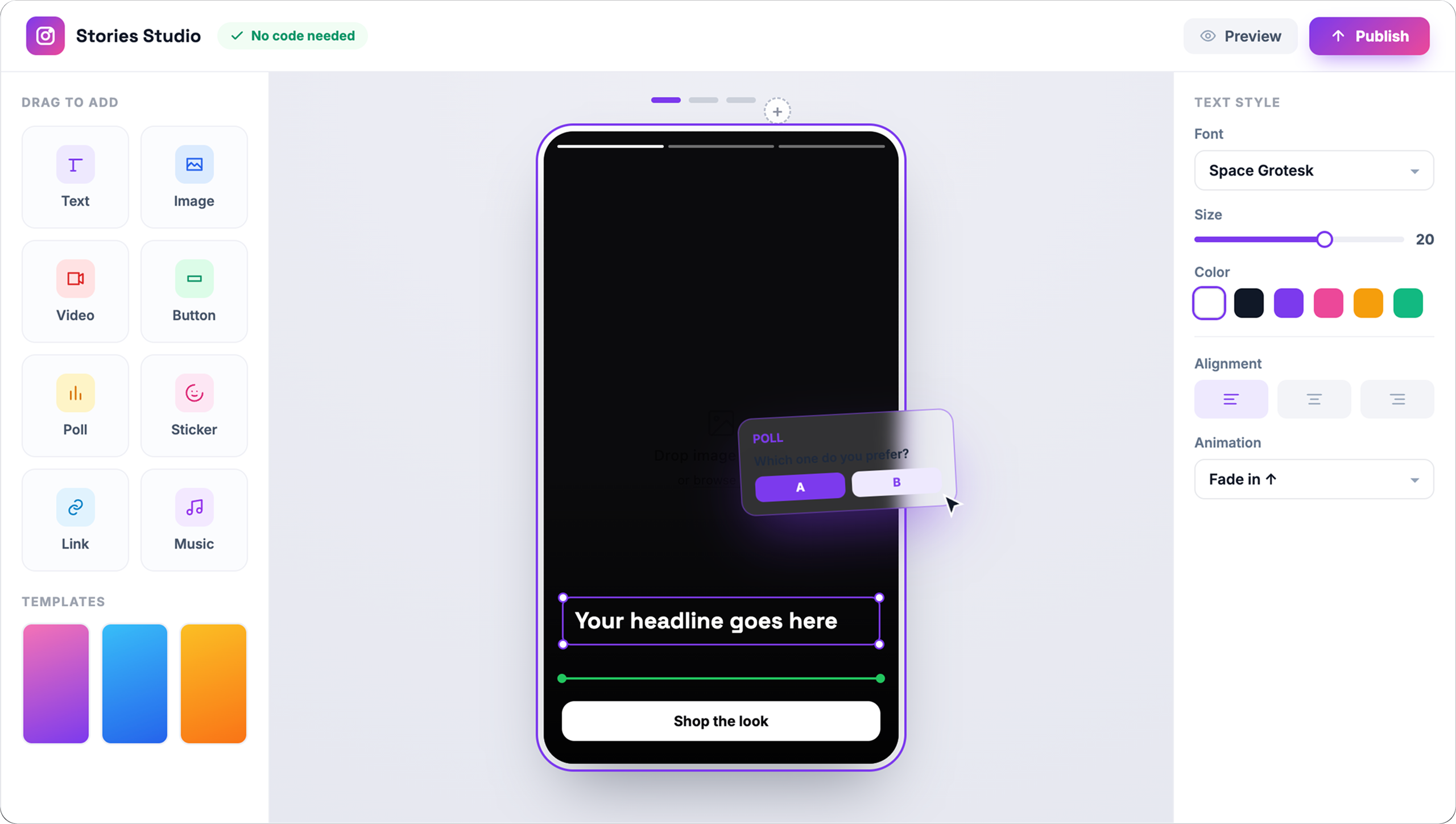
Modern tools, especially AI-assisted ones, make content creation easier than ever. Even with little to no programming experience, you can create content that is engaging, beautiful, and runs smoothly on your platform. Of course, it takes experience to know how to make content that works well with your branding. After all, no AI tool can substitute practical knowledge. But you'd be surprised how intuitive it is to design, optimize, and integrate Web Stories with tools like StorifyMe.
Myth #5: Web Stories can't be monetized
A big thing among bloggers and publishers is content monetization. Namely, while most will see the benefit of leveraging Web Stories, some will write them off as non-monetizable. This is absurdly untrue. Not only can you monetize Web Stories in various ways, but you can also use them in various monetization strategies. Especially if you are aware of how users perceive them within your platform.
With Web Stories, it is fairly easy to get support for Google Ad Manager, affiliate links, and shoppable elements. This opens up ads, product placement, and affiliate marketing as viable options for monetization. Furthermore, Web Stories are top-performing content when it comes to onboarding. This makes explaining paywalls behind subscriptions and gated content that much easier. With all this in mind, you'd be a fool not to use Web Stories in your monetization.

Myth #6: Web Stories have no lasting value (they "expire" like social stories)
An easy myth to bust. No. Web Stories don't expire or lose value. Unlike Instagram or Snapchat Stories, Web Stories live permanently on your website. From the moment you post them, until the moment YOU decide to take them down. They continue to rank, drive traffic, and promote your brand. Now, this doesn't mean that your web stories couldn't use some retouching or redesigning every once in a while. After all, good content creators know how to repurpose their content and yield as much value from it during its lifetime. But, even without doing so, Web Stories are by no means like social stories when it comes to lifetime value.
Myth #7: Web Stories don't support much content
We've run into this myth before, and it can mean two things. Either it means that you cannot fit much content into Web Stories. That it can only contain short messages. Or, it means that you cannot integrate different types of content into Web Stories. Both are false.
Firstly, Web Stories are primarily visual. And the old "a picture is worth a thousand words" comes to mind. A creative designer can weave quite a lot of information in a bite-sized format, especially if they have years of experience and are inspired. If not, you can always make a Story carousel to get your point across. Or use Storytelling as a way to spread out your content across multiple instances.
As for what types of content you can weave into Web Stories, we will only list some:
- Written
- Animations
- Voiceovers
- Music
- Camera footage
- Polls
- Questionaiers
- Hyperlinks
- Shoppable elements
- Chats and comment sections
We can go on, but sufficient to say that the myth is busted.
Myth #8: Web Stories are a dying format
Web Stories aren't exactly new when it comes to marketing. Snapchat added them in 2013, which means that we've used them in one way or another for over ten years. But while Story content isn't exactly new, it is by no means dying. As we said, there are constant innovations when it comes to tools, trends, and content ideas. Google continues to invest in the format and surfaces it prominently. And more and more industries are finding quite creative ways to make use of Web Stories. While AI is changing online content as a whole, there is no reason to think that Web Stories are dying, or that they will ever become obscure.
Final thoughts
Web Stories are one of those rare marketing tools that manage to be both widely misunderstood and wildly underutilised at the same time. As we've seen, most of the myths surrounding them stem from a simple confusion. People apply the rules and limitations of social media stories to a format that operates on an entirely different level. Web Stories live on your domain, rank in Google, support rich and varied content, can be monetised in multiple ways, and are accessible to creators of virtually any skill level.
The truth is, whether you are a solo blogger, an e-commerce brand, a publisher, or a global enterprise, there is a version of Web Stories that works for you. As AI and new tools continue to lower the barrier to entry, there has never been a better time to experiment with the format. The brands and creators who take the time to understand what Web Stories truly are (and what they are not) will be the ones best positioned to benefit.
StorifyMe is an interactive content platform that helps brands create, publish, personalize, and measure Stories, Shorts, and other mobile-first experiences across their websites and mobile apps. It gives marketing and product teams full control over content distribution, audience engagement, customer data, and monetization across their owned digital channels.