How Publishers Monetize Stories While Maintaining a Premium App Experience
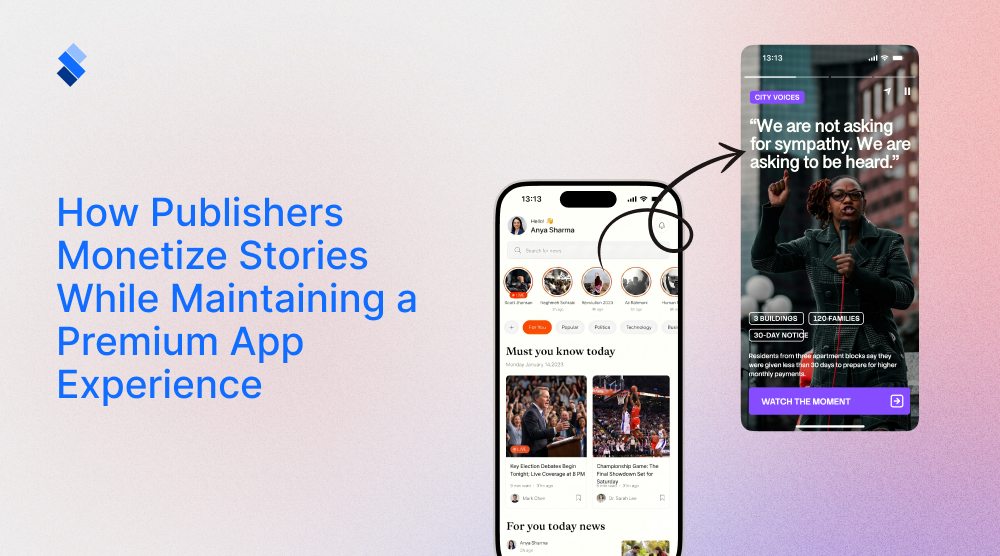
For years, the go-to way for mobile publishers to monetize their content has been banner ads. The reason for this was their simplicity. A publisher could, quite easily, stick a 320x50 strip at the bottom of the screen, hook it up to a programmatic network, and watch some revenue trickle in. Simple and scalable. But, in the past decade or so, this also became almost universally despised by the viewers. It seems as if we've all collectively grown tired of ads and would prefer to pay extra to simply not have to look at them. Some publishers tried to figure out how to deal with this and came up with a surprising find. The issue was never advertising itself. The issue was forcing the wrong ad format into the wrong content environment. It turns out that when ads are designed to match the content around them, they work quite well. Engagement goes up, user satisfaction stays high, and revenue follows. So, the problem is not how to replace ads, but instead how to properly integrate them and maintain the UX. As we'll soon see, Story ads turned out to be quite a potent tool, especially when it comes to app design and mobile UX.
What are story ads, and why do they work?
Unless you've been offline for quite a while, you'll surely run into some form of Story content. The "stories" format is a full-screen, vertically scrollable or tappable sequence of cards. The short history is that it was popularized by Snapchat, perfected by Instagram, and has since been adopted across virtually every major content platform. For publishers, stories represent one of the best-performing content formats, whether in app, on a website, or on any number of content-sharing platforms. Viewers lock in, scroll through, and get an automated feed of content personalized for them.
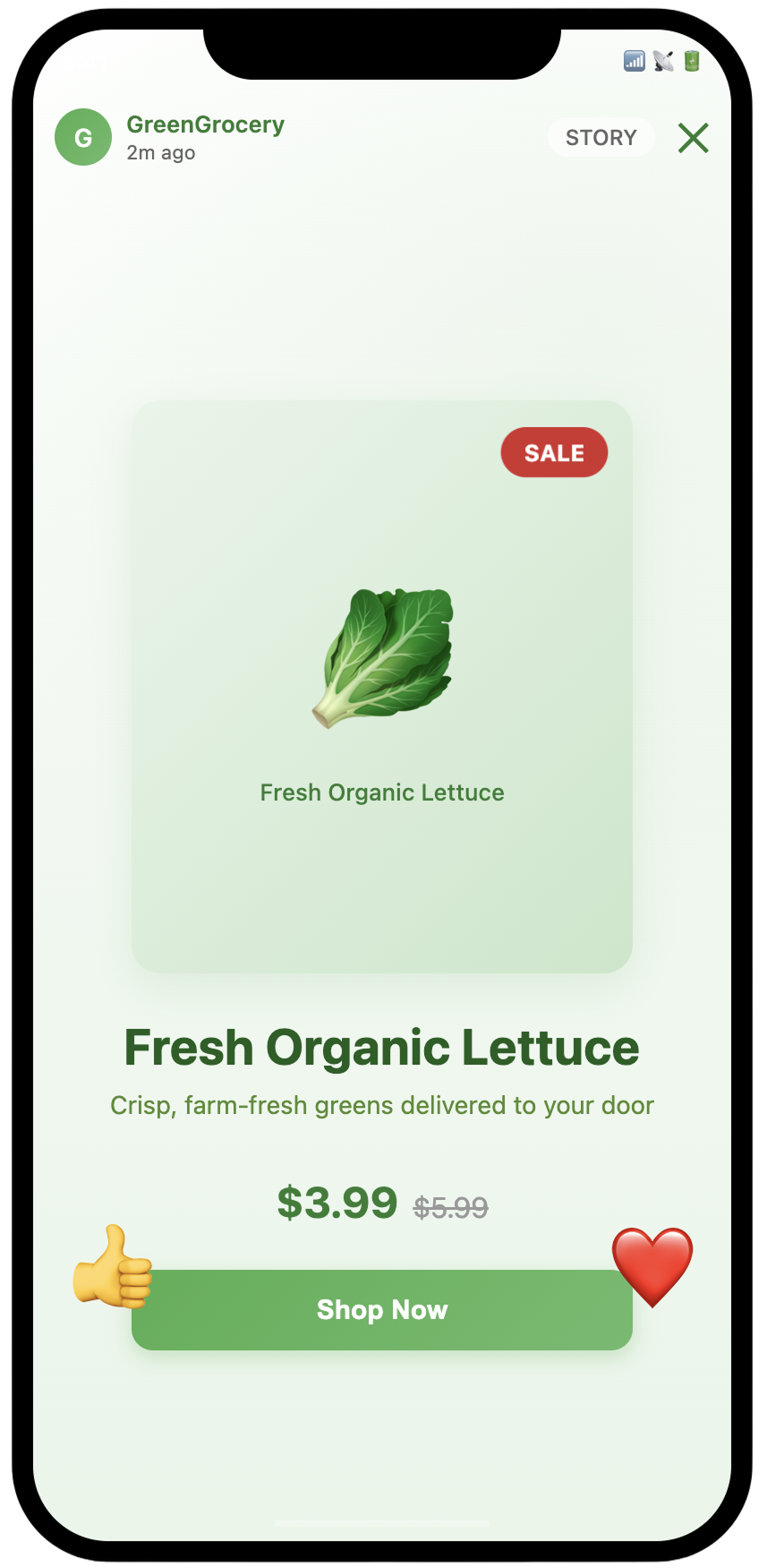
As it turns out, Story ads slot directly into this flow. Rather than appearing as a separate unit disconnected from the content, a story ad occupies one card in the sequence. It looks, feels, and behaves exactly like the editorial content around it. The user is already in the right mental posture: full screen, focused, thumb engaged.
The UX case for Story Ad formats
One of the reasons why users don't skip Story Ads is that they respect the user's existing behavior. The person scrolling through a story feed is already expecting to tap through a series of cards. An ad card doesn't require them to learn a new interaction, adjust their attention, or tolerate something being overlaid on top of what they came for. It fits. Furthermore, story ads also benefit from natural skip mechanics. When a user taps past an ad story card, they are doing exactly what they would do with any other card. There is no "close" button to look for, no accidental click on an expanding unit. No frustration. The control remains with the user, and that sense of control is a significant contributor to ad satisfaction.
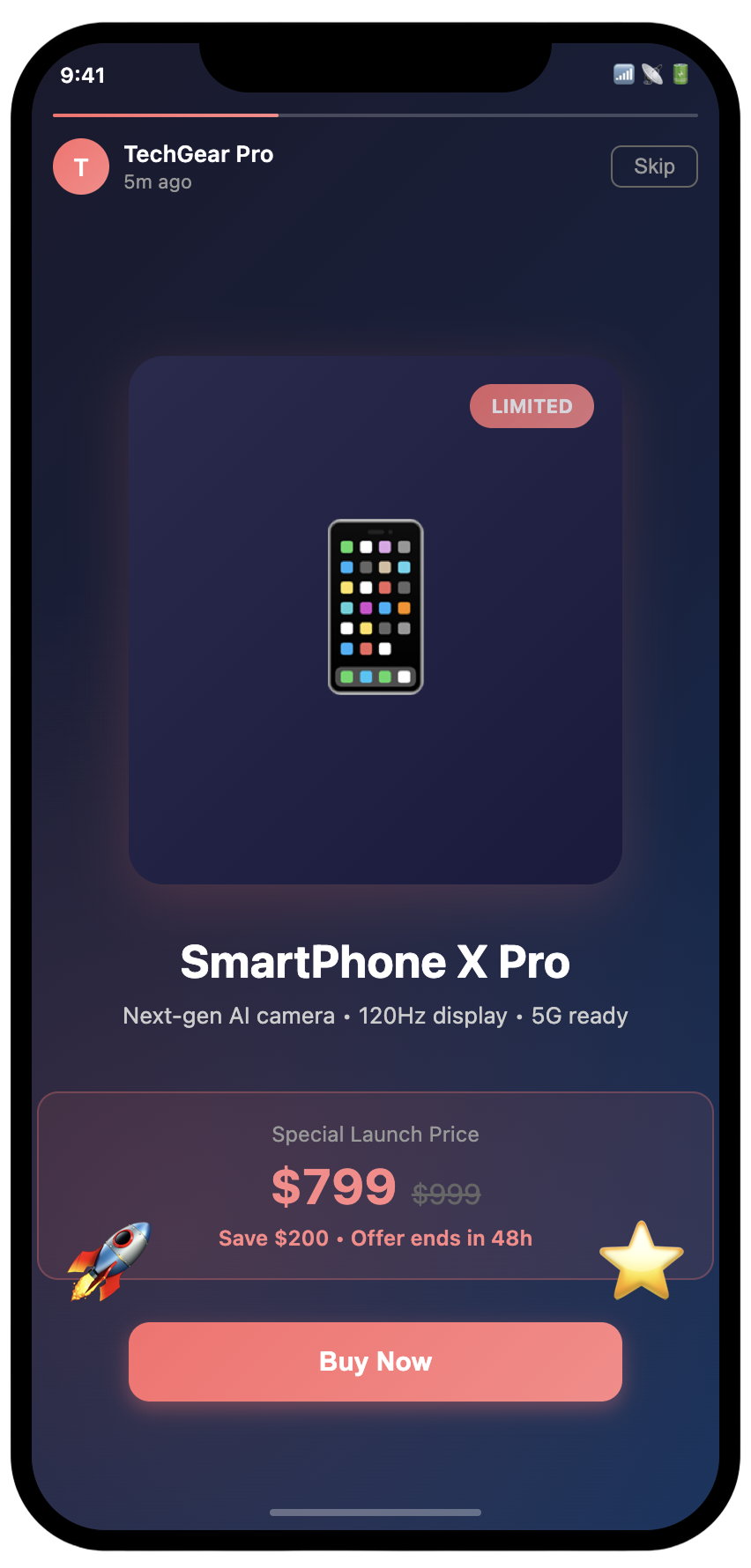
Now compare this to a banner ad at the bottom of the same screen. The user's attention is focused on the story content. The banner is in a different visual zone, associated with a different kind of content. Furthermore, due to overexposure, it is subconsciously tagged as something to ignore. If they need to view it, they will likely feel frustrated because they can't skip it, or a cunning button placement will have them open it. Frustration galore. Keep in mind that if the banner auto-refreshes or loads a rich media creative, it competes with the story's own load performance, thus degrading the very experience the user showed up for.
Why is context alignment important?
If all this wasn't enough, Story ad formats also benefit from something that display banners cannot offer by design, which is content alignment. When a publisher places a story ad between two pieces of content on the same topic, the transition feels logical. For instance, a user is reading a story sequence about travel destinations and encounters a full-screen ad for luggage or a flight booking app. This doesn't yank out of the experience (as is often the case with banner ads). They're encountering a relevant suggestion when they are naturally interested in the subject.
This contextual fit is one of the primary reasons story ads consistently outperform banners on interaction rate. The user is already in a frame of mind that makes the ad relevant. Sure, programmatic targeting can put the right ad in front of the right viewer. But it is with content alignment that publishers ensure that the content reinforces the message. That's an effect that banners, by design, cannot replicate, since they seldom have a connection to the content before them.
Can you use Story ads for monetization and maintain app experience?
What we've outlined so far makes a clear statement that Stories are a far better way to monetize your content than banner ads, especially when it comes to apps. In fact, when used properly, Stories can be a highly engaging, easy-to-use format that can seamlessly flow with your app experience.
The sequential story as a narrative journey
Creating Stories for an app is a fairly easy task. You go to StorifyMe, create an account, create the story you want, export it as a widget, and place it within your app. Simple enough. But the problem comes out when you need to decide what story to create and how to weave it into the app experience.
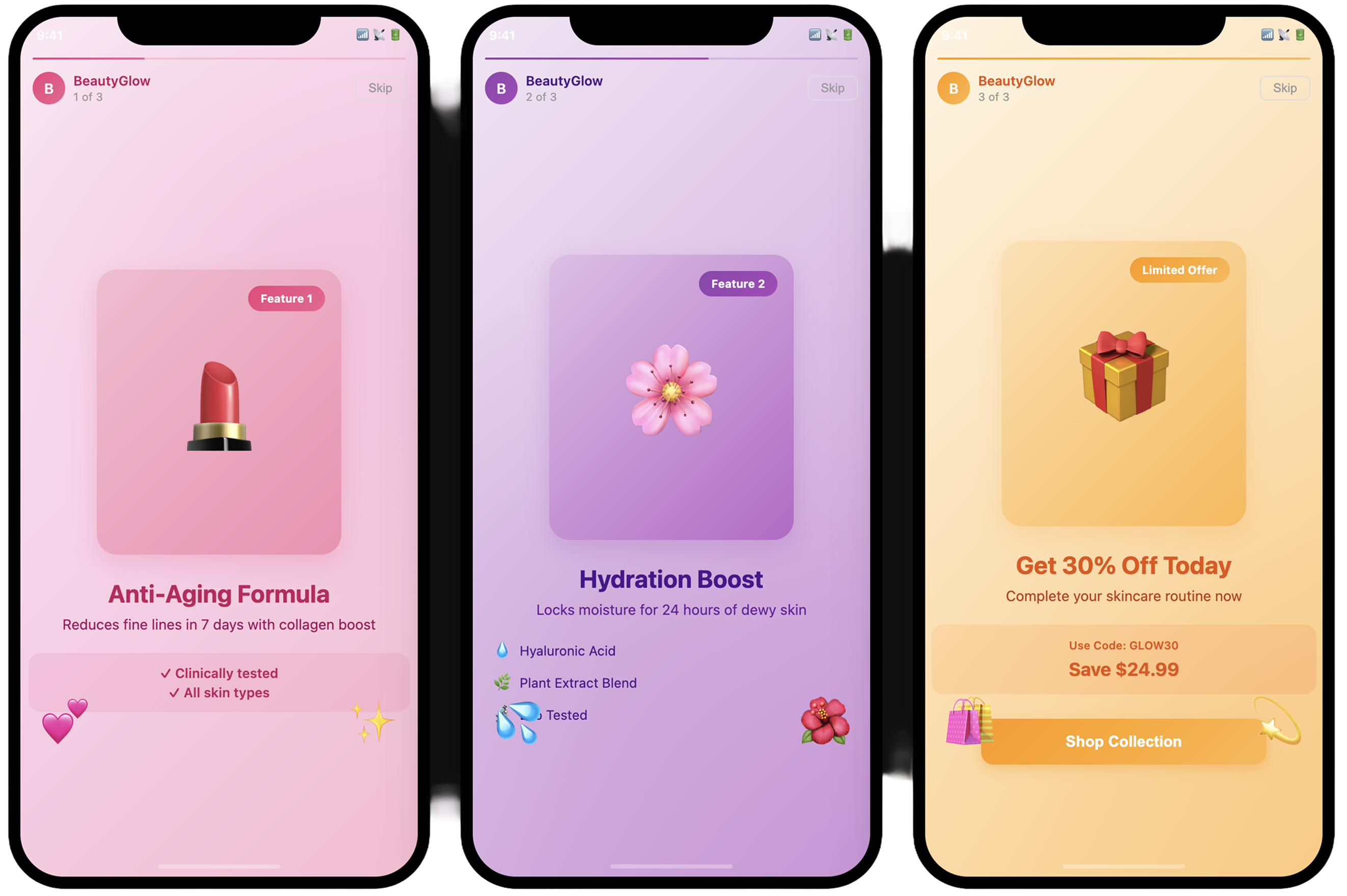
A good, rookie-friendly option is to utilise storytelling. The most effective retail story ads don't treat each card as a standalone unit. They use the content sequence as a narrative device. First card creates the hook. With the second, you build context or demonstrate the product. Then the third introduces social proof or a specific offer. And the final card is the call to action.
Opting for this approach is beneficial in several ways. Firstly, it helps you learn how to approach retail and how to describe what you wish to market. With some A/B testing, you'll get first-hand experience of your viewers and how to motivate them towards purchases. Secondly, this approach mirrors the way consumers actually make purchase decisions. Nobody sees a product for the first time and immediately buys it. There is always a micro-journey of awareness, interest, and desire that happens in seconds in a well-designed retail environment. A story sequence can compress that same journey into four swipes. That's something a single banner unit, no matter how well targeted, cannot replicate.
Shoppable stories enable fast transactions
Arguably, one of the most commercially significant developments in advertising is the shoppable Stories. A shoppable Story embeds a direct purchase or product-exploration mechanic within the story card itself. This can be a swipe-up link to a product page, a tap-to-shop overlay, or an in-app product carousel that surfaces without ever leaving the publisher's environment.
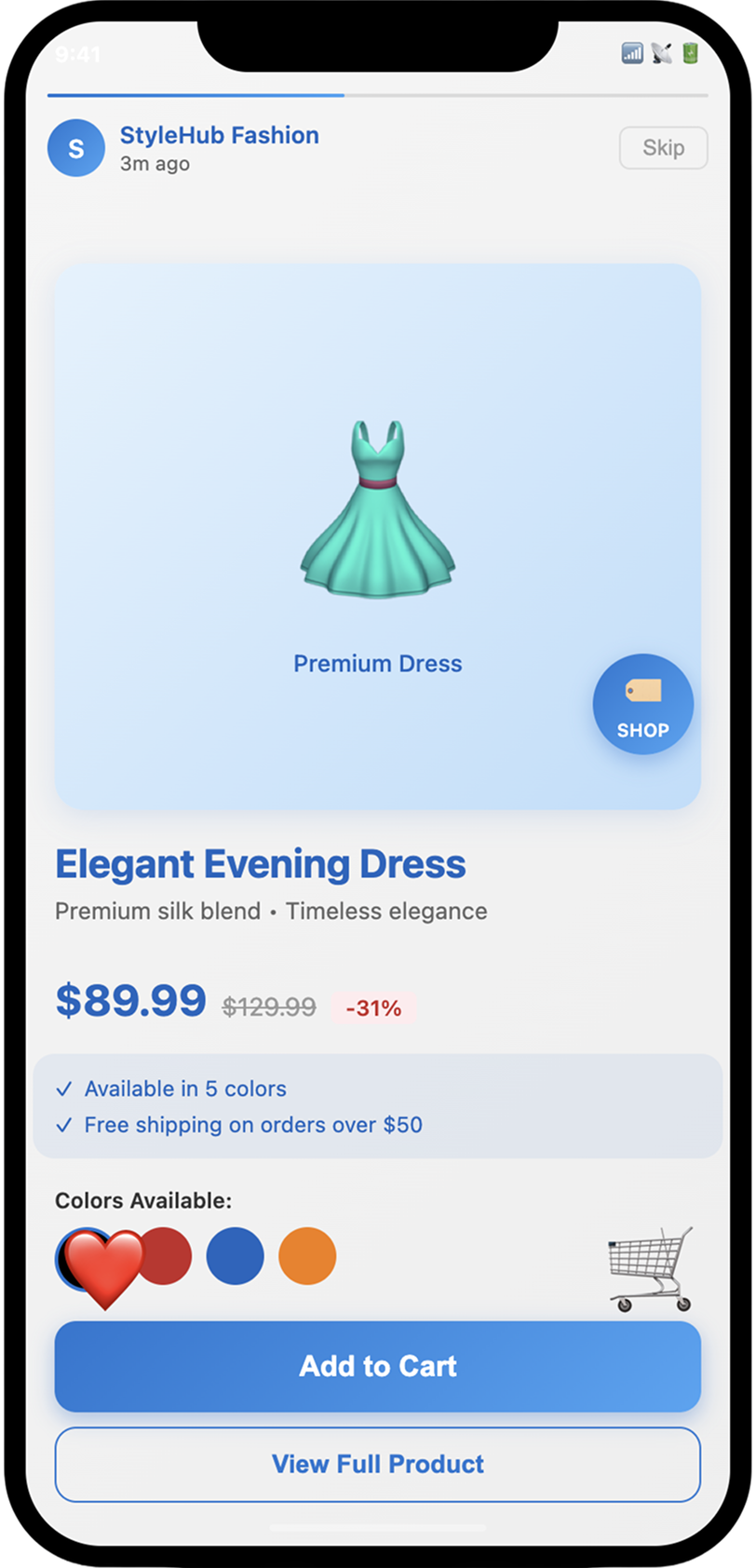
The importance of this cannot be overstated. Every step between a moment of purchase intent and the actual transaction is an opportunity for the user to lose interest, get distracted, or simply change their mind. Marketing stats have clearly shown that a good rule of thumb is that the fewer steps you have between the intent and transaction, the better. The user sees the product in a highly interested frame of mind, and the path from "I want that" to "I bought that" can be as short as two taps. This can bring down the storytelling aspect we've mentioned before. But, if you've understood the UX until the ad, you won't need any prior storytelling to give the viewer context.
Community-driven content makes the audience part of the UX
A significant factor to keep in mind is that ads are inherently distrustful. Even if you create a top-notch Story and situate it perfectly within your app (not disturbing the UX, and yet garnering attention) you still won't overcome the innate feeling of mistrust. Namely, every viewer realises that you are trying to sell them something. And that, naturally, you will highlight the good aspects and ignore the poor ones. This lack of trust is not something you can overcome simply with content quality or honest marketing (although both help). But you can overcome it with community-driven content.
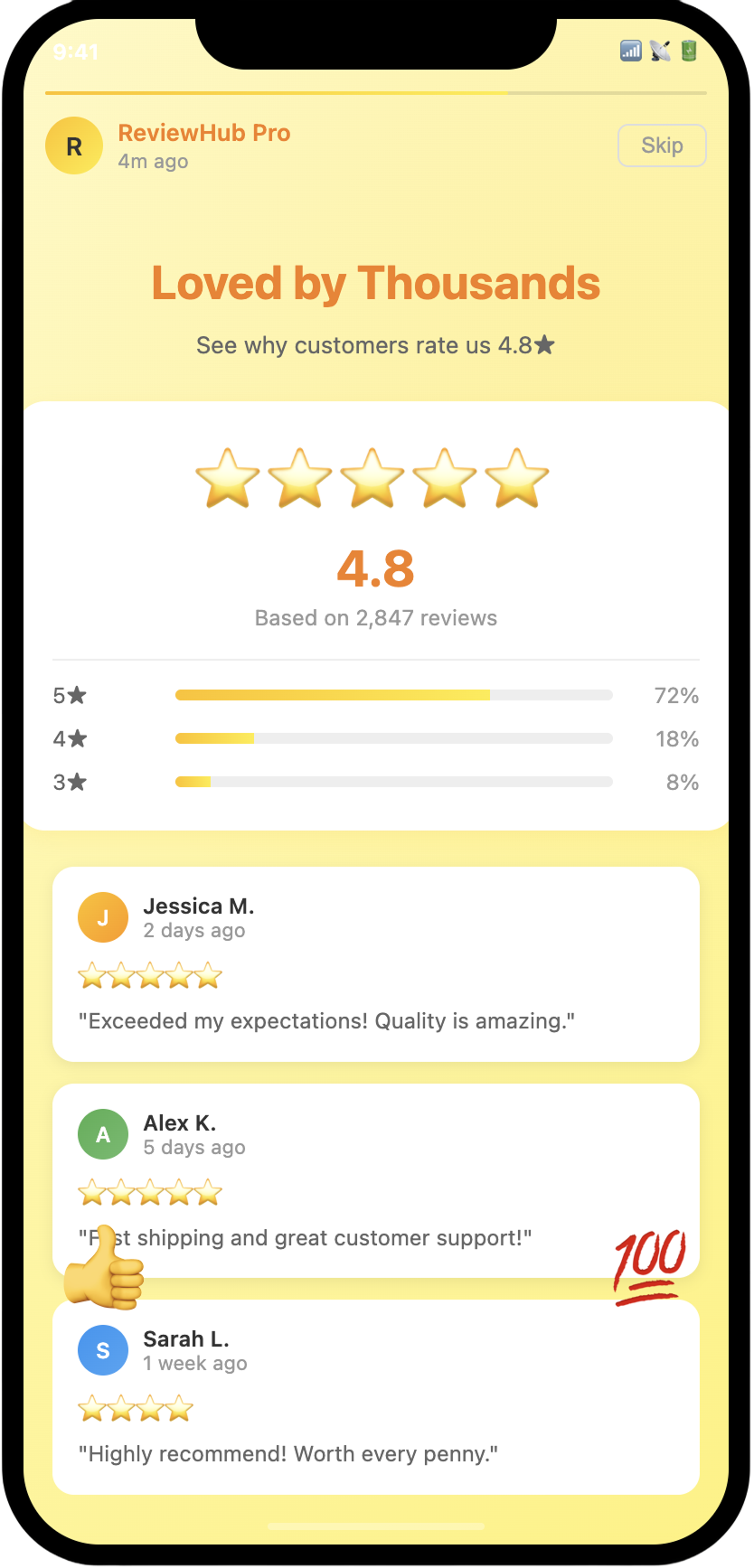
We've written before about adding a community layer to your content and why doing so can be a game-changer, especially if you already have a growing community. So, we won't go into much depth here. It is sufficient to note that while a customer won't trust a brand, they will quite likely trust another customer. Whether it is a product review, a recommendation, or a simple rating, a bit of customer input can go a long way. If you can motivate your customers to make comparisons to similar products or give their opinions on long-term use, you will situate yourself as a one-stop shop for your customer base.
Monetizing content while maintaining a Premium App experience
To illustrate how Stories would work as a monetization option, let's take an example of a sports news portal. Along with their standard content, they may benefit from running Story ads for specific products. How could they do so? Well, let's outline a Story that would fit well within a standards sports news content feed:
Card 1: The Hook
A cinematic slow-motion clip of a sprinter leaving the blocks. No product yet. Just energy and aspiration that mirrors the sports news the user is already consuming.
Text: "The shoe every serious athlete is talking about this season."
The goal of this card is simply to stop the thumb and earn the next tap.
Card 2: The Product
The shoe takes center stage. Three short, spec-driven bullet points written in the language of a sports fan: grip, weight, performance. A subtle nod to professional endorsement without leaning too hard on it.
Text: "Built for match day. Engineered for every day."
This card does the product work — it gives the engaged user a reason to want it.
Card 3: Social Proof
A mosaic of user-generated content styled to look like the app's own community feed. Weekend league players, fans in the stands, real people in real contexts. It should feel like editorial content, not an ad.
Text: "24,000 athletes made the switch this season."
Community-driven content carries this card. Authenticity does more here than any brand creative could.
Card 4: The Shoppable CTA
Clean, simple, no clutter. One headline, one offer tied to the match week context, one button.
Text: "Match week offer — 20% off. This weekend only." CTA: "Shop Now — Opens in App"
The in-app checkout keeps the user inside the publisher's environment, removing every possible point of friction between intent and purchase.
Final thoughts
The shift from banner ads to story-based monetization isn't just a design trend. It's a fundamental rethink of the relationship between advertising and content. What we've outlined is a clear and practical case: when ads respect the environment they live in, everyone wins. Publishers earn more, advertisers reach genuinely engaged audiences, and users get an experience they don't resent.
Story ads work because they don't ask users to change their behavior. The tap-through mechanic, the full-screen format, the sequential narrative... All of it aligns with what users are already doing. Add content alignment on top of that, and you have an ad format that feels less like an interruption and more like a natural extension of the feed. The tools available within that format only strengthen the case. Shoppable mechanics collapse the distance between discovery and purchase in a way that no banner ever could. Community-driven content replaces brand messaging with peer trust. And when you combine both within a well-constructed story, the result is evident.
The sports news example illustrates this well. Four cards, one coherent journey, zero friction. The user arrived for match coverage and encountered an ad that spoke their language from the first frame. That's by chance. It's the result of format, context, and content working together.
For publishers still relying heavily on display banners, the opportunity here is significant. The technology is accessible, the formats are proven, and the audience's appetite for immersive content is only growing. The question is no longer whether story ads work. It's how quickly you're going to make the switch. When you do, StorifyMe is here to help.