Using Stories to promote Subscriptions Without Paywall Friction

More and more platforms are turning to subscriptions as a viable payment option. After all, the steady revenue from subscriptions gives you enough room to focus on creativity and content quality, which is seldom possible when you're working with ads. But while it is quite enjoyable to get revenue from subscriptions, implementing them can be hard. One wrong move, or a mistake in timing, and a potential subscriber quickly leaves. Luckily, you aren't the only one facing this problem. Through trial and error, people have found surprising success in using Stories to promote subscriptions and gently guide people towards them. So, for this article, we will go over various forms of Story content and how it can be used to promote subscriptions without paywall friction.
What is "Paywall friction"?
A paywall is the barrier you put in your content that the viewer needs to pay to get over. Paywall friction is the resistance a reader feels the moment they hit that barrier. It is the interruption and the demand of "pay now or leave." For decades, the paywall was seen as the necessary divider between casual browsers and committed subscribers. And while it does define a clear line between paying and non-paying viewers, it also brings its set of issues.

Research consistently shows that most readers who encounter a hard paywall simply leave. Even if they might enjoy the content and could be warmed up to the idea of paying, a blunt paywall puts them on the spot. And that spot is quite uncomfortable. As a result, bounce rates spike, content sharing drops, and brand trust erodes. The user who might have enjoyed the content and became a loyal subscriber in six months never got the chance. And it is because the relationship was severed before it began. This is why some brands still rely on ads as another method of monetization, even if it isn't as stable.
Don't get us wrong. A paywall by itself isn't a bad thing. If you want to introduce subscriptions, you will have to implement some form of a paywall. After all, what other incentive would there be to subscribe, other than sheer philanthropism? Therefore, the problem you need to solve is not "Should we have a paywall?" but rather "How do we make people believe that their subscription is worth it?"
The shift from gates to journeys
The most effective subscription strategies no longer treat content as something to be locked away. Rather, the content is seen as a journey where payment is an important part. A narrative arc that fans want to follow so badly that paying for continued access becomes the obvious next step. This is the core principle behind story-driven subscription marketing. You don't shorten the viewers' enjoyment by gatekeeping interesting things behind a subscription. Instead, you make fans a part of the content, and subscribing enables them to enjoy more of it.
Let's consider how this works in practice. A reader discovers a long-form piece about local government corruption. The story is gripping, well-reported, and relevant to their community. At the end of the article (not partway through or behind a meter), there is a clear, emotionally resonant invitation: "This investigation took eight months. It changed policy. Support the journalism that holds power accountable. Remember, our supporters get access to our next article a whole week before free users do!" That is not a paywall. That is a story with a subscription CTA and a good reason behind it.
As it turns out, the distinction matters enormously for conversion. Readers who complete a piece of content are dramatically more likely to subscribe than readers who are cut off mid-way. Instead of feeling like they are being extorted, the reader is made to feel like a vital part of the content, and that it is their subscription that is necessary for the content's survival.
How news media is rewriting the subscription playbook
This different approach to gatekeeping content is not the only way to tackle subscriptions. In fact, more and more news outlets are finding quite interesting ways to monetize their content without resorting to simple ads or hard paywalls. Rather than metering stories, many have shifted to what might be called the "newsletter-first" model. The idea is that readers subscribe to a journalist or a beat, not a publication. The story is the journalist's voice, their relationship with the community, and their ongoing reporting arc.
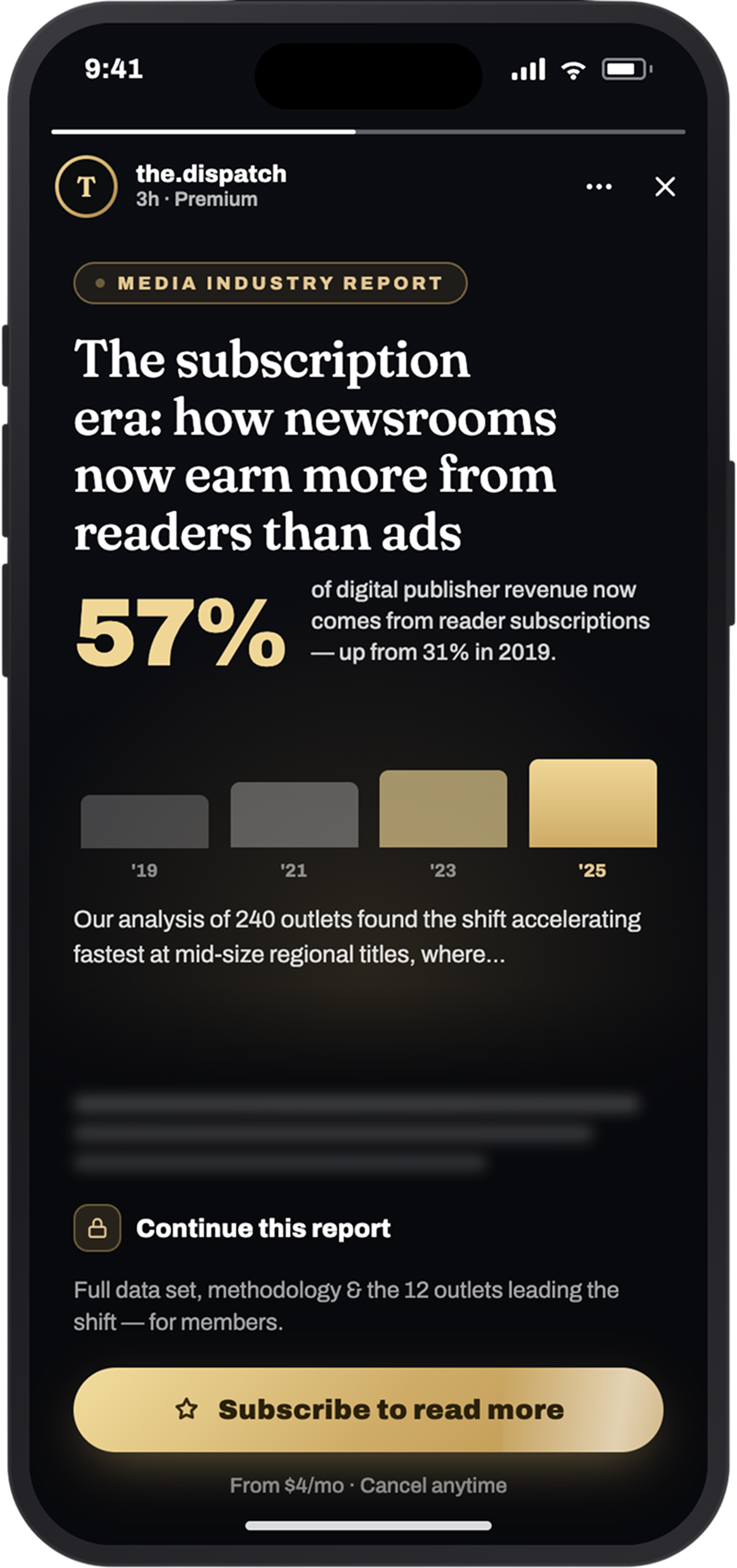
The Texas Tribune pioneered a version of this approach. They built a loyal subscriber base through long-term transparency about funding, and a newsroom culture that treated readers as stakeholders rather than customers. This makes readers not only feel appreciated but also an actual part of the reporting process. Mind you, it took some time to build this kind of narrative. Their subscription pitches consistently mention that:
- Stories that would not have been told without reader support.
- Investigations that are ongoing are only due to our subscribers.
- Communities whose voices would go unheard.
National outlets have followed a similar logic. The Atlantic's subscriber growth over the past several years has been fueled in large part by long-form narrative journalism. This was a nice break from punchy, attention-grabbing, and straight-to-the-point journalism that is often found on social media. Because it was well made and nicely paced, readers felt compelled to follow, not just read once, but return to it as the stories develop. It is a valuable thing when subscribers feel they are following an ongoing story rather than accessing a static archive.
Sports media and the power of the narrative arc
Nowhere is the story-driven subscription model more naturally suited than in sports media. Sports are, at their core, a continuous narrative. Seasons, careers, rivalries, dynasties, and collapses that unfold over years and decades. This is why we have so many movies about sports that still capture our interest.
There are brands that have built entire subscription strategies on this insight. Rather than offering sports statistics or match reports behind a paywall, they invested in narrative-first sports journalism. This includes things like:
- Feature profiles of athletes
- Behind-the-scenes access
- Reported investigations into team culture.
The content was designed to be followed over a longer time period. Readers subscribed not to access scores but to follow a story.
This approach fundamentally reframes the subscription proposition. A sports fan who subscribes to follow the reported narrative arc of their team's rebuild season, or a detailed profile series on a rising athlete, is not experiencing paywall friction. They are continuing a story they are already invested in.
Season-long storytelling
Another great thing about sports is that they are usually seasonal. Some sports media brands have also discovered the power of season-long storytelling hooks and how effective they can be in avoiding the paywall friction. The trick is to use Stories to tie subscription prompts to key narrative moments. This can be the start of a playoff run, a transfer window, or a championship weekend. When timed properly, these hooks convert dramatically better than evergreen offers. The story creates urgency. The subscription lets the fan follow it to the end.
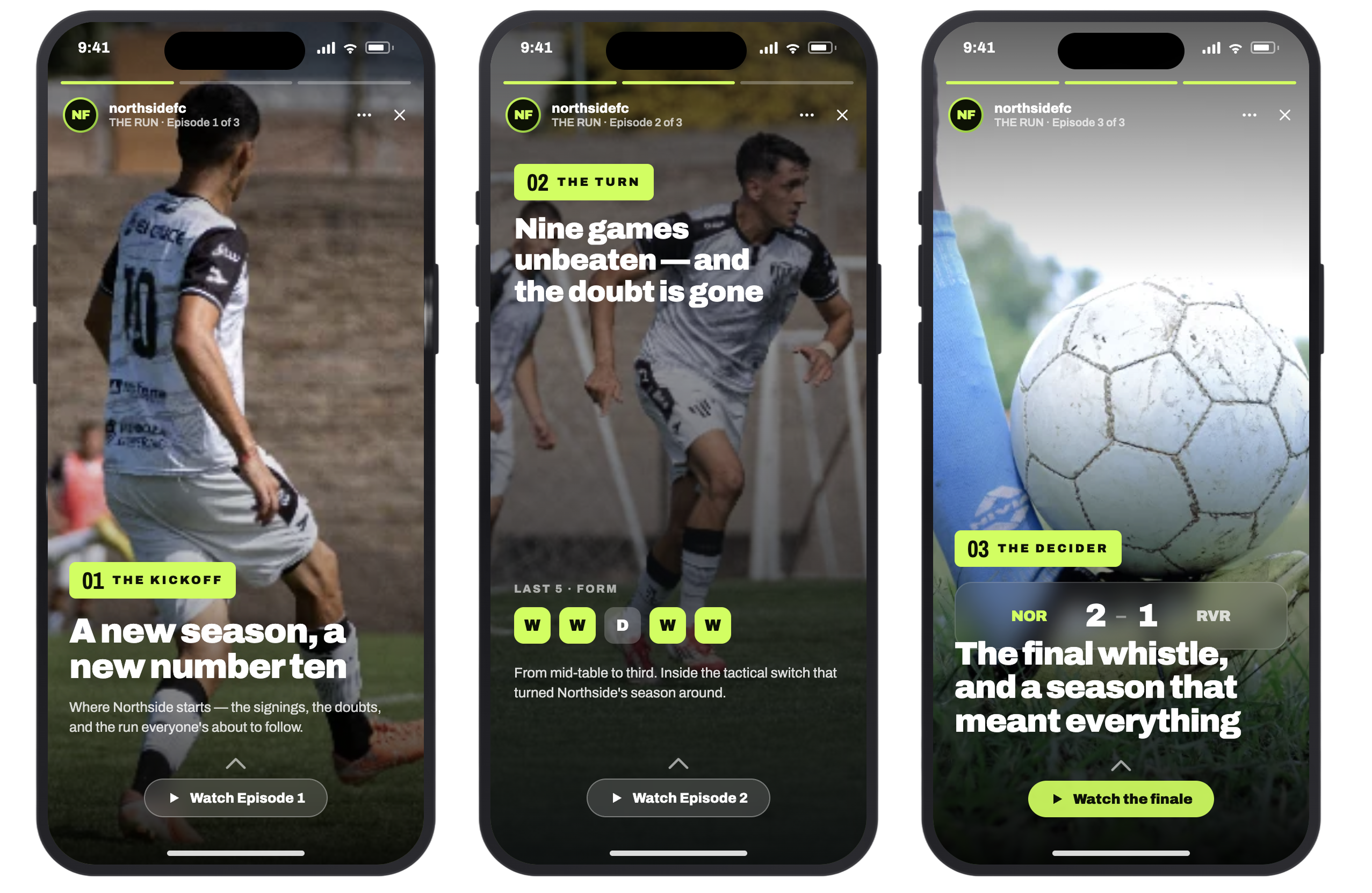
Using Stories to handle subscriptions
Building a narrative around your subscription proposition seems to be quite effective in avoiding the paywall friction. Furthermore, it makes people feel that their subscription is actually important, and not just another addition to your monthly revenue. But, even with this knowledge, it can be hard to push the subscription in the right way, at the right time. Luckily, Story content presented itself as an elegant solution to this multidimensional problem.
Making Story content with ease
Story content, by design, gives a lot of room for experimentation and adaptation. It is a visually rich, swipable format that is easy to digest. This makes it an ideal candidate for a subscription proposition, as you can easily weave it into the rest of your content and make the proposition relevant to what the viewer is experiencing. Another reason why Story content is such a great choice is that it is quite easy to create.
Social media makes creating Story content quite easy. Any amateur with a phone has the ability to create content that could, potentially, go viral. But when brands decide they need to step away from Social media, or simply create high-end Stories that actually drove an important message, it suddenly became clear that professionals had to step in. This was seen as expensive. Creating a decent Story that would be in line with the brand image was seen as something only large-scale brands could afford. The assumption has been that producing polished, mobile-first Story content requires a dedicated team, significant technical resources, and full-fledged workflows.
That assumption is increasingly outdated. Platforms like StorifyMe have made it quite straightforward to create high-quality Story content without specialised technical knowledge or large production budgets. StorifyMe provides an intuitive creation environment where editorial teams can build visually compelling Stories using their existing assets, whether that means video clips, images, text, polls, or links to full articles. The result is content that feels native to the platforms where modern readers spend their time, without the overhead that once made this kind of production prohibitive.
Personalized Story content and AI
One of the oldest challenges in subscription marketing has always been relevance. A story that resonates deeply with one reader might feel completely irrelevant to another. In the past, publishers had to choose between writing broadly enough to appeal to everyone. Or, they had to be narrow enough to truly connect with someone. Neither approach was ideal, and neither was particularly effective at converting casual readers into paying subscribers.
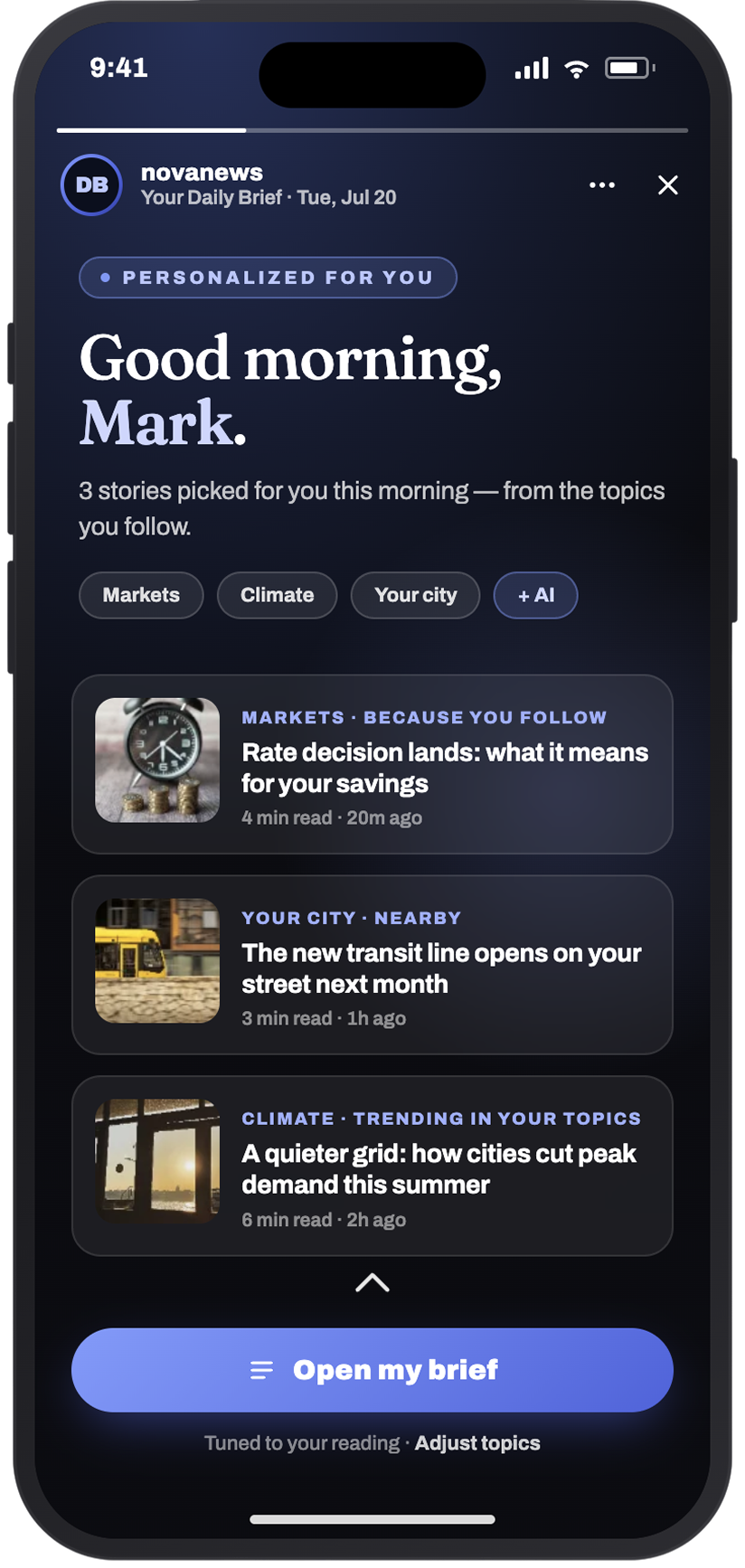
This is where artificial intelligence came in. AI makes personalisation and data gathering not only possible at scale, but genuinely practical for brands of all sizes. By analysing reading habits, content preferences, time-on-page behaviour, and even scroll depth, AI systems can build detailed pictures of what individual readers care about most. And when that data is applied to Story content, the result is a well-timed, well-formatted subscription proposition with no paywall friction.
Optimized subscription CTAs
Consider what this looks like in practice. A reader who consistently engages with investigative pieces about environmental policy will see one subscription prompt. A reader who gravitates toward human interest stories or local reporting will see another. This simply makes sense. Instead of a generic "Subscribe for full access," each reader encounters a Story that speaks directly to their demonstrated interests. "Follow our ongoing investigation into chemical dumping in your region. Our subscribers get exclusive updates before anyone else." That is not a wall. That is an invitation tailored specifically to the person standing in front of it.
The personalisation extends beyond just the message. AI can also determine the optimal moment to present a subscription offer within a Story. Some readers convert best after three or four pieces of content. Others need a longer relationship before they are ready to commit. AI-driven systems can identify these patterns and time subscription prompts accordingly. This reduces friction by presenting the offer when the reader is most emotionally invested and least likely to simply walk away. The story does not change, but the moment it asks something of the reader is carefully calibrated to when the reader is most ready to give it.
The Community layer - conversation between subscribers
There is another dimension to Story content that often gets overlooked in discussions about subscriptions, and that is its built-in capacity to build community. Stories are not just consumed. They are discussed, debated, shared, and reacted to. This social layer, when properly cultivated, becomes one of the most powerful retention mechanisms a subscription platform can have.
Think about what happens when a reader finishes a compelling long-form investigation or a deeply reported profile. The natural impulse is to talk about it. Who can I share this with? What do others think? Did I miss something? These are the instincts that drive people toward forums, comment sections, and social media threads. A subscription platform that provides a dedicated, high-quality space for these conversations is offering something that free content almost never can: a community of people who care about the same things you do, at the same depth you do.
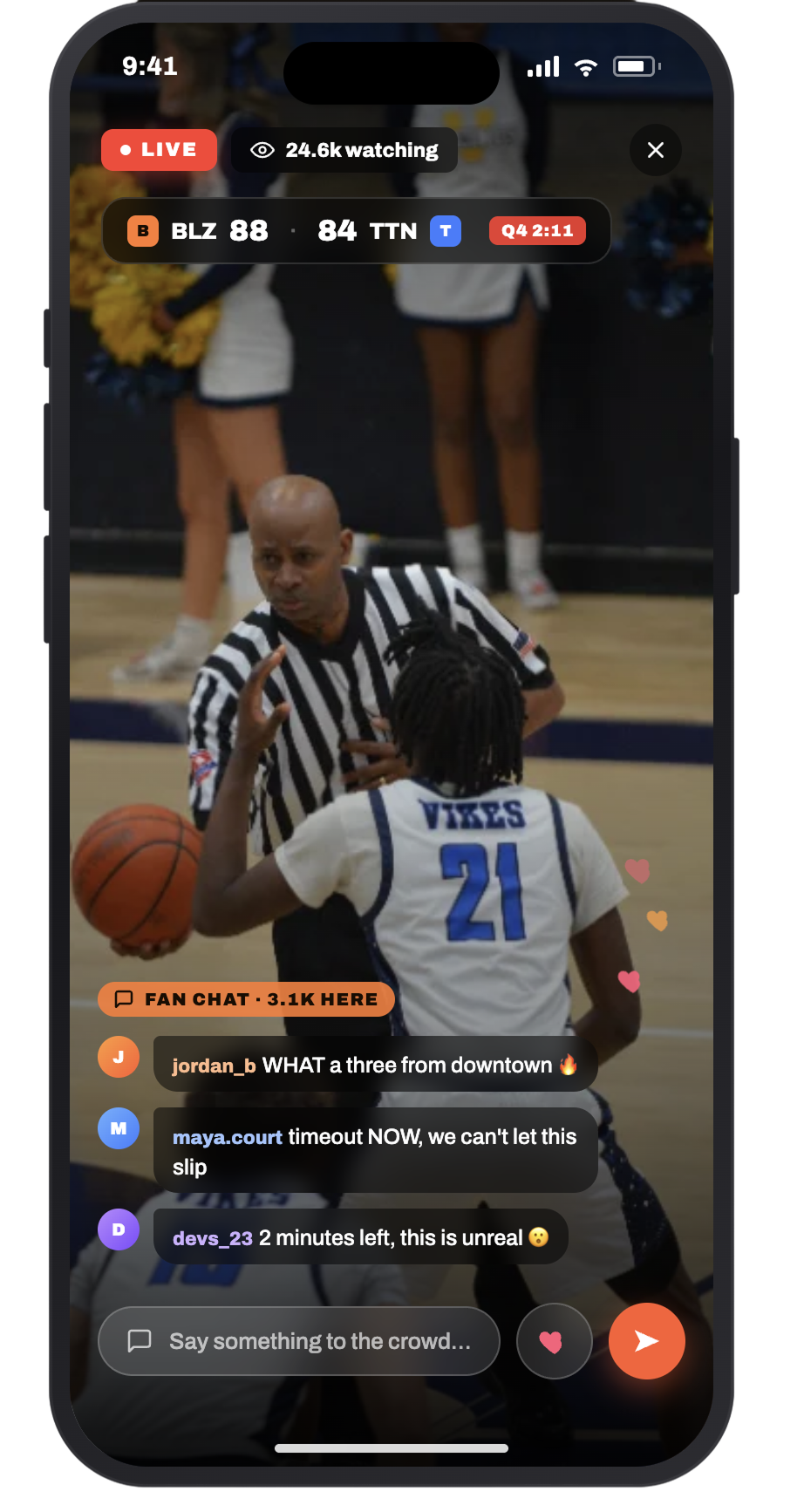
Story content also enables viewers (and potential subscribers) to directly communicate with each other. You can easily weave subscriber reviews and ratings to help convince people to join. You can even put live chats within Story content, and have people discuss the Story in question, or a timed event (like a sports event).
Final thoughts
What all of these elements share is a common philosophy. The relationship between a publisher and a reader should feel earned, not forced. This can mean AI delivering a subscription offer at precisely the right moment with precisely the right message. A community of subscribers making the paywall feel like a door rather than a wall. Or Story content that travels seamlessly from article to app to social feed. The goal is the same. Make the reader feel that what lies on the other side of the subscription is something they genuinely want to be part of. Paywall friction does not disappear by removing the paywall. It disappears when the reader stops seeing the paywall as a barrier and starts seeing it as the entrance to something worth entering. Story content, used thoughtfully and supported by the right tools and technology, is the most reliable way publishers have found to make that shift happen.
StorifyMe is an interactive engagement layer that helps news publishers deliver personalized Stories, Shorts, and interactive content experiences across their websites and mobile apps. Publishers use StorifyMe to increase session time, improve content discovery, expose more readers to subscription offers, and create new opportunities for monetization.