Why Owned Media Is Winning Back Attention from Social Platforms
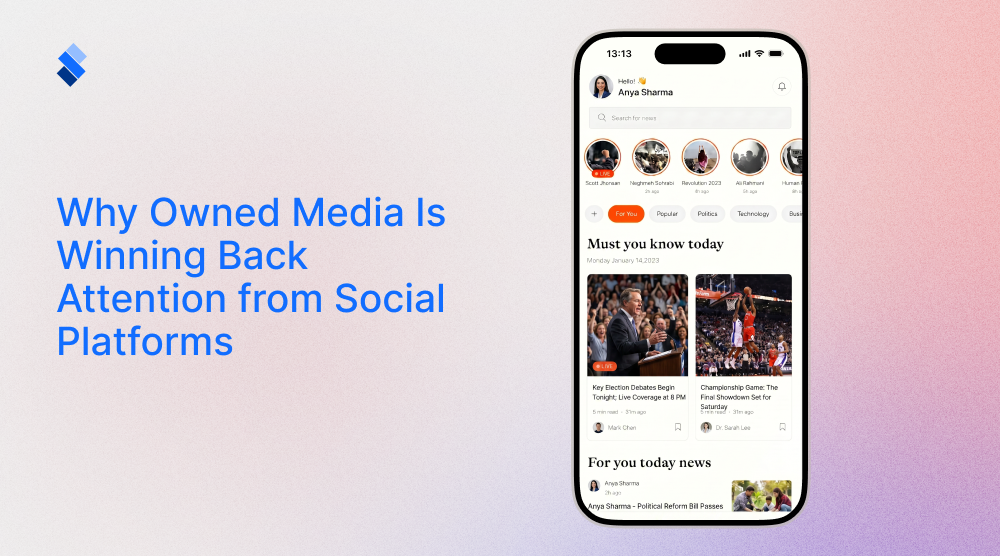
For a long while, social media was the undisputed focal point for digital attention. Big and small, brands poured budgets into Facebook ads, chased algorithmic favor on Instagram, and wrecked their minds in creating engaging LinkedIn posts. Simply having a social media presence was seen as a must. This was because the barrier to entry was non-existent and because not being on social media pretty much made you invisible. But over the past couple of years, there has been a quiet shift. Audiences are slowly moving away from social media and towards owned media. And many of the smartest brands and creators are already on the other side, waiting for them. Why is this so?
Are we in the downfall of social media?
The short answer is no. The long answer... Well, it depends. By all accounts, social platforms are by no means dying. When we look at the number of people using social media, the numbers are only rising. This is why even a DIY social media account is still better than nothing. But while more and more people are using social media, more and more people are also getting tired of it. The ads, the never-ending content, the self-promotion of narcissistic users... All this has become a bit too much. And when we factor in the AI slop that we'll see more and more of, it soon becomes clear why people aren't as keen on social media as they were before. Furthermore, we've grown aware of how detrimental it is to spend too much time on these platforms, and how pretty much everyone could use a social media detox.
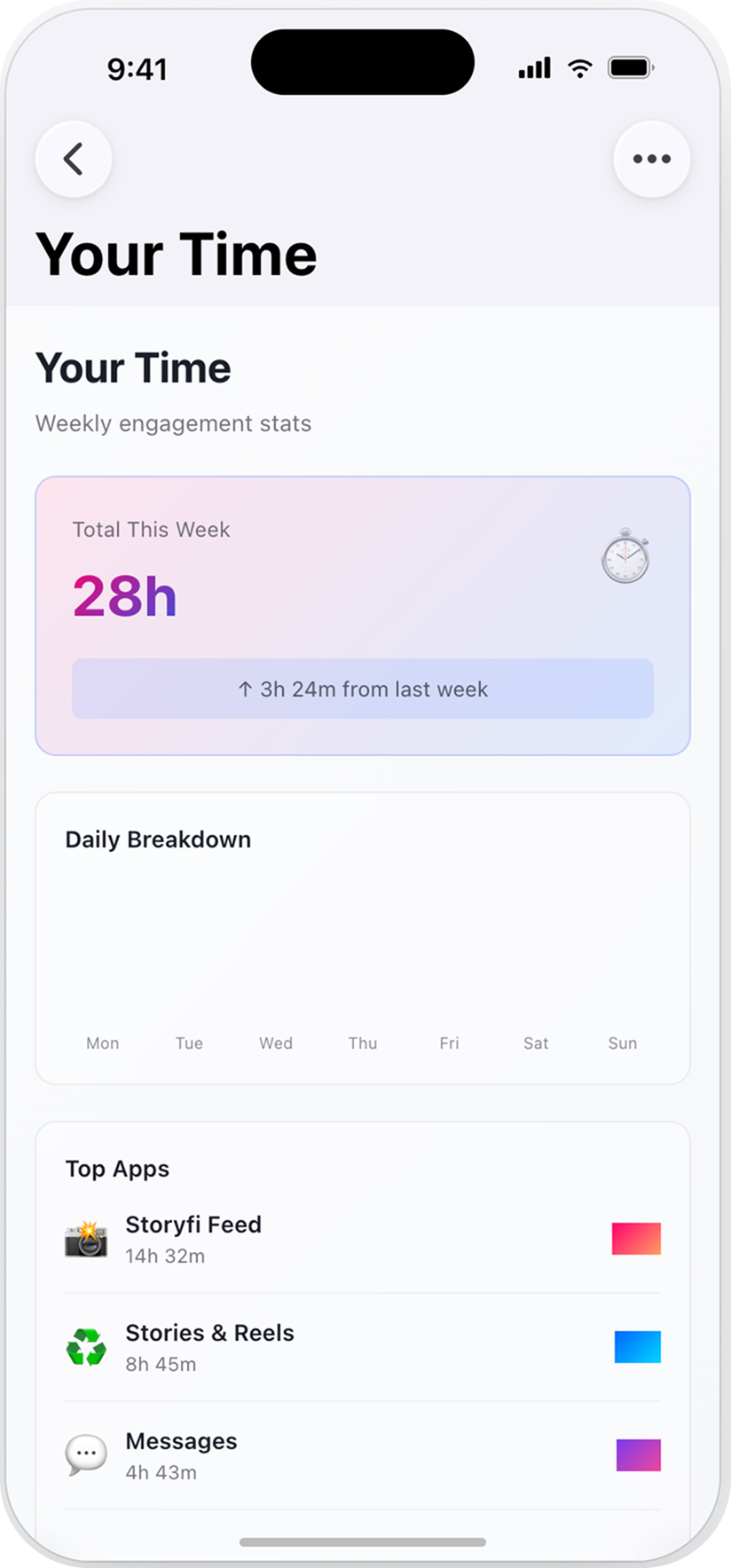
While social media will continue to be effective, it is safe to assume that it has reached its peak. So, instead of investing as heavily in it, brands are turning to their owned media. This helps them avoid the staggering competition for attention on social media and enables them to provide a more unique UX for their users.
What is owned media, and why does it matter now?
Owned media refers to any content channel that a brand controls directly. Your website is the prime example of owned media. Besides it, your email list, your podcast, your community forum, your blog, your SMS list... All owned. What's important is that the audience relationship is not mediated by a third party. So, there is no platform's algorithm, monetization model, or terms of service that obstructs your effort.
In this regard, social media should be considered as rented media. And it is vital that we understand the difference between them. When you build an audience on Instagram or TikTok, you are building on land you do not own. The platform can change its algorithm tomorrow, throttle your organic reach, or introduce a new ad format that buries your content. And if they do, you pretty much have no recourse. Adapt or fall into obscurity. You might have followers, but you don't have all the data about them. You have visibility, but you don't have the necessary access.
The Renaissance of owned media
This downside of not truly owning your content on social media is by no means a new thing. Ever since it came out, it was clear that you, as a brand, were only the user of social media. All the content and interactions you have are owned by the platform. But, seeing that social media was a novelty that everyone used, there wasn't much choice. Take what you get and go with the flow. Back in the day, websites were seen as expensive, boring, unintuitive, and difficult to share (at least when compared to social media profiles). For years, the rule was to focus on social media and hope that either interest from there or your SEO would bring people to your website.
Things have changed since then. New tools and features have slowly seen the light of day and made website design easier, cheaper, and simply more fun. Designers have learned from social media and figured out how to integrate various aspects into owned media. With AI, it became quite easy to design a website and redesign it as you see fit. And with platforms like StorifyMe, it became even easier to create the content you want and weave interactivity, community, and shoppability into the content itself. The websites of old were static, flooded with text, and difficult to navigate. Modern websites are dynamic, visually based, and intuitive. In essence, we've taken what is best from social media and decided to use it on our own content.
The Ad-Free advantage
One of the most underappreciated reasons owned media is winning is quite simple: it doesn't have ads in it. This sounds obvious, but the implications run deep. Social platforms have become advertising businesses. Their entire product is designed to interrupt the user experience in ways that are monetizable. Every feed is a negotiation between the content someone came for and the commercial messages the platform needs to serve. That negotiation has only become more aggressive over time. The ratio of ads to organic content on major platforms has increased steadily year over year. And while social media platforms try to be sneaky, users notice, even when they can't articulate it. They feel the friction.
Ad fatigue is real and well-documented. Studies consistently show that banner blindness, ad-skipping behavior, and general distrust of algorithmically surfaced content are at all-time highs. The average person now encounters somewhere between 4,000 and 10,000 advertising messages per day across all channels. And this has been going on for a while. By the time someone opens their social feed, their psychological defenses are already raised. They are pre-skeptical. They scroll faster, engage shallower, and remember less. While there are ways to avoid ad fatigue, it is usually best to find ways to avoid ads altogether.
Owned media operates in an entirely different environment. When someone opens a newsletter they chose to subscribe to, there is no surrounding noise to actively ignore. No competing ads, no algorithmically inserted posts from accounts they vaguely remember following, no autoplay video from a brand they've never heard of. The content takes up the full field of attention. That clarity is extraordinarily rare in 2026, and audiences are gravitating toward it precisely because of its scarcity.
Authenticity as a structural feature
There is a lot of talk about "authentic content" in marketing circles. Paradoxically, most of it is thoroughly inauthentic. A brand strategy dressed up as an honest, thoughtful voice. What owned media enables is something closer to the real thing, and it does so structurally, not just superficially.
On social platforms, content is shaped by the algorithm before it ever reaches an audience. Through trial and error, creators and brands learn what format, length, tone, and topic will get traffic. This is seen as mandatory, as not doing so will likely have your content remain without views. What happens is that, over time, content creators get conditioned to create content in a certain way. Consciously or subconsciously, they view all content as marketing content (trends and algorithms first, authentic thoughts and ideas second). The result is that all content starts feeling the same. Everyone starts to sound a little like everyone else. The feed becomes generic and repetitive, reflecting the same content archetypes in slightly different skin.
Owned media breaks this feedback loop. A newsletter writer does not need to package every idea into a hook-body-CTA format designed for a 1.3-second swipe. A podcaster does not need to front-load drama to beat a 15-second drop-off threshold. A community builder does not need to manufacture controversy to trigger engagement signals. The relationship with the audience develops over time rather than being won or lost in the first three seconds of a scroll.
This freedom produces content that feels more honest and authentic. Long-form newsletters can sit with complexity. Podcasts can let conversations go on. Community spaces can hold nuanced discussions rather than forcing every idea into a comment-friendly binary. We have become remarkably good at detecting the difference between content shaped by genuine perspective and content shaped by platform optimization. The ones who seek out owned channels are, almost by definition, the ones who've decided they want authenticity.
There is also a trust dynamic worth noticing. Email inboxes still carry a psychological weight that social feeds have lost. When a newsletter lands in your inbox, it is implicit that you asked for it. The sender is speaking directly to you. There is no middleman inserting their own agenda into the exchange. That directness builds trust faster than any number of social impressions. And trust, once built in an owned context, is remarkably durable. Newsletters with engaged subscriber bases often report that readers continue to open, click, and respond years after subscribing. This is a retention rate that social platforms can only dream of.
The community layer
One could argue that the most significant development in the owned media renaissance is the addition of the community layer. For years, "community" in branded contexts meant a Facebook Group. A space the brand didn't own, on a platform the brand couldn't control, moderated under rules set by someone else. That arrangement is increasingly untenable, and modern tools have enabled brands to move their communities onto owned infrastructure.
Platforms like Discord made it possible for any brand or creator to host a real, owned social experience. A step further is various layers of community that you can weave into content. Modern tools allow for live chats, comment sections, and reviews to be integrated into posts, Stories, and product placements. This means that people can effectively communicate with one another without having to head to a different platform.
In essence, community layers solve one of owned media's historic weaknesses: the one-way nature of the relationship. Emails speak at recipients. Podcasts speak at listeners. Blogs are written for readers. A community layer creates dialogue where the real brand loyalty is forged. When a subscriber can ask a question and get a response, they can connect with other people who share their interests. This makes them feel like they are part of something rather than just a recipient of something. The owned channel becomes a community rather than a delivery mechanism. That is a fundamentally different kind of value. The brands seeing the strongest returns from owned media in 2026 are almost universally those that have invested in this community dimension. They use their newsletter or podcast to drive members to the community, and the community to deepen engagement with the content.
What can we expect with owned content and AI?
Another big factor to consider, especially when it comes to websites, is the AI. Namely, over the past decade, AI has become better and better in web design. With DeepSeek, Claude, and ChatGPT, it has become quite easy to create a website from scratch, even if you have little to no experience. This was a major hurdle to overcome before, as one would have to pay a web designer to create a professional-looking website. Now, with a couple of thought-out prompts, you can have a running website in a couple of hours. As you can imagine, this has substantially increased the number of people making their own websites and providing owned content.
AI has also made it easier to create content for social media. While this brought some benefit to smaller brands, as brainstorming, editing, and post-production became easier, it also brought its own set of problems. Namely, social media is getting filled with AI slop. As of writing this article, 20% of videos on YouTube are AI slop. While people are trying to address this in various ways, the issue persists. And as things stand, it is likely going to.
Another big question is whether publishers can maintain trust and relevance on social media. AI makes it easier than ever to post fake news and circulate it at record speed. Even so, it is somewhat difficult to discern a real video from an AI-generated one. And when we consider how easy it is to make subtle changes to real videos, and in doing so change their entire message, the future seems scary. But we will leave further discussion about AI and content creation for a future article.
Final thoughts
Social platforms are not disappearing. As things stand, they will remain useful distribution channels for reaching new audiences. But they have shown their limitations. The combination of ad saturation, algorithmic focus, declining organic reach, and diminishing user trust has created a genuine opening. And owned media is moving through it.
The brands winning attention in 2026 are not the ones with the most followers. They are the ones with the most direct, trusted, and community-supported relationships. They are building in email, in audio, in long-form writing, and in owned gathering spaces where their audience doesn't just watch. They participate and fully engage. That is what owned media offers, and it is increasingly what audiences are looking for: a place where the content is chosen rather than served. Where the relationship is direct rather than mediated. And where the community makes the experience worth returning to. Modern content tools make it easier than ever to own your online presence. It is up to you to use them.