Best Story Formats for Live Sports Content
There is something deeply primal about watching sports. Even before stadiums, television, and live streams, humans gathered in groups to watch competition unfold. The crowd's roar, the shared agony of a missed penalty, the emotional eruption when the ball hits the back of the net. These are the integral parts of enjoying spots. In spite of this, sports platforms have historically relied upon fundamentally solitary content formats. The long-form article, the pre-recorded highlight reel, the static score update... Yes, they deliver information in an entertaining way. But they do not deliver the feeling of being in the stands. This is the gap that Story formats are uniquely positioned to fill. just as long as they are used in the right way. In this article, we will try to answer which format, deployed at what moment, for which audience segment, will create the kind of communal, electric experience that makes fans feel like they are part of something, not just passively watching. Let's get into it.
Sports are a social event, and always have been
Before we can meaningfully analyze story formats, we need to understand what we are trying to replicate in the digital space. In our view, the goal for any sports platform is not just to inform. The goal is to recreate the social atmosphere that makes sport worth following in the first place. And you can only do this by making your fans a part of an active community within your online landscape. Once you achieve that, every other goal, like conversion, product promotion, or mere further engagement, is made much easier.
Think about the last time you genuinely enjoyed watching a sporting event. Chances are, you were not alone. You were with friends in a bar or sitting at home in front of a TV, messaging your group chat. At the very least, you were doom-scrolling through social media to see what other fans were saying. The score, the tactics, the individual performances... These matter, of course. But it's the experience of sharing that makes sports content truly enjoyable.
A quick rundown of Story formats
“Story formats" is a fairly broad term. So, before analyzing which ones work best for live sports, we should define what they cover. The differences between formats are meaningful, and each brings a distinct UX with distinct strengths and limitations.
In-app Stories
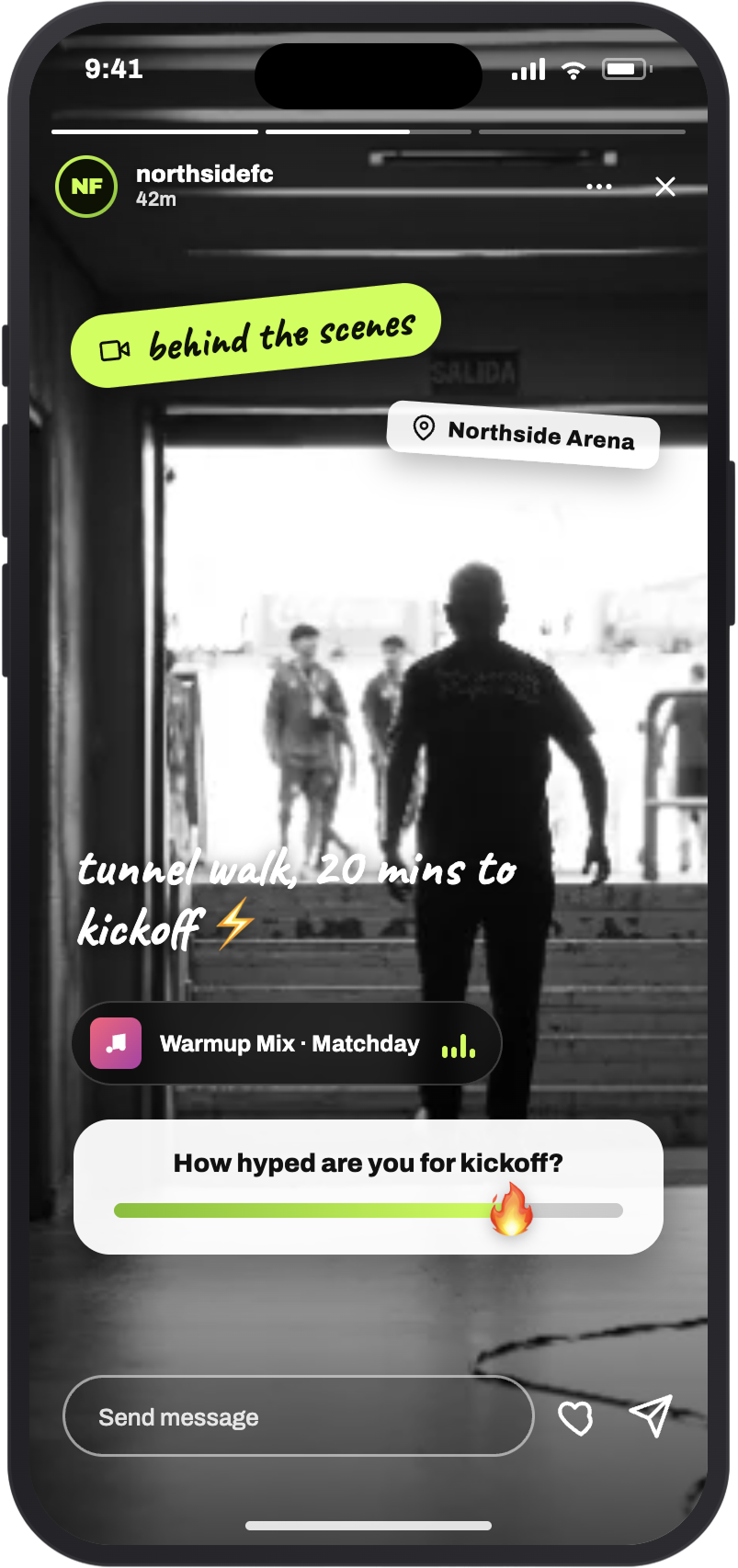
These are the native story experiences embedded within a sports platform's own mobile app. They follow the familiar vertical, full-screen, tap-to-advance model popularized by Instagram and Snapchat. The crucial difference is that they live within an owned environment rather than a social media platform. As such, they give publishers full control over the UX, the data, and the branding. Sports brands particularly benefit from the ability to embed interactive elements like polls, live chats, and quizzes without being subject to a third-party platform's algorithmic whims.
Live Stories
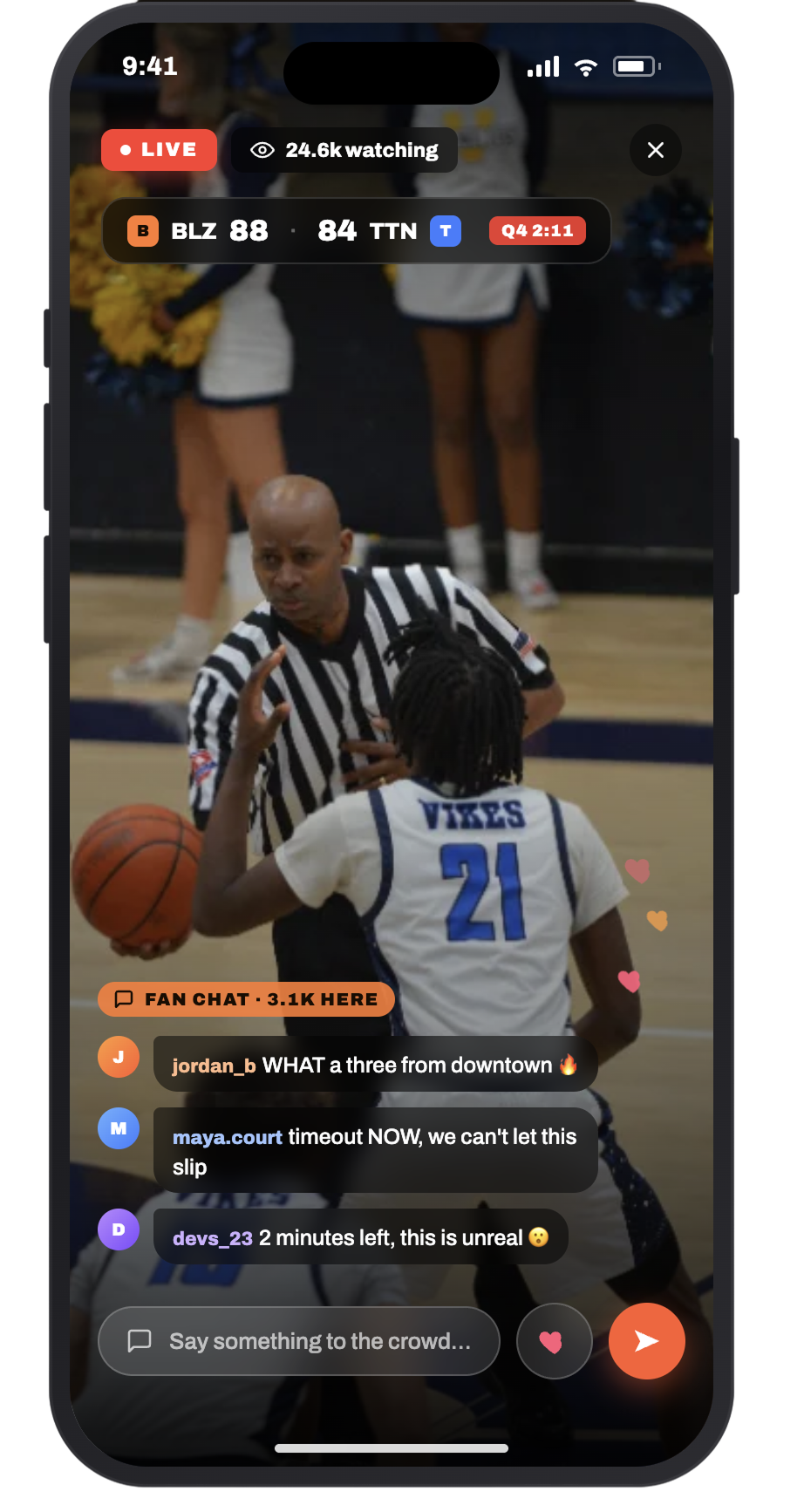
A live feed presented through the Story format. Unlike a static story published after the fact, a live story is a breathing, evolving narrative. A basketball game might generate dozens of new frames across four quarters, each one adding a new layer to the unfolding story.
Carousel Stories
This is a horizontal sequence of swipeable content cards, often used for summaries, rankings, or multi-angle takes on a single event. Truth be told, they are usually less immersive than single vertical stories and demand a bit more attention. Bet, they excel at presenting structured, comparative information in a digestible format.
Ephemeral Stories
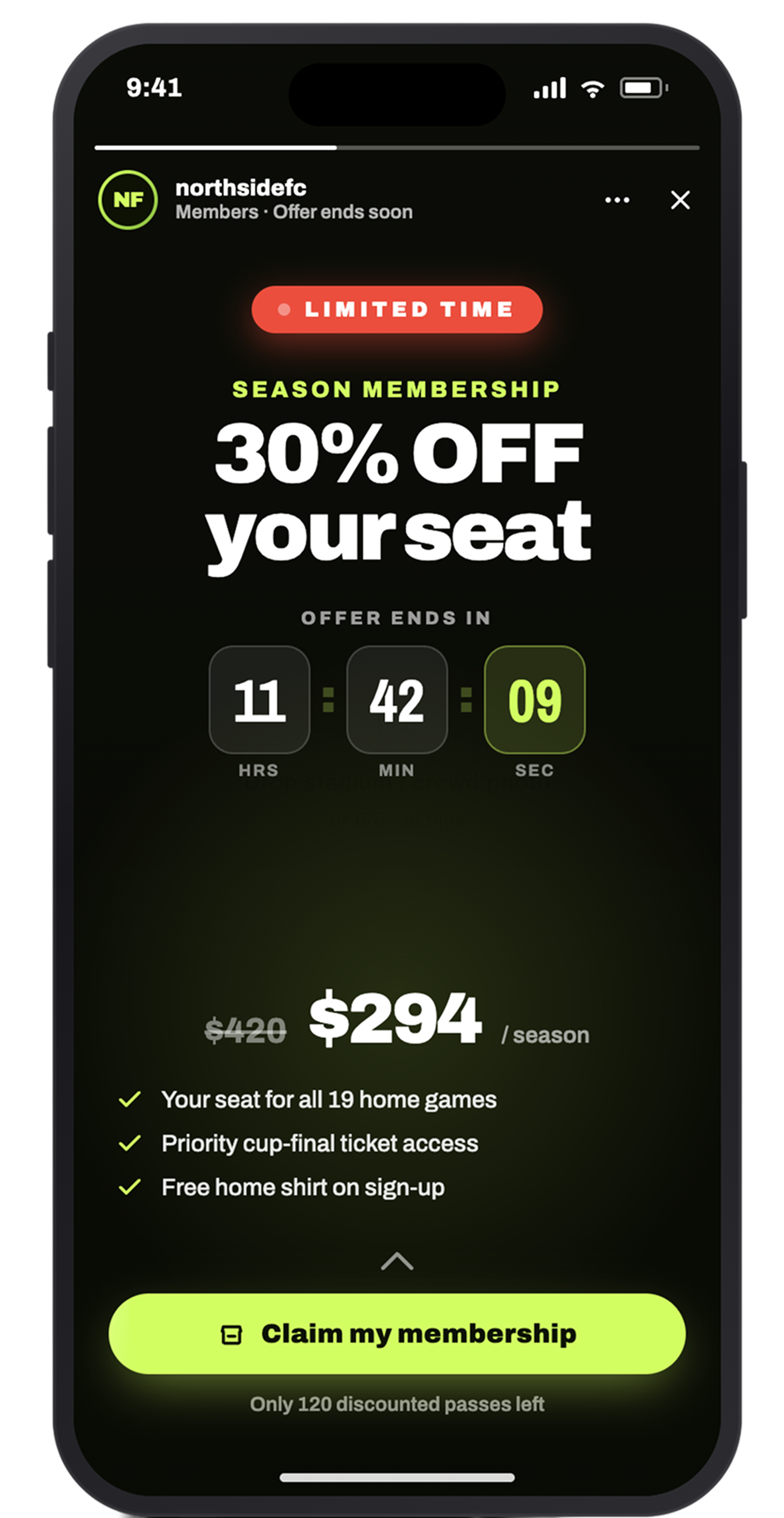
These are the closest to what you see on social media. Time-limited story formats (typically lasting 24 to 48 hours) create urgency through their temporary nature. Their disappearing quality has its pros. It drives real-time engagement and encourages fans to check in frequently during an event rather than catching up afterward.
User-generated Stories
This encapsulates the fan-submitted story content that a platform can curate and surface within its own feed. Rather than only broadcasting from publisher to fan, this format turns the audience itself into a content layer, creating a genuine community experience within the product.
A deeper dive
While there are other Story formats, these are the most commonly used. And now that we've given a quick rundown, let's go a little bit more in-depth into how these specific formats relate to live sports.
Live Stories maintaining the live feel
There is a strong case to be made that live stories are best suited (almost purpose-built) for live sports coverage. The reasons are structural. A match is an event that has to be experienced as it unfolds. It has a beginning, a middle, and an end. It has momentum shifts, dramatic reversals, and pivotal moments. It rewards the fan who is paying attention at the right moment. Watching it tomorrow, or even with a 10-minute delay, simply isn't the same. There is something about knowing that you are watching something as it is happening.
A live story mirrors this structure almost perfectly. It can open with lineup announcements and pre-match analysis, build through quarter-by-quarter updates, reach a climax at the final whistle, and then transition seamlessly into post-match reaction content, all within a single story arc. It is simply a tool that helps you focus the viewers' attention on a certain aspect of the game.
For platforms that have implemented this format, the results have been striking. Users who engage with live story content during a game check the story multiple times per match, building the kind of habitual, repeat-visit behavior that is the holy grail of any sports publisher. The live story does not just inform. It creates a reason to keep coming back.
From the UX perspective, the advantage here is clear. Rather than refreshing a news feed or sifting through a static article, the user simply taps forward through story cards that unfold at the pace of the game. The format respects the user's attention while delivering continuous information. It feels native to the mobile experience in a way that a live blog with a chronological text feed simply does not.
The main drawback of live stories is that they are hard to run. Creating real-time story content during a live event requires a streamlined production workflow. Static articles can be edited and polished after the fact. Live stories cannot. Getting this format right requires editorial discipline, pre-built story templates, and even AI-assisted content tools. That way, you can both keep track of what is going on and add your own content, thus giving a reason for people to regularly check what you have to say.
In-App stories making you the true content owner
Having people use your app is seen as a universally good thing for sports brands. Firstly, they give you full freedom to interact with your audience as you see fit. Secondly, they enable you to gather first-party data about your viewers, which is essential.
Of course, doesn't mean that you can solely focus on running an app. Social media platforms are, and will continue to be, a powerful distribution channel. But, at the end of the day, they are someone else's channel. An algorithm change, a policy update, or a shift in user behavior can evaporate your reach overnight without warning. Building your live sports content experience on top of a social media infrastructure means renting your audience rather than owning it.
In-app stories change this. When fans engage with live story content inside your own platform, you capture first-party data on their preferences, viewing habits, and interaction patterns. This enables you to send push notifications before key moments in a match. Or to build personalized story feeds that surface the content most relevant to each user. This can be a specific team, a particular competition, or a preferred type of analysis.
From a UX perspective, in-app stories also allow sports platforms to go significantly further than their social media counterparts. For instance, you can embed a live chat window directly within a story card, turning a solo viewing experience into a shared conversation. You can surface community polls mid-match: "Was that a foul or a dive?" and publish the results in the next card, creating a real-time feedback loop between the content and the audience. These are not features that a platform like Instagram or TikTok will allow you to build for your specific community. They require an owned environment.
It is fair to say, though, that the required investment is notable. Building and maintaining a high-quality in-app story experience demands ongoing product and engineering effort. But for any sports platform serious about long-term fan engagement, this investment pays off and then some. And no amount of social media spend can match.
Carousel stories embeleshing the live experience
While we've elaborated on the importance of "live feel" when it comes to sports content, it is also worth mentioning that not every story format needs to operate in real-time. Carousel stories excel in specific phases of the live sports content cycle: the build-up and the aftermath. And sometimes, these types of stories capture our attention more, as they aren't competing with the rest of the live content requiring our attention.
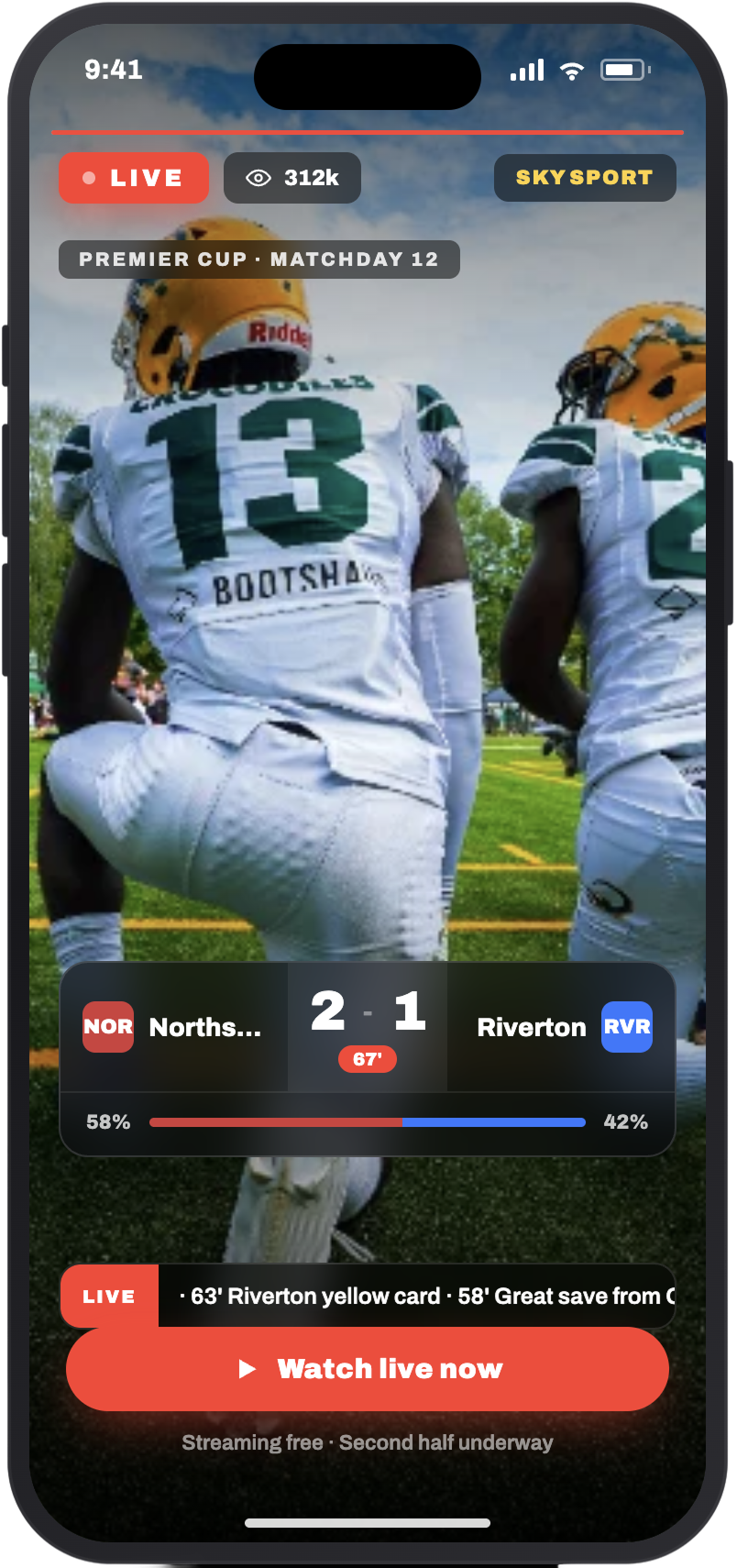
In the hours before a major game, a carousel story can walk fans through the match. The starting lineups, form guides, head-to-head statistics, and tactical previews, where each card delivers one crisp piece of information before moving to the next. The tap-to-advance UX naturally creates a sense of progression and completion. The user moves from "uninformed" to "ready for kickoff" in a two-minute swipe session. That is a genuinely satisfying content experience.
Similarly, after the final whistle. The same format works beautifully for structured post-match analysis. "Five things we learned," "Player ratings," "The moment that decided the game". All these are content formats that fit the carousel structure almost perfectly. Each card is a self-contained idea, and the sequence adds up to a complete picture.
Lastly, notice that the carousel stories don't have the same time pressure that live storeis do. The limitation of carousel stories for live coverage is precisely that they are not live. Their strength is a thought-out structure, which requires time and judgment to create well. Trying to produce quality carousel content in real-time during a match is a recipe for either poor quality or significant production stress. The smarter approach is to use carousel stories in the preparation and analysis phases, while deploying live stories for in-game coverage.
Ephemeral stories bringing urgency
The temporary nature of ephemeral stories (content that disappears after 24 or 48 hours) might seem like a weakness for a sports platform. Why create content that vanishes? In the context of live sport, however, the ephemeral format's built-in urgency is its driving force.
When fans know that coverage will disappear, they have a reason to engage now rather than later. This is not incidental. It directly mirrors the urgency of live sport itself. The game only happens once. The conversation around it has its most electric period in the hours immediately following the final whistle. Ephemeral stories honor that feel. They say: this is the moment, this is where the conversation is happening, and if you miss it, you miss it.
The UX implication here is important. Ephemeral story indicators (the familiar ring or progress bar around a profile icon) condition users to check frequently during event windows. Sports platforms that use this format effectively can train their most engaged fans to develop a habitual checking behavior around match days. This compounds heavily into significant improvements in daily active users and session frequency over a season.
But the downside is equally obvious: ephemeral content provides no long-term SEO value and does not build a library of evergreen assets. It is a format for moments, not for reference. This is one of the main reasons why you cannot rely solely on social media. When used in tandem with permanent web stories and in-app archives, ephemeral content does fill a specific and important role.
UGC Stories turning fans into the content layer
There is one more story format worth discussing seriously, and it is perhaps the most underutilized by sports platforms: user-generated story content. A sports game is a social event, through and through. And the instinct to share during a live sports event is one of the most powerful drives in fan behavior. Fans photograph their matchday setups, share their reactions in the moment, post clips from sports bars, tag friends, and document their own experience of watching the game. This content is authentic in a way that professionally produced editorial simply cannot match.
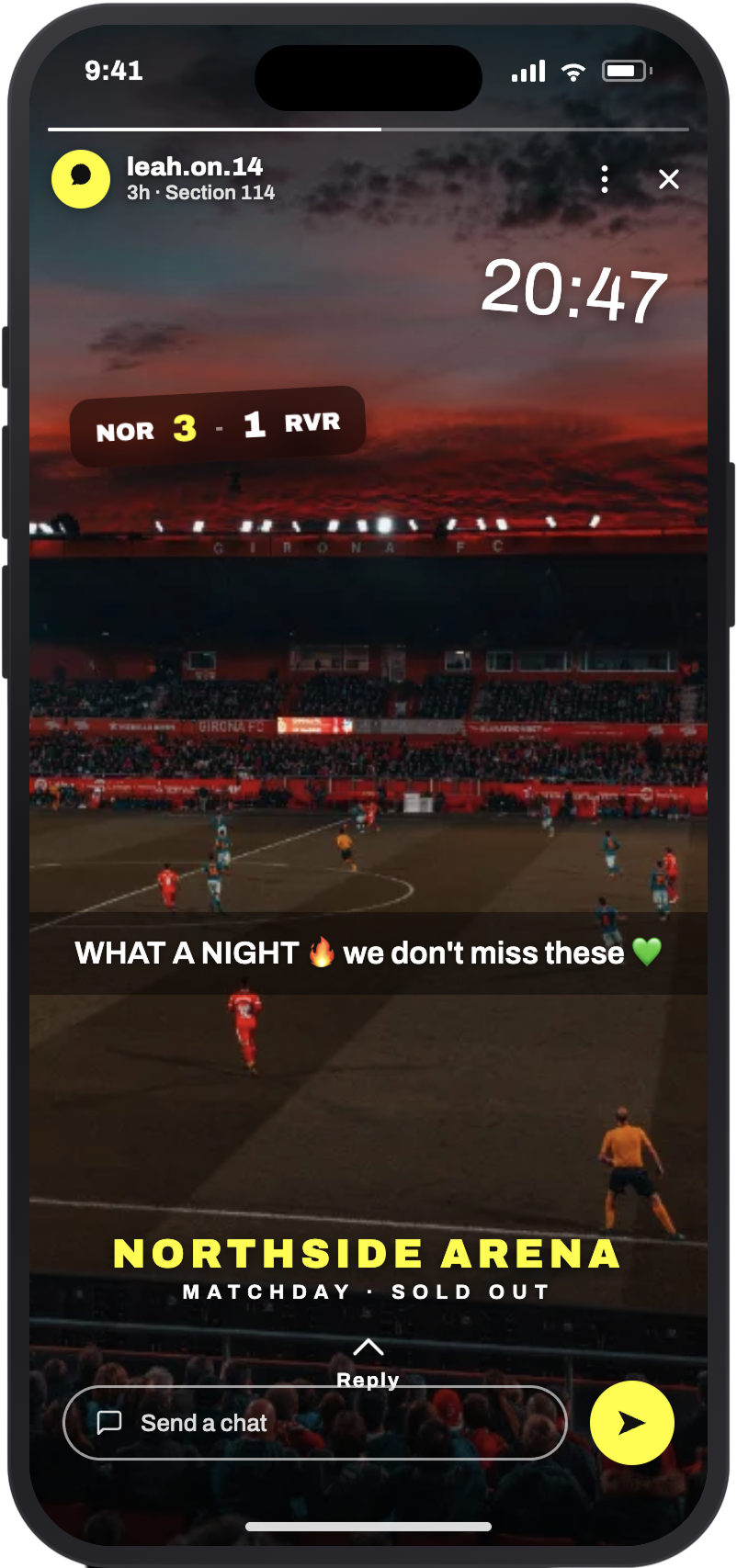
Platforms that create a structured channel for this content (essentially, a curated UGC story layer that surfaces the best fan contributions within the product) achieve several things at once:
- They acquire authentic content at zero production cost.
- They signal to fans that their voice matters within the platform's ecosystem.
- They create a community experience that goes beyond the one-to-many broadcast model, turning the product into something that fans are genuinely helping to build.
The curation and moderation requirements are there, and they should not be underestimated. Vetting and filtering UGC does take some work. Not every piece of fan content is appropriate or interesting enough to surface. But with clear submission prompts, basic moderation workflows, and smart ranking logic, UGC story layers can become one of the most engaging features a sports platform offers.
Final thoughts
Live sports coverage sits at a fascinating overlap of two of the most powerful forces in digital content right now: the demand for real-time, mobile-first experiences, and the hunger for genuine community and shared participation. Story formats, in their various configurations, help with both. So, the question for any sports publisher is not whether to adopt these formats, but which combination to prioritize and when. Live stories deliver the real-time narrative spine. In-app stories create an owned, interactive community layer. Carousel stories bring editorial structure to the preparation and analysis phases. Web stories drive organic discovery. Ephemeral stories generate urgency. UGC stories amplify authenticity. Of course, none of them replicate the experience of being in the stadium with seventy thousand other fans. But used thoughtfully, in concert, they come closer than anything else that digital publishing has yet produced.
StorifyMe is an interactive engagement layer that helps sports platforms deliver personalized Stories, Shorts, live updates, and fan-driven content across their websites and mobile apps. It enables teams, leagues, and sports publishers to increase fan engagement, build owned communities, collect first-party insights, and create new sponsorship and monetization opportunities.