What Are Web Stories Formats, Examples & Use Cases
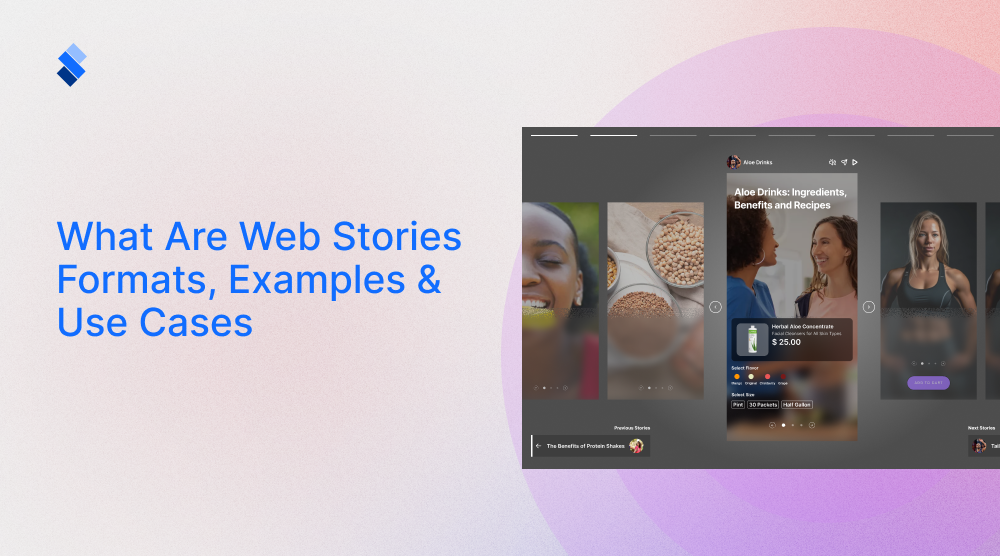
Over the past years, we've had tremendous joy in helping our clients create the Story content they want. From In-app stories that onboard people with relative ease. To web stories that seamlessly showcase the latest updates. Our main focus now is to develop new tools and features to enhance your Story design capabilities. But being so engrossed in a certain subject can make one forget about the basics. While our clients are familiar with Web stories, there are those out there who know little to nothing about them. Given the various novelties that have emerged since we last covered this subject, we believe it is necessary to go back to the basics and elaborate on what web stories.
The basics of Web Stories
When they came out, Web Stories were seen as a mere content trend. But years have passed, and from this standpoint, we can confidently say that Web and In-app stories represent a fundamental shift in marketing content. They combine the immersive, full-screen experience of social media stories with the open, discoverable nature of the web. And unlike their social media counterparts that disappear after 24 hours, Web Stories live permanently on your website. This provides SEO visibility while giving you the format for an engaging experience that users have grown to love.

But what makes Web Stories so effective? Well, at their core, Web Stories are visual-first, mobile-optimized narratives designed for quick consumption. Each story consists of individual "cards" or "pages" that users swipe or tap through. This format achieves two things. Firstly, it captures the viewers' attention, as there is no need to focus on a larger piece of content. Secondly, it creates a sense of progression and discovery that keeps them engaged. TikTok, Instagram Stories, and YouTube Shorts have shown us that mobile audiences crave bite-sized, visually compelling content. And Web Stories turned out to be the best format to guide that craving toward specific brands.
From surfing to scrolling
Web Stories came at a time when online users were changing their viewing habits. For years, the way in which we've enjoyed online content was through "surfing". We went online, looked for a topic that interested us, and then continued to "surf" the wave of online information (meaning exploring links and other articles that we related to what we came to see).
But these days are long gone. Modern audiences don't "surf" the web. Instead, they scroll. When a modern person goes online, 9 times out of 10, they don't really have a clear idea of what they want to see. Instead, they open their favourite social media app and simply scroll through. Modern algorithms will be more than happy to placate them with various content that they will probably like, and change things up if it seems that they don't. This modern approach takes away the agency and the intent that the "surfers" had and places more value on capturing the "scrollers'" attention and figuring out how to keep it for as long as possible.
The reason why Web Stories thrive in the modern marketing landscape is that they were built for "scrollers". Through their design, they overcome the innate disinterest of viewers. An effective Web Story will grab attention immediately, using high-quality imagery, bold typography, and strategic color choice. They will communicate ideas before a single word is read, thus ensuring that the viewer has absorbed the message even before they realize it. Unlike traditional articles where images support text, in Web Stories, visuals carry the narrative weight while text serves as a complementary element.
Design principles of Web stories
While tools like StorifyMe offer endless possibilities in creating Web Stories, there are certain principles that you ought to adhere to. While these are not set in stone, we strongly urge you to at least understand them as they are a big reason behind web story's sucess.
The visual hierarchy in Web Stories follows specific principles. Images and videos should occupy 60-80% of screen real estate, with text overlays kept concise (typically no more than 200 characters per card). This constraint shouldn't be seen as a limitation but a creative challenge that forces you to distill your message to its essence. After all, Twitter (now X) imposed the 280-character limit and became popular because of it.

Video integration elevates Web Stories from static presentations to dynamic experiences. Short video clips (15 seconds or less per page works best) add motion and emotion that static images can't match. Whether it's a product demonstration, behind-the-scenes footage, or customer testimonial, video creates intimacy and authenticity. The autoplay feature means these videos start playing as soon as users land on a page, creating immediate engagement without requiring any action. This doesn't mean that static images don't have a role to play. But, unless you have a very good reason why your Story should be static, you should opt for video.
Animation and motion graphics add another dimension to Web Stories. Subtle animations like text fading in, images zooming, or graphic elements sliding across the screen will guide the viewer's eye and create professional polish. These micro-interactions make stories feel alive and premium, distinguishing them from simple slideshows. With StorifyMe, you orchestrate these movements without heavy coding, making sophisticated visual effects accessible to non-developers.
Interactive elements that drive engagement
Another key factor to Web stories' success is interactivity. Namely, by relying on interactive elements, brands transform passive viewers into active participants. Polls and quizzes are perhaps the most popular, allowing audiences to vote on questions, test their knowledge, or share opinions. The idea is that these elements don't just entertain. They generate data about audience preferences and behaviors that inform future content strategies. And this first-party data is a goldmine for any brand that wishes to improve engagement rates.
CTAs
Call-to-action buttons represent critical conversion points within Web Stories. Unlike traditional ads that feel interruptive, CTAs in Web Stories integrate naturally into the narrative flow. For instance, a fashion brand might place a "Shop Now" button after showcasing an outfit, or even allow shopping for the items within the same story. A travel blogger could include a "Book Your Trip" link after highlighting a destination. And a fitness brand could post a link to "Join Us" in a brand-building, hashtagged fitness challenge. The key is timing. Placing CTAs when engagement peaks ensures that it will actually yield results.

Swipe-up links
Swipe-up links and attachment features provide pathways to deeper content. When a story successfully hooks a viewer, these links guide them to full articles, product pages, or sign-up forms. The attachment feature displays a small prompt at the bottom of screens, inviting users to "swipe up" for more information without disrupting the story experience. This creates a natural funnel from awareness to consideration to action.
Triggered actions
Lastly, page-triggered actions add sophistication to the user experience. Stories can be programmed to respond to user behavior. Perhaps revealing additional content after someone spends a certain amount of time on a page. Or, triggering an animation when they interact with an element. These conditional behaviors make each viewing experience feel personalized and responsive, which drastically increases the likelihood that users complete the entire story and take desired actions.
Serial storytelling
Web Stories excel at series and episodic content that keeps audiences returning. Unlike one-off pieces, video storytelling creates both anticipation and habit formation. For example, a cooking site might publish weekly recipe stories. A news outlet could deliver daily briefings. Or a fitness brand might share ongoing challenge updates. This serialization builds routine engagement, training audiences to check back regularly for new installments.
Exploring daunting subjects
The episodic format allows complex topics to be explored across multiple stories rather than crammed into single presentations. By doing so, brands manage to both adapt to audience attention while creating multiple touchpoints for engagement. For example, a comprehensive guide to sustainable living might become a 12-part series, with each story focusing on a specific area like fashion, food, or transportation. And every page within the story can hold links to further research. This structure makes daunting topics approachable while generating more opportunities for discovery and sharing.
Bindge consumption
Story collections and playlists help organize content for binge consumption. Just as streaming platforms group related episodes, publishers can curate Web Story collections around themes, topics, or campaigns. A fashion retailer might create seasonal lookbook collections, while a travel brand could organize stories by destination. These collections appear as discoverable units in search results, increasing the likelihood that users consume multiple stories in a single session.
Lastly, push notifications and email integrations keep communities informed about new stories. When audiences opt in to updates, each new story publication becomes a re-engagement opportunity. These notifications can be personalized based on user interests or past engagement, ensuring relevant content reaches the right people. The result is a self-selecting community of highly engaged fans who actively seek out your stories rather than stumbling upon them accidentally.
The community layer
The interactive elements and serial storytelling made web and in-app stories effective tools to both guide users' attention and bridge different channels. With their use, it became quite easy to explore complex subjects with little friction fron audience. And to connect your website to your app, your app to your social media, and your social media to your website.
If we were writing this article just a couple of years back, this would be the gist of web and in-app stories. But, since we are writing in 2026, we cannot help but mention the community layer and how story content helps users connect.
Social Integration
Because they are mobile-friendly, bite-sized, and self-contained, Web Stories are ideal for sharing. Unlike traditional articles that might require context or introduce visitors to a confusing navigation structure, Web Stories deliver complete, coherent narratives that make sense in isolation. When someone shares a story, the recipient gets the full experience without needing to understand your broader site architecture or content library. Built-in social sharing buttons make it effortless for viewers to distribute stories across Facebook, Twitter, LinkedIn, Pinterest, and other platforms with a single tap. Not to mention that sharing stories with friends and family has become somewhat of a bonding experience. This native sharing functionality transforms each viewer into a potential distributor, creating viral loops that exponentially expand reach beyond your owned channels.

User-generated content integration creates community participation opportunities. Brands can encourage audiences to create their own Web Stories featuring products or services, then aggregate these contributions into curated collections. This strategy works particularly well for campaigns with branded hashtags (like the aforementioned fitness brand example), turning customers into advocates. This fills content calendars with authentic, relatable stories that resonate with prospects. Talk about getting a big bank for a small buck.
AI innovations
Another important innovation worth exploring is AI. On the one hand, it seems that AI holds tremendous promise. For creating Story content. AI tools can streamline every phase of the production pipeline. From generating initial creative concepts to drafting compelling scripts, and even suggesting optimal visual and audio elements. This automation dramatically reduces production time and costs. Which, in turn, allows teams to focus on strategic curation and brand alignment rather than manual design.
On a deeper level, AI enables hyper-personalization. Before AI, analyzing user data was almost exclusive to large brands that could support the necessary framework. Nowadays, most brands can afford basic AI analytics tools to follow past interactions, preferences, and browsing behavior. Algorithms can dynamically assemble story variants, tailoring everything from product recommendations and narrative paths to color schemes and messaging tone for individual viewers.
However, it is important to notice the dark side of AI. Over-reliance on automation can easily lead to generic content, especially if there is little human oversight. The most successful implementations treat AI as a collaborative co-pilot. Even now, we are overrun with AI slop left and right. And as time goes on, it will only become more difficult to separate real Story content from AI.

Final Thoughts
Web Stories have evolved from a content trend into a must-have format for modern digital engagement. By combining the visual immediacy of social media with the permanence and discoverability of web content, they offer brands a powerful tool to capture attention in an increasingly distracted digital landscape. Their true strength lies in versatility, serving simultaneously as awareness generators, engagement drivers, and conversion tools. However, success requires thoughtful application. Visual-first principles, strategic animation, well-timed CTAs, and interactive elements separate compelling stories from forgettable ones. And while AI promises to streamline production, it is essential that you maintain a human touch. The challenge moving forward is leveraging AI's efficiency without sacrificing the authenticity that makes stories genuinely resonate.
Ultimately, Web Stories succeed because they meet audiences where they are, in the format they prefer, with content that respects their time while delivering genuine value. Brands that master this format will find themselves not just competing for attention, but earning it.