Vertical Video vs Articles: What Drives Engagement in Mobile Apps
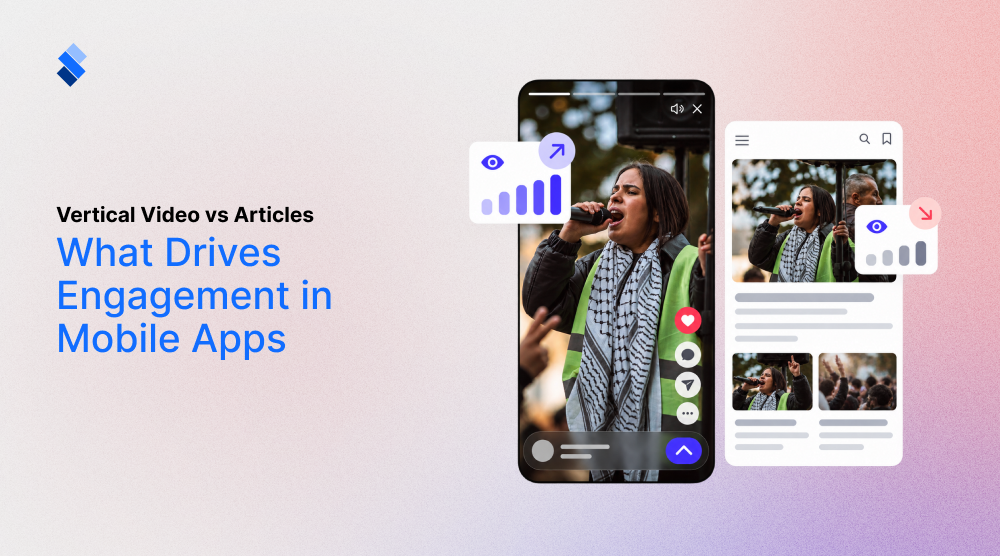
At first glace this might seem like a trivial question. After all, modern marketing trends unanimously point towards vertical video. Whether you are a big-shot marketing company or a small brand looking to come out of obscurity, vertical videos are the way to go. Especially when we consider that a fair number of monetization and engagement strategies require you to push an app. Articles seem like an old marketing tool that has long past its use. But, if this were truly so, we wouldn't be writing this article. We would simply create a series of videos about the subject. So, what is the benefit of articles in modern marketing, and, more specifically, can they play a role in mobile apps?
Attention spans haven't necessarily gotten shorter. The issue of modern marketing is that attention has gotten more expensive. Users are bombarded with notifications, competing apps, and an endless supply of short-form video on social platforms. So, when someone opens your app, you have a shrinking window to prove that staying is worth their time.

For some, this simply meant rethinking their approach to vertical videos. And sure, a more up-to-date approach to anything will yield results. But simply chasing the ongoing marketing trends is not the right call. At least from a long-term perspective. Instead, you need to find a way to both grab this expensive attention that everyone is trying to chase, and maintain it through value and thoughtful presentation. You also need to tackle both SEO and GEO, which is not easily done through vertical videos alone. But all this becomes quite manageable when you factor in owned media and especially articles.
Defining the two formats inside an app context
Before discussing them, it's worth defining what they actually are within the context of an app.
Articles
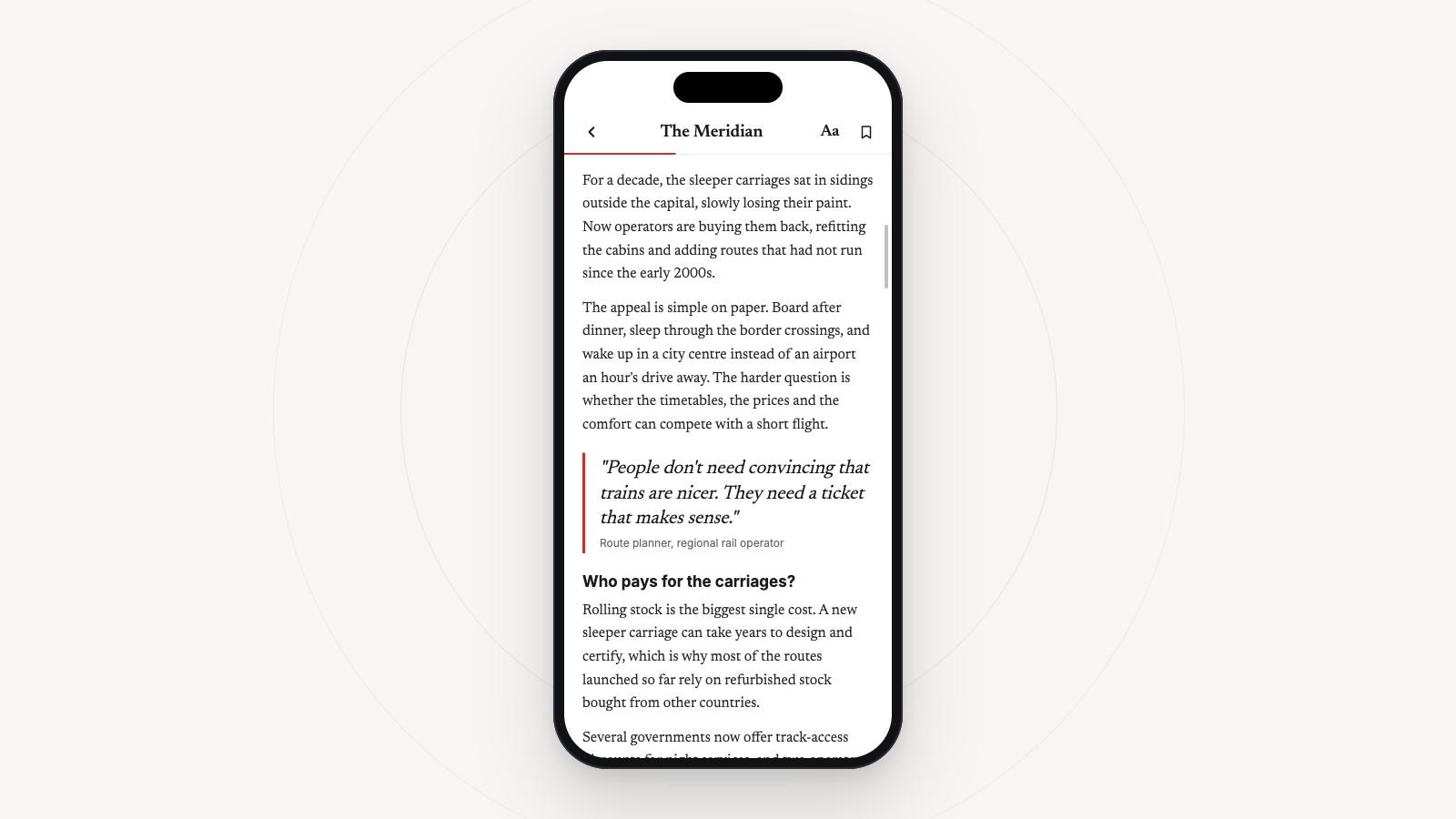
These are long-form or medium-form written content, typically read top to bottom, sometimes with embedded images or video. They require sustained attention, active reading, and a degree of cognitive effort. Articles are excellent at explaining nuance, providing depth, and establishing authority. A well-written 1,200-word piece can do things a 15-second video simply cannot: cite sources, build an argument step by step, and let a reader pause, reread, and reflect.
Vertical video
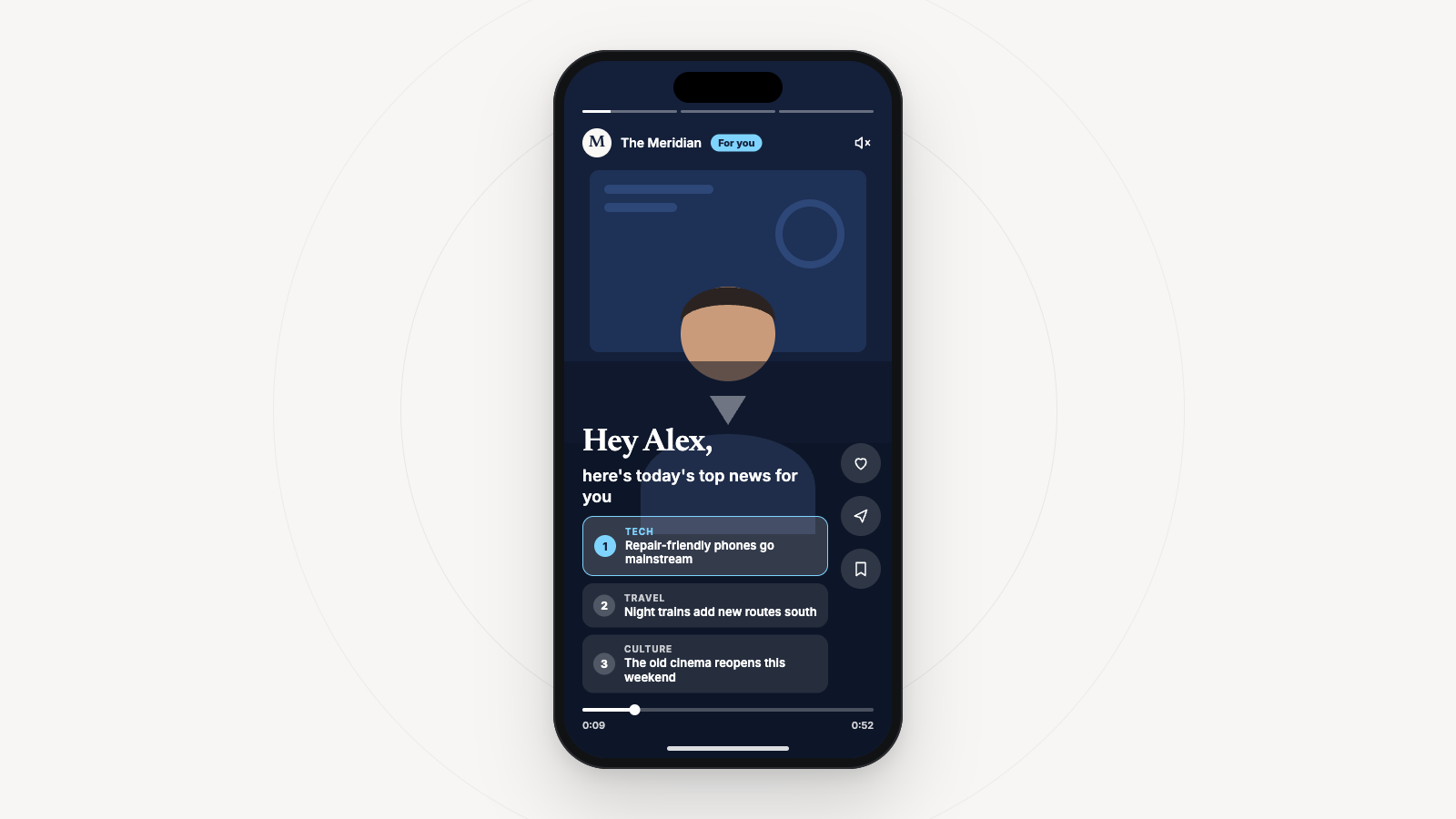
Especially in the "Stories" or short-form format popularized by social platforms and now widely adopted inside native apps. They are full-screen, tap-or-swipe-to-advance, and typically broken into short segments. The format demands almost no active effort from the viewer. You don't scroll, you don't decide what to read next, you just watch, and the content plays itself. This passive, low-friction quality is precisely what makes it so effective at extending session time or guiding people from other platforms to your app. But it's not always the best format for delivering deep, nuanced information.
What the engagement data actually shows
If you look purely at raw engagement metrics, vertical video tends to outperform articles on nearly every surface-level number like time spent per session, completion rate, and return frequency. This isn't surprising once you consider how the format is designed.
Session time and the psychology behind it
The dominance of vertical video marketing is by no means an accident. They, particularly Story-style sequences, benefit from a handful of well-documented psychological mechanisms that articles simply don't trigger in the same way.
- Low cognitive load - Tapping through video cards requires almost no decision-making.
- Instant reward - Each new video card might deliver something slightly different, a new angle, a surprising stat, a punchy visual. This unpredictability keeps users moving forward in a way that mirrors the same reward loop found in social feeds.
- Full-screen immersion. There's nothing else competing for attention on a full-screen vertical video. At least if it's well made.
If we combine these, it becomes obvious why apps that introduce vertical video or Story-style formats often report notable increases in average session duration. Multiple card sequences can also be chained automatically, meaning one video ending simply opens the door to the next. This can drastically extend the session, with no friction to the user.

Where articles still win
None of this means articles are obsolete inside mobile apps. Articles remain the format of choice when the goal is depth, trust, and long-term brand authority. A few areas where text consistently outperforms video:
- Complex or technical subject matter - Financial analysis, legal explainers, in-depth investigative journalism, detailed how-to guides... These are difficult to compress into 15-second segments without losing substance.
- Searchability and reference value - Articles are easier to scan, skim, and revisit. A user looking for a specific detail can use search-within-page or simply reread a paragraph, something you can't easily do with video. This also makes them far easier to manage for SEO optimization.
- Trust signals for credibility-driven content - Readers evaluating news, health information, or financial guidance often still expect a written source they can cite, quote, or fact-check.
So the answer to "which drives more engagement" is: it depends entirely on what you mean by engagement. If engagement means minutes spent in-app and daily return visits, vertical video usually wins. If engagement means depth of understanding, trust, and long-term brand credibility, articles still hold their ground.
The apps getting this right don't choose. They combine.
If you don't have to choose between the two, don't. The most effective mobile products aren't debating vertical video versus articles as an either-or decision. They're using each format for the job it does best, and connecting the two in a single content journey.
A pattern that keeps showing up across news apps, retail apps, and even fintech products looks something like this:
- A short vertical video sequence introduces a topic and builds curiosity. This is usually done in a fast, visually engaging way.
- At the point of peak interest, right when the viewer is most curious, the sequence funnels into the full article for anyone who wants the deeper version.
This mirrors a technique borrowed from television storytelling: the cliffhanger. Cover the setup quickly and visually, then offer a tap-through to the full story for those who want more than the highlight reel.
This sequencing does two things at once. It captures the users who would have ignored a wall of text. The low friction of vertical videos keeps them long enough to grab their interest. Those who found this interesting would keep scrolling; those who didn't wouldn't. But if this was all there was, the more interested users, who are looking for more in-depth information, would also leave. The superficial information from the vertical video would motivate them towards further research, where they would head to Google to read up on what's important. But you, being a savvy content manager, don't let that happen. Instead, you provide the article when their interest is at its peak, thus serving the users who want depth, without forcing everyone into the same experience.
News publishers have been especially aggressive about this model. They use rolling video-story sequences tied to the news cycle (morning briefings, breaking updates, evening recaps) to build habitual daily usage. Then, they funnel the most engaged users into full articles or subscription content.
Retail and e-commerce apps use a similar logic. A vertical video showcases a product in motion, highlights a use case, or features a quick testimonial. The tap-through leads to a full product page with specs, reviews, and a purchase flow (essentially an "article" in commercial form).
Common misconceptions worth clearing up
Given how much noise there is around "video killing articles" or "text-based content being obsolete," let's bust a couple of myths.
Myth: Vertical video is only for entertainment or social content
In-app vertical video has expanded well beyond entertainment. News apps use it for briefings, retail apps use it for product discovery, banks use it to explain financial products, and sports platforms use it for real-time updates during live events. The format is content-agnostic; what matters is how it's structured.
Myth: Articles don't work well on mobile anymore.
Articles work fine on mobile when they're formatted properly, with shorter paragraphs, clear subheadings, and mobile-optimized images. The problem isn't the article format itself. It never was. It's applying desktop-era formatting habits to a mobile-first audience.
Myth: You have to choose one format for your whole app.
As covered above, the strongest-performing apps blend both. Treating this as a binary choice is one of the most common strategic mistakes teams make when redesigning their content experience.
Myth: Articles are for older users
There is this misconception going around that younger audiences don't read. That they rely on TikTok so much that they are incapable of paying attention to an article. The truth is that reading has little to do with age. People who are interested in a subject will read up on it. And there are plenty of older people who couldn't be bothered to read a story card, let alone a full-fledged article. Age doesn't really factor in.
The future of in-app content
It is becoming more and more apparent that brands cannot rely on a single content format to carry their marketing. Different formats have different strengths and weaknesses, and knowing how to leverage them will continue to be the key distinction between sucessful and unsuccessful brands.
Another thing to note is that the distinction between video and text inside apps is likely to blur further. AI tools make it easier to repurpose one format into the other automatically. Long articles are increasingly being converted into vertical video summaries, and vertical video sequences are increasingly linking out to expanded written content, sometimes within the same content management workflow. This not only makes handling multiple content formats more streamlined, but it also sets the expectation from the user that every bite-sized bit of content will have its long-form counterpart.
Quick answers to common questions
To finish off, let's go over some frequently asked questions and outline the answers.
Does vertical video actually increase session time in mobile apps?
Yes, in most cases. The combination of full-screen immersion, low cognitive load, and chained autoplay sequences tends to keep users active in-app longer than a standard article feed.
Should a news or media app replace articles with video entirely?
No, it's better to combine. The strongest-performing apps use video to drive session time and habitual return visits, then funnel engaged users into full articles for depth, credibility, and search visibility. Replacing articles entirely tends to hurt SEO performance and alienate readers who want substance over speed.
Which format converts better for subscriptions?
Vertical video sequences tend to generate more subscription touchpoints per session. This is simply because users consume more content, more quickly. But the actual conversion moment often depends on pairing the Stories with well-timed paywall or upgrade prompts rather than the format alone.
Is vertical video only relevant for younger audiences?
Not really, as vertical videos became standard across news, banking, retail, and telecom apps serving audiences of every age group. This is largely due to the low-effort viewing experience that appeals broadly, not generationally.

Final thoughts
Whether we like it or not, people will continue to question articles. The fact that articles have their own unique benefit that's almost impossible to recreate with other content will not stop them. The same goes for emails. They came into widespread use around the same time as Floppy disks (Gen Z will have to Google this). And every new iteration of online messaging (from DMs to Social Media) promised to be the end of emails. They weren't, just like vertical videos won't be the end of articles.
If you are dealing with app design, we would just advise that you study up on what makes an article readable on a phone. In certain cases, you might need to heavily rework an article so that it fits the constraints of an in-app experience. Luckily, with AI tools, this can be automated to a large extent. So, don't forgo articles just because a new and shiny content format seems to outperform it. Articles are here, and they are here to stay.